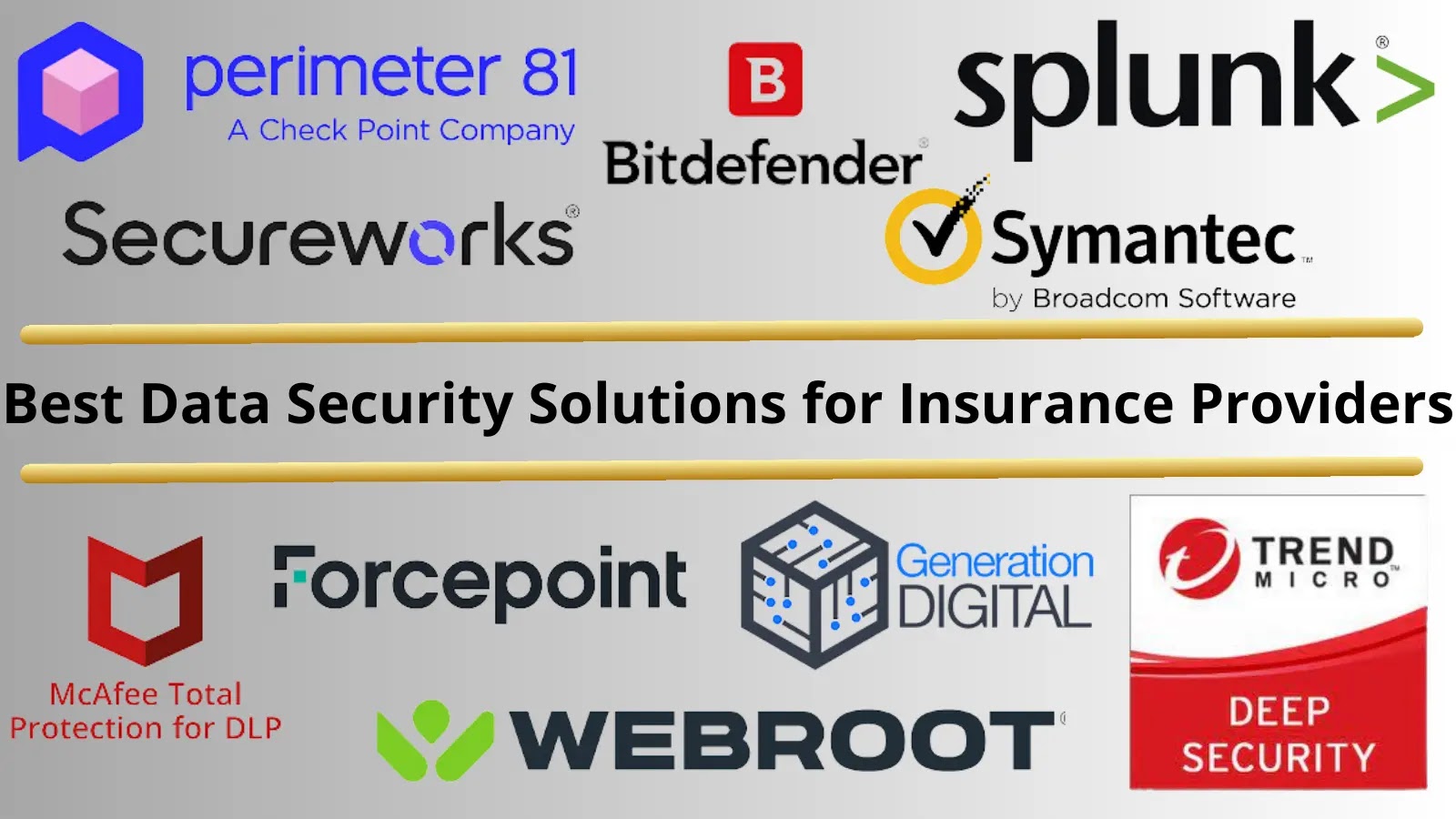
Best Data Security Solutions for Insurance Providers – 2026
The insurance industry, by its very nature, is a custodian of some of the most sensitive personal and financial data imaginable. From health records to financial histories and personal identifying information, the sheer volume and granularity of this data make insurance providers prime targets for cyberattacks. Protecting this invaluable, often irreplaceable, information is not merely a regulatory obligation; it’s a fundamental commitment to customers and a cornerstone of maintaining trust and operational continuity. The consequences of a data breach – regulatory fines, reputational damage, and loss of customer confidence – are severe and long-lasting.
The Imperative for Robust Data Security in Insurance
Insurance companies regularly handle vast repositories of personally identifiable information (PII), protected health information (PHI), and financial details. This makes effective data security solutions non-negotiable. The landscape of cyber threats is constantly evolving, with attackers employing increasingly sophisticated methods to exploit vulnerabilities. Effective data security isn’t a one-time deployment; it’s a continuous, multi-layered strategy that integrates technology, policies, and ongoing practices to safeguard information at every stage of its lifecycle.
Core Pillars of Data Security for Insurance Providers
An effective data security posture relies on a synergistic blend of technical controls and operational best practices. These foundational elements work together to create strong defenses against both external aggressors and internal missteps.
Encryption: Securing Data at Rest and in Transit
- Data at Rest: Implementing strong encryption for all sensitive data stored on servers, databases, and endpoints is paramount. This includes full disk encryption for laptops and workstations, and transparent data encryption (TDE) for databases. Even if an unauthorized party gains access to a storage device, the data remains unreadable.
- Data in Transit: All communication channels, whether internal networks or external connections, must be secured with robust encryption protocols like Transport Layer Security (TLS) for web traffic and Virtual Private Networks (VPNs) for remote access. This prevents eavesdropping and man-in-the-middle attacks.
Multi-Factor Authentication (MFA): A Critical Layer of Identity Protection
Passwords alone are insufficient protection. MFA requires users to provide two or more verification factors to gain access to an account or system. This could involve something they know (password), something they have (hardware token, smartphone with an authenticator app), or something they are (biometrics). Implementing MFA across all internal and customer-facing systems significantly reduces the risk of unauthorized access due to compromised credentials, a common attack vector often seen in incidents like the compromise detailed in CVE-2023-38831, which highlights shortcomings in authentication mechanisms.
Granular Access Controls: Principle of Least Privilege
The principle of least privilege dictates that users should only have access to the resources absolutely necessary to perform their job functions. This involves fine-grained control over who can view, modify, or delete sensitive data. Implementing role-based access control (RBAC) ensures consistent application of these permissions. Regular audits of access logs are essential to detect and rectify unauthorized access attempts or excessive privileges, which could lead to internal breaches or data leakage.
Intrusion Detection and Prevention Systems (IDPS)
IDPS solutions continuously monitor network traffic and system activity for malicious patterns or suspicious behavior. Intrusion Detection Systems (IDS) alert administrators to potential threats, while Intrusion Prevention Systems (IPS) actively block or mitigate these threats in real-time. These systems are crucial for detecting known attack signatures and identifying anomalies that might indicate emerging threats or zero-day exploits, such as those that might precede the widespread exploitation of a vulnerability like CVE-2024-20353.
Data Loss Prevention (DLP)
DLP technologies are designed to prevent sensitive information from leaving the organization’s control without authorization. DLP solutions can identify, monitor, and protect data in motion (network communications), data at rest (storage), and data in use (applications). They enforce policies to prevent the unauthorized transfer of sensitive data via email, cloud services, USB drives, or other channels. This is particularly vital for insurance companies handling large volumes of PII and PHI.
Security Information and Event Management (SIEM)
A SIEM solution centralizes and correlates security event data from various sources across the IT infrastructure, including firewalls, servers, applications, and operating systems. By providing a holistic view of security events, SIEM platforms enable security teams to detect complex threats, respond to incidents faster, and meet compliance requirements. Advanced SIEMs leverage AI and machine learning to identify obscure patterns indicative of sophisticated attacks, improving threat hunting capabilities.
Emerging Solutions and Best Practices for 2026
Beyond the foundational elements, the evolving threat landscape demands continuous adaptation and the adoption of cutting-edge security solutions.
Cloud Security Posture Management (CSPM) and Cloud Workload Protection Platforms (CWPP)
As more insurance providers leverage cloud infrastructure for data storage and application hosting, robust cloud security becomes paramount. CSPM tools continuously monitor cloud environments for misconfigurations and compliance violations, while CWPPs protect workloads running in public, private, and hybrid clouds, offering capabilities like vulnerability management, application control, and micro-segmentation. This addresses the unique security challenges presented by distributed cloud environments.
Zero Trust Architecture (ZTA)
Moving beyond traditional perimeter-based security, Zero Trust assumes that no user or device, whether inside or outside the network, can be implicitly trusted. Every access request is rigorously authenticated, authorized, and continuously validated. For insurance providers, adopting a ZTA model can drastically reduce the attack surface and limit lateral movement by attackers, even if an initial compromise occurs.
Automated Vulnerability Management and Patching
Regular identification and remediation of software vulnerabilities are critical. Automated vulnerability scanning tools can continuously monitor applications and infrastructure for known weaknesses. Integrating these with automated patching systems ensures that critical security updates are deployed promptly, reducing exposure to exploits like those targeting vulnerabilities outlined in advisories such as CVE-2024-24576.
Remediation Actions for Identified Vulnerabilities
When vulnerabilities are identified, swift and decisive remediation is essential. This often involves a structured approach:
- Prioritization: Assess vulnerabilities based on severity, exploitability, and potential impact on sensitive data.
- Patch Management: Implement a robust patch management program to apply security updates as soon as they are available.
- Configuration Hardening: Follow security best practices for configuring systems, applications, and network devices to reduce the attack surface.
- Security Patches & Updates: Regularly apply vendor security patches for all software and hardware components.
- Network Segmentation: Isolate critical systems and sensitive data stores to contain potential breaches.
- Incident Response Plan: Develop and regularly test a comprehensive incident response plan to minimize the impact of a successful breach.
- Security Awareness Training: Educate employees on phishing, social engineering, and secure data handling practices.
Conclusion
The imperative for insurance providers to implement sophisticated data security solutions can’t be overstated. Protecting customer data is a continuous battle against a dynamic threat landscape. By combining foundational security measures like encryption, MFA, and granular access controls with advanced solutions such as Zero Trust, CSPM, and robust vulnerability management, insurance companies can build a formidable defense. This multi-layered approach safeguards sensitive information, maintains regulatory compliance, and, most importantly, preserves the trust that is the bedrock of the insurance industry.