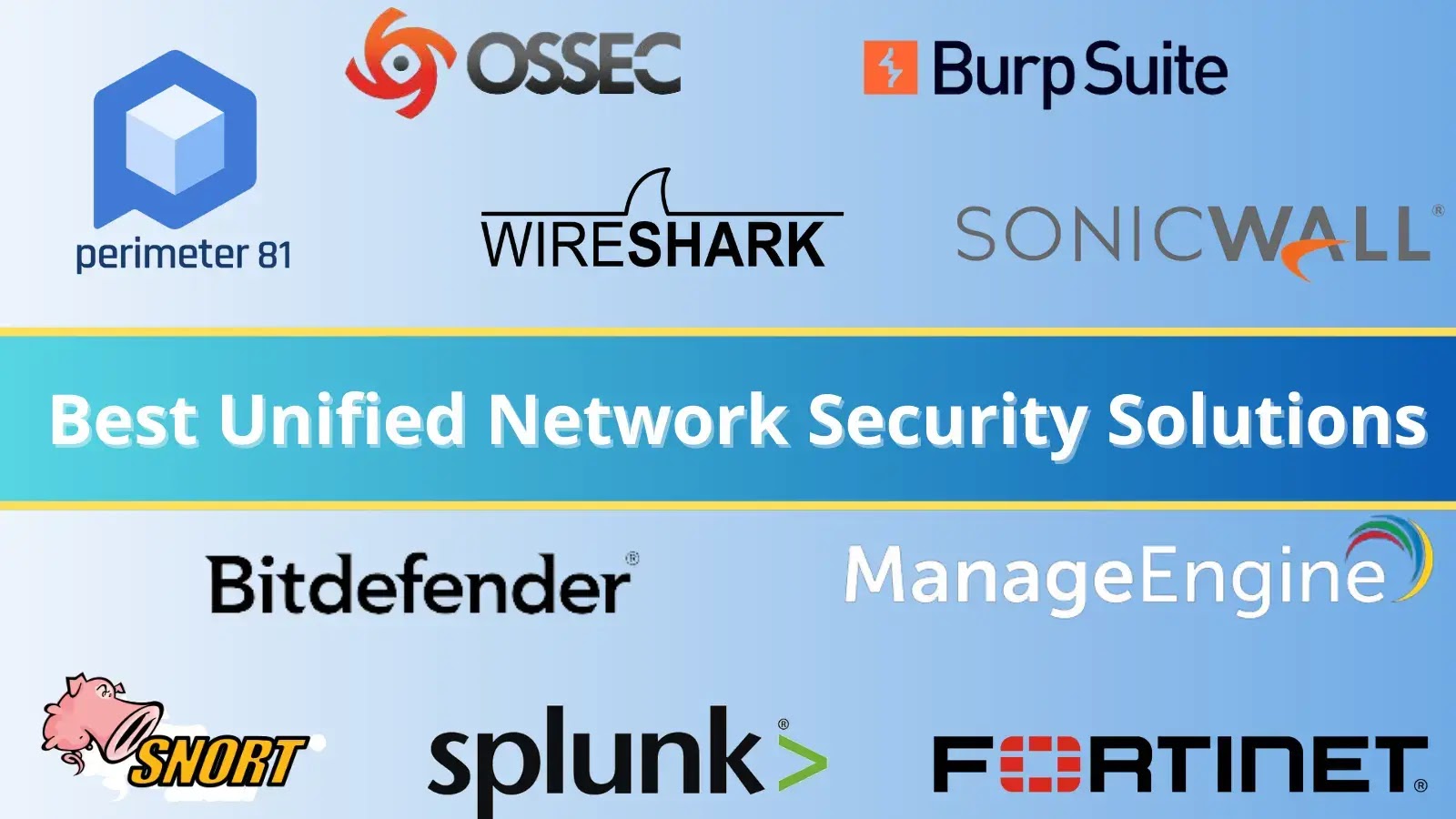
Best Unified Network Security Solutions for Small Businesses
For small businesses, the digital landscape presents a dual challenge: the imperative to innovate and compete, alongside the constant threat of cyberattacks. Limited resources often mean that comprehensive cybersecurity can feel out of reach, leading to fragmented defenses and heightened vulnerability. This is where unified network security solutions become not just beneficial, but essential. They are the strategic backbone that allows small businesses to navigate complex threat environments with confidence and efficiency.
The traditional approach of patching together various security products often results in security gaps, operational inefficiencies, and an increased attack surface. A truly unified platform consolidates critical security functions, transforming what could be an overwhelming task into a manageable and robust defense strategy. This article will delve into how these solutions provide an integrated, proactive stance against evolving cyber threats, specifically tailored for the unique needs of small businesses.
The Challenge of Fragmented Security for Small Businesses
Small businesses face an uphill battle when it comes to cybersecurity. They are often targeted by opportunistic attackers because they are perceived as having weaker defenses than larger enterprises. The cost of a breach – including data loss, reputational damage, and regulatory fines – can be catastrophic. Historically, SMBs might invest in a firewall, an antivirus solution, and perhaps a separate email security gateway. While each tool offers some protection, their lack of integration creates significant blind spots and operational overhead.
Managing disparate security tools requires more personnel, more training, and more time, all of which are scarce commodities in a small business. This disjoined approach often leads to:
- Inconsistent Policies: Security rules might differ across various systems, creating loopholes.
- Visibility Gaps: A threat detected by one tool might not be communicated effectively to another, delaying response.
- Increased Complexity: Administrators spend more time managing tools than actively securing the network.
- Higher Total Cost of Ownership: Licensing, maintenance, and support for multiple vendors can quickly add up.
Understanding Unified Network Security Solutions
A unified network security solution, as highlighted by Cyber Security News, consolidates various cybersecurity functionalities into a single, integrated platform. The core idea is to move away from a siloed approach to security and embrace a centralized management system that enhances visibility, streamlines operations, and bolsters defenses. For small businesses, this integration can be a game-changer, simplifying complex security narratives into easily digestible and actionable insights. Key components often include:
- Unified Threat Management (UTM): Combining firewall, VPN, intrusion prevention, antivirus, and content filtering.
- Identity and Access Management (IAM): Consolidating user rights, privileged access, authentication, and verification.
- Endpoint Detection and Response (EDR): Monitoring and responding to threats across all devices.
- Security Information and Event Management (SIEM): Centralized logging and analysis of security alerts.
The Power of Unified Identity Security Platforms
The reference content specifically emphasizes the significance of unified identity security platforms. This is a critical point, as identity is now considered the new perimeter in cybersecurity. Managing who has access to what, and under what conditions, is paramount. A unified identity security platform transforms fragmented processes into a streamlined operation by consolidating:
- Management of user rights
- Privileged access management (PAM)
- Authentication and verification methods (MFA)
- Security analytics for identity-centric threats
- Compliance reporting related to access controls
This holistic approach effectively addresses “identity sprawl,” a leading cybersecurity gap where an abundance of unmanaged or poorly managed user identities and access permissions creates significant vulnerabilities. By centralizing these functions, businesses can erase vulnerabilities associated with uncontrolled access, ramp up operational efficiency, and push governance across their entire digital estate. This is particularly relevant for mitigating risks related to compromised credentials, a common attack vector.
Benefits for Small Businesses
Adopting a unified network security solution offers a multitude of benefits for small businesses, enabling them to punch above their weight in the cybersecurity arena:
- Enhanced Visibility: A single pane of glass provides a comprehensive view of all network activity and security events, allowing for quicker identification and response to threats.
- Simplified Management: Reducing the number of vendors and platforms significantly eases the administrative burden on IT staff.
- Improved Threat Detection and Response: Integrated systems can correlate data from various sources, leading to more accurate threat detection and faster incident response. For example, anomaly detection related to user access (IAM) can be immediately linked to network traffic patterns (UTM/SIEM).
- Cost Efficiency: Consolidating solutions often results in lower total cost of ownership compared to purchasing and maintaining multiple disparate products.
- Compliance Adherence: Centralized security policies and reporting capabilities make it easier for small businesses to meet regulatory requirements (e.g., GDPR, HIPAA, PCI DSS).
- Reduced Attack Surface: By eliminating security gaps that arise from unintegrated systems, these solutions help shrink the overall attack surface available to adversaries.
Remediation Actions for Identity Sprawl
Given the emphasis on identity security, addressing identity sprawl is a critical remediation action for many small businesses. Implementing a unified identity security platform is the primary solution, but specific steps within that framework include:
- Conduct Regular Access Reviews: Periodically audit user accounts and their associated permissions to ensure they are still necessary and appropriate. Remove access for former employees immediately.
- Implement Multi-Factor Authentication (MFA): Mandate MFA for all user accounts, especially for privileged access. Even if credentials are stolen, MFA acts as a strong barrier.
- Enforce the Principle of Least Privilege (PoLP): Grant users only the minimum access rights required to perform their job functions. This limits the damage an attacker can inflict if an account is compromised.
- Utilize Privileged Access Management (PAM): For accounts with elevated permissions, PAM solutions add an extra layer of control, monitoring, and auditing.
- Centralize User Provisioning and De-provisioning: Ensure a consistent and automated process for creating, modifying, and deleting user accounts across all systems.
- Monitor Identity-Related Events: Actively track login attempts, access to sensitive data, and changes in user permissions. Look for unusual activity patterns.
Historical vulnerabilities like CVE-2022-26923 (Windows Active Directory Domain Services Elevation of Privilege Vulnerability) underscore the importance of robust identity management. While that specific CVE was a Microsoft patch, strong identity practices proactively mitigate the impact of such vulnerabilities when they emerge.
Key Takeaways for Small Businesses
For small businesses, embracing unified network security solutions is a strategic imperative. They simplify the complex task of cybersecurity, offering a robust defense posture without the overwhelming overhead. By consolidating identity management, threat protection, and compliance under one roof, these solutions transform security from a patchwork of components into a cohesive, proactive system. Investing in a unified platform is not just about protection; it’s about enabling growth and innovation with the peace of mind that comes from a strengthened digital foundation.