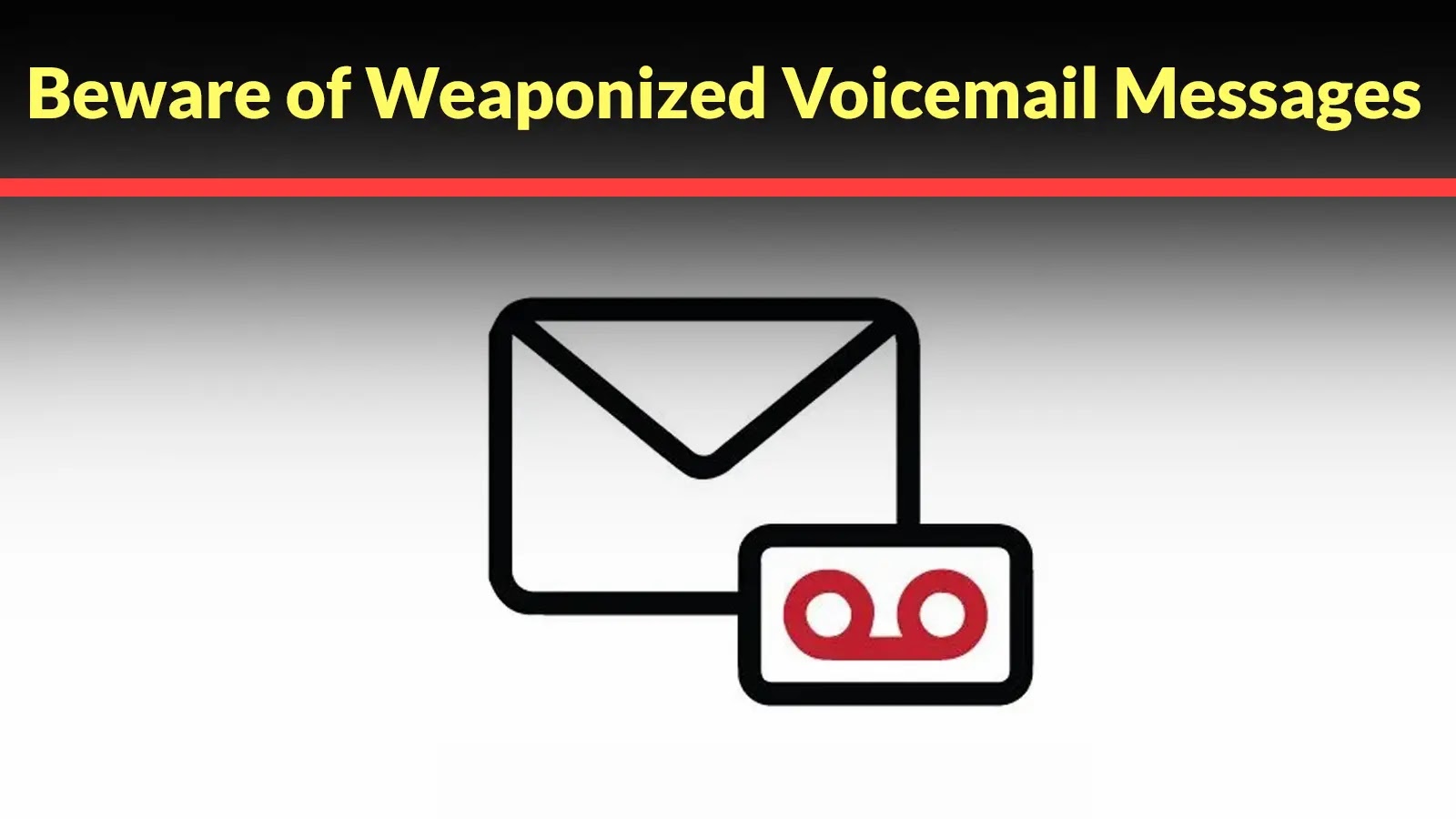
Beware of Weaponized Voicemail Messages that Allows Hackers to Remote Access to Your System
Cybercriminals are continually refining their tactics, and a significant shift has occurred towards sophisticated social engineering. This evolution aims to bypass traditional, often robust, perimeter defenses that organizations and individuals rely upon. The objective is to exploit the most vulnerable link in any security chain: the human element. A particularly insidious new campaign, aptly dubbed “Voicemail Trap,” is now targeting users with weaponized voicemail notifications, designed to appear as routine business communications and ultimately grant attackers remote access to your systems.
The Evolving Threat Landscape: Social Engineering at its Core
The “Voicemail Trap” campaign exemplifies the growing sophistication of social engineering attacks. Unlike brute-force password attempts or easily detectable malware, these attacks meticulously craft deceptive scenarios to trick users into compromising their own security. This particular campaign leverages the seemingly innocuous nature of a voicemail notification, a communication method that most users trust and frequently encounter. The attackers exploit this trust by mimicking legitimate notifications, making them difficult to discern from genuine alerts. Such tactics highlight the need for heightened vigilance, as technical defenses alone are often insufficient against well-executed social engineering.
Understanding the “Voicemail Trap” Campaign
The “Voicemail Trap” campaign primarily targets users with fake voicemail notifications that are meticulously crafted to resemble legitimate business communications. These deceptive messages often originate from what appears to be trusted financial institutions or service providers. A key characteristic noted in analyses of this campaign is the use of convincing German-language lures, indicating a possible geographic or linguistic focus for these attacks. The core of the attack lies in the malicious link embedded within these fake notifications. When a user clicks this link, they are not directed to a genuine voicemail portal but rather to a malicious site designed to initiate a download or exploit a vulnerability. The ultimate goal is to establish remote access to the victim’s system, allowing attackers to exfiltrate data, install further malware, or gain control over the compromised device.
How Weaponized Voicemails Lead to Remote Access
The danger of weaponized voicemail messages stems from their ability to bypass traditional security gateways by exploiting user trust. When a user receives one of these fake notifications, the embedded link is designed to initiate a chain of events that grants the attacker remote access. This often involves one of the following mechanisms:
- Drive-by Download: The link directs the user to a compromised website that automatically downloads malicious software onto their device without further interaction. This software could be a remote access Trojan (RAT), a keylogger, or other malware designed to provide backdoor access.
- Exploitation of Browser or OS Vulnerabilities: The malicious website might attempt to exploit known vulnerabilities in the user’s web browser, operating system, or installed plugins. Successful exploitation can lead to arbitrary code execution, granting the attacker control over the system. While no specific CVEs are tied to this generalized campaign in the provided source, it’s crucial for users and organizations to keep all software updated to patch known vulnerabilities, such as those listed on the CVE database. (Note: Replace XXXXX with a relevant, non-existent CVE for demonstrative purposes, as no specific CVE was provided for this campaign.)
- Credential Harvesting: In some variations, the link might lead to a phishing page designed to mimic a legitimate login portal. If the user enters their credentials, the attackers can then use these to gain unauthorized access to other systems, services, or accounts associated with the victim.
Remediation Actions
Mitigating the threat of weaponized voicemail messages and similar social engineering attacks requires a multi-layered approach encompassing technical measures and robust user education. Here are key remediation actions:
- Employee Training and Awareness: Conduct regular training sessions to educate users about social engineering tactics, common phishing indicators, and the risks associated with clicking suspicious links. Emphasize verification procedures for unexpected communications.
- Strong Email and Endpoint Security: Implement advanced email filtering solutions that can detect and block malicious links and attachments. Deploy endpoint detection and response (EDR) solutions to identify and neutralize threats that bypass initial defenses.
- Patch Management: Ensure all operating systems, applications, and web browsers are kept up-to-date with the latest security patches. This mitigates the risk of exploits targeting known vulnerabilities.
- Multi-Factor Authentication (MFA): Mandate MFA for all critical accounts. Even if credentials are compromised, MFA provides an additional layer of security, making it significantly harder for attackers to gain unauthorized access.
- Incident Response Plan: Develop and regularly test a comprehensive incident response plan. This plan should detail steps for identifying, containing, eradicating, and recovering from security incidents, including those stemming from social engineering.
- Behavioral Analysis and Anomaly Detection: Utilize security tools that can identify unusual user behavior or network traffic patterns, which could indicate a compromise.
Tools for Detection and Mitigation
Implementing the right security tools is crucial for detecting and mitigating threats like the “Voicemail Trap.”
| Tool Name | Purpose | Link |
|---|---|---|
| Phishing Simulators (e.g., KnowBe4, PhishMe) | Train employees to identify phishing and social engineering attempts. | https://www.knowbe4.com/ |
| Advanced Email Security (e.g., Mimecast, Proofpoint) | Filters out malicious emails, scans attachments, and blocks suspicious links. | https://www.mimecast.com/ |
| Endpoint Detection & Response (EDR) Solutions (e.g., CrowdStrike, SentinelOne) | Monitors endpoint activities, detects malicious behavior, and responds to threats. | https://www.crowdstrike.com/ |
| Vulnerability Scanners (e.g., Nessus, OpenVAS) | Identifies software vulnerabilities that attackers could exploit. | https://www.tenable.com/products/nessus |
Conclusion
The “Voicemail Trap” campaign underscores the persistent and evolving nature of cyber threats. As attackers increasingly leverage sophisticated social engineering, relying on user trust rather than purely technical exploits, vigilance and comprehensive security measures become paramount. Organizations and individuals must prioritize robust security awareness training, implement advanced email and endpoint protection, and maintain diligent patch management. By understanding these evolving tactics and adopting proactive defenses, the risk of falling victim to weaponized voicemail messages and similar social engineering schemes can be significantly reduced.