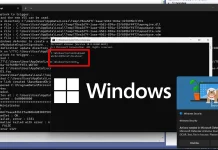
BlueHammer PoC for Windows Defender Exploited by Researchers to Escalate Privileges
BlueHammer: Exploiting Windows Defender for Privilege Escalation
The digital defense landscape faces constant challenges, and the recent public release of “BlueHammer” highlights a critical vulnerability within Microsoft Windows Defender. This proof-of-concept (PoC) exploit, developed by security researcher Nightmare Eclipse (also known as Chaotic Eclipse), demonstrates a zero-day local privilege escalation (LPE) flaw in Windows Defender’s signature update mechanism. The confirmation of its functionality by principal vulnerability analyst Will Dormann of Tharros underscores the severity of this issue and the ongoing frustrations with Microsoft’s security response processes.
Understanding the BlueHammer PoC
BlueHammer isn’t just another vulnerability; it represents a concerning method for attackers to gain elevated privileges on a compromised system. The exploit targets a fundamental component of Windows Defender: its signature update process. This process, critical for keeping antivirus definitions current, ironically becomes an attack vector. By manipulating this update mechanism, an attacker with basic user privileges can escalate to SYSTEM or administrator-level access, effectively taking full control of the affected machine. This LPE capability is particularly dangerous as it allows an initial foothold, perhaps gained through phishing or a less severe exploit, to rapidly transform into a full system compromise.
The Mechanics of Local Privilege Escalation (LPE)
Local privilege escalation is a post-exploitation technique where an attacker, having gained initial access to a system with limited privileges, exploits a vulnerability to elevate their access to a higher privilege level, typically administrator or SYSTEM. In the context of BlueHammer, the vulnerability lies within how Windows Defender handles its signature updates. This process often runs with elevated privileges to ensure it can modify system files and configurations necessary for security. If an attacker can inject malicious code or manipulate files during this critical, highly privileged operation, they can execute their own code with the same elevated permissions. This bypasses standard security controls and allows for deep system manipulation, data exfiltration, or the deployment of further malicious payloads.
Researcher Frustration and Responsible Disclosure
The public release of BlueHammer, while concerning, often stems from a broader issue: the challenging and sometimes unresponsive nature of vulnerability disclosure processes with major vendors. Security researchers often face hurdles when reporting critical flaws, ranging from lengthy response times to what they perceive as inadequate prioritization. The act of publicly releasing a PoC, though controversial, can be a last resort to force attention and prompt quicker action from vendors, thereby accelerating the release of patches and protecting a wider audience. This tension highlights the delicate balance between responsible disclosure and the urgent need to address critical security flaws before malicious actors discover and weaponize them.
Potential Impact on Organizations
The implications of an LPE vulnerability in Windows Defender are significant for organizations of all sizes. Windows Defender is a ubiquitous security solution, often the first and sometimes only line of defense for many endpoints. An LPE flaw means that even if an initial infection is limited to a user account, an attacker can quickly gain full control, bypassing many layers of security. This could lead to:
- Complete system compromise and data theft.
- Installation of rootkits or other persistent malware.
- Lateral movement within the network, using the compromised machine as a springboard.
- Disruption of critical services or data destruction.
Organizations must treat this vulnerability with extreme urgency, as a fully exploited system can lead to severe operational and reputational damage.
Remediation Actions
Addressing the BlueHammer vulnerability requires a multi-faceted approach. While Microsoft will ultimately need to release a patch, organizations can take proactive steps to mitigate risk:
- Apply Microsoft Security Updates Immediately: As soon as a patch is released by Microsoft addressing this specific vulnerability (likely to be identified by a CVE number once assigned), it must be prioritized and applied across all affected systems. Keep an eye on official Microsoft security advisories and the Microsoft Security Response Center (MSRC) for updates.
- Principle of Least Privilege: Ensure all users and applications operate with the absolute minimum necessary privileges. This limits the blast radius of any successful initial compromise.
- Endpoint Detection and Response (EDR): Utilize robust EDR solutions that can detect anomalous process behavior, privilege escalation attempts, and suspicious modifications to system files, even before a patch is available.
- Regular Security Audits: Conduct frequent audits of system configurations and user privileges to identify and rectify potential weaknesses.
- Network Segmentation: Implement strong network segmentation to limit lateral movement possibilities even if a system is compromised.
- User Awareness Training: Continue to educate users on phishing and social engineering tactics, as these are often the initial foothold for more sophisticated attacks.
Tools for Detection and Mitigation
While awaiting an official patch, several tools and categories of tools can assist in detecting potential exploitation attempts or bolstering overall security:
| Tool Name | Purpose | Link |
|---|---|---|
| Microsoft Defender for Endpoint | Advanced EDR capabilities for detecting anomalous behavior, including privilege escalation attempts. | https://www.microsoft.com/en-us/security/business/threat-protection/microsoft-defender-for-endpoint |
| Sysmon (Sysinternals) | Monitors and logs system activity, including process creation, network connections, and file modifications, which can help detect suspicious behavior. | https://learn.microsoft.com/en-us/sysinternals/downloads/sysmon |
| Osquery | Enables SQL queries to enumerate OS state, providing insights into system health, running processes, and configuration changes. | https://osquery.io/ |
| Vulnerability Scanners (e.g., Nessus, Qualys) | Identify known vulnerabilities and misconfigurations on endpoints, helping to reduce the overall attack surface. | https://www.tenable.com/products/nessus |
Final Thoughts
The BlueHammer PoC is a stark reminder that even built-in security solutions can harbor critical vulnerabilities. While the immediate focus is on Microsoft’s response and the subsequent patching, the incident also underscores the broader importance of defense-in-depth strategies, robust threat intelligence, and proactive security measures. Organizations must remain vigilant, apply security updates promptly, and continuously monitor their environments to protect against evolving threats that leverage such dangerous flaws.