Critical Vulnerability in VM2 Sandbox Library for Node.js Let Attackers run Untrusted Code
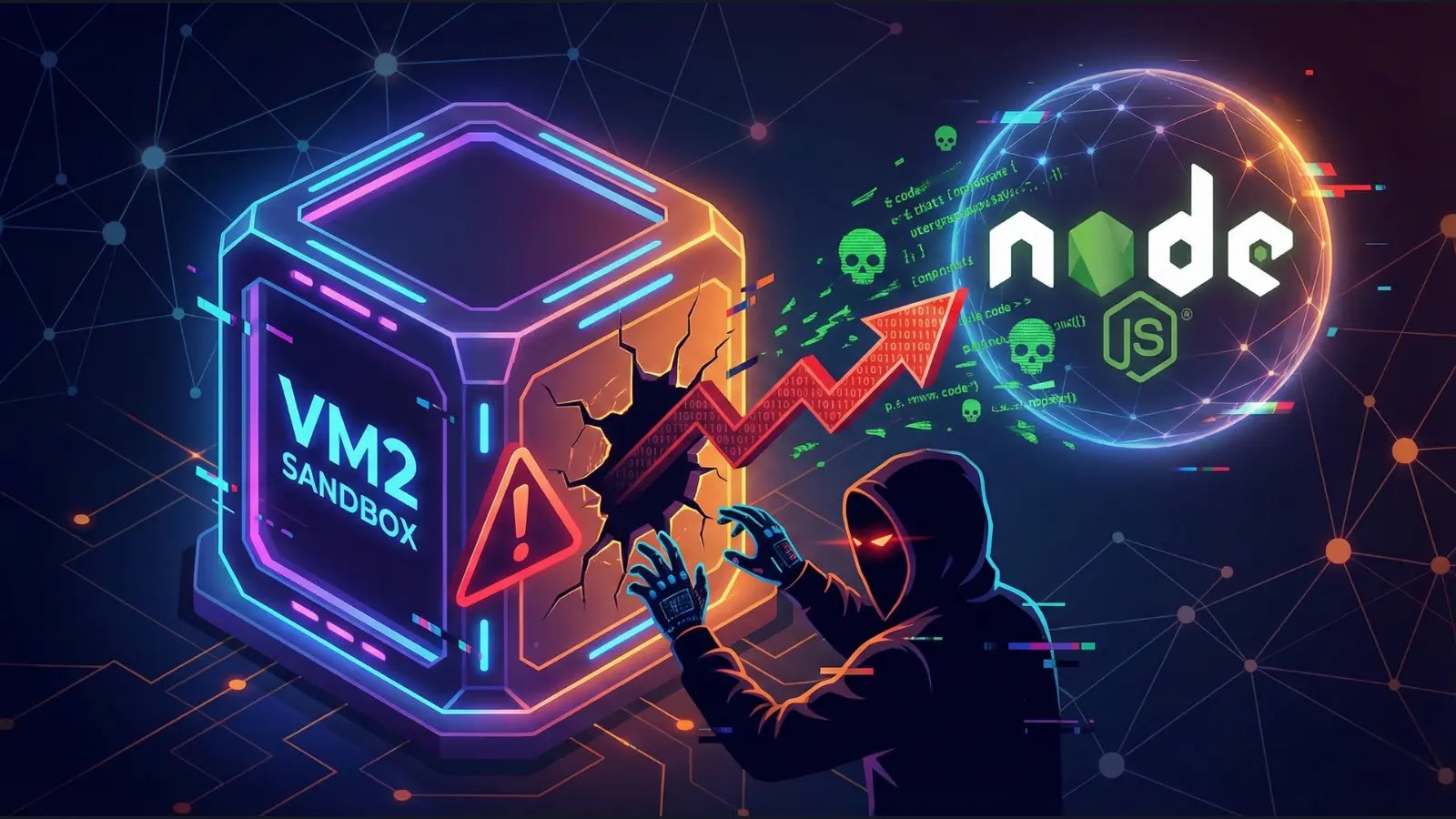
In the intricate landscape of software development, sandboxes are indispensable tools, providing a controlled environment to execute untrusted code safely. However, when these critical security mechanisms falter, the consequences can be severe. A recent discovery has sent ripples through the Node.js community: a critical sandbox escape vulnerability identified in the widely-used VM2 library. This flaw, with its maximum severity rating, poses a significant threat to applications relying on VM2 for isolation.
This post delves into the specifics of this vulnerability, its impact, and the crucial steps developers and organizations must take to protect their systems. Understanding such high-impact flaws is paramount for maintaining robust cybersecurity posture in an era of increasingly sophisticated attacks.
Understanding the VM2 Sandbox Vulnerability
The VM2 library for Node.js is a popular choice for developers needing to run untrusted JavaScript code within a secure, isolated sandbox environment. Its purpose is to prevent malicious code from interacting with or compromising the host system. Unfortunately, a critical flaw, tracked as CVE-2026-22709 (also known as GHSA-99p7-6v5w-7xg8), has been uncovered that completely undermines this fundamental security premise.
This vulnerability allows an attacker to perform a sandbox escape, effectively breaking out of the isolated environment and gaining the ability to execute arbitrary code on the underlying host system. Such an escape bypasses all the carefully constructed security boundaries VM2 is designed to enforce, leading to potential remote code execution, data theft, or complete system compromise.
Severity and Impact
The severity of CVE-2026-22709 cannot be overstated. It carries a CVSS v3.1 base score of 10.0, the highest possible rating, denoting maximum severity. This score indicates that the vulnerability is easily exploitable, requires no special privileges or user interaction, and provides complete impact on confidentiality, integrity, and availability.
The flaw is present in all versions of VM2 up to and including 3.10.0. Given the library’s widespread adoption in projects ranging from online code editors to serverless functions and plugin systems, the potential attack surface is vast. Any Node.js application utilizing vulnerable versions of VM2 to execute user-submitted code or untrusted third-party scripts is at extreme risk.
The root cause of this critical flaw lies in incomplete callback sanitization. This means that certain callback functions, which are mechanisms for code within the sandbox to interact with the host, were not properly vetted or restricted. An attacker could craft malicious code within the sandbox that, when executed, leverages these inadequately sanitized callbacks to gain control outside of the intended isolation.
Remediation Actions
Immediate action is required for all developers and organizations using the VM2 library. Procrastination in patching this critical vulnerability would leave systems exposed to severe threats.
- Update VM2 Immediately: The most crucial step is to update your Node.js projects to a patched version of the VM2 library. While specific patch versions haven’t been released in a stable form yet, continuous monitoring of the official VM2 GitHub repository for releases beyond 3.10.0 is essential. As of the time of this publication, the recommendation is to follow official advisories for patched versions.
- Isolate Vulnerable Systems (Temporary): If immediate patching is not feasible due to complex dependencies or testing requirements, consider isolating applications that use vulnerable VM2 versions. This might involve placing them behind additional network firewalls, restricting network access, or temporarily disabling features that rely on untrusted code execution.
- Review Code that Uses VM2: Conduct an urgent review of all code pathways that leverage VM2. Understand what kind of “untrusted” input is being fed into the sandbox and whether there are additional layers of validation or sanitization that can be applied externally to reduce the risk.
- Monitor for Exploitation Attempts: Increase logging and monitoring for applications using VM2. Look for unusual process creation, file system access attempts outside the expected sandbox scope, or unexpected network connections originating from the application. Implement intrusion detection systems (IDS) to flag suspicious activity.
- Consider Alternatives (Long-term Strategy): While VM2 is a powerful tool, for highly sensitive applications, this vulnerability serves as a stark reminder of the inherent risks in running untrusted code. Evaluate whether alternative isolation mechanisms or stricter input validation can reduce reliance on sandboxes for ultimate security in specific scenarios.
Tools for Detection and Mitigation
While direct patching is the primary mitigation, several tools can assist in identifying the presence of vulnerable libraries and enhancing overall security posture.
| Tool Name | Purpose | Link |
|---|---|---|
| npm audit | Identifies known vulnerabilities in Node.js project dependencies. | https://docs.npmjs.com/cli/v9/commands/npm-audit |
| Snyk | Developer security platform for finding and fixing vulnerabilities in code, dependencies, and containers. | https://snyk.io/ |
| Dependabot | Automated dependency updates and vulnerability alerts for GitHub repositories. | https://github.com/dependabot |
| OWASP Dependency-Check | Identifies project dependencies and checks if there are any known, publicly disclosed vulnerabilities. | https://owasp.org/www-project-dependency-check/ |
Key Takeaways for Node.js Security
The discovery of CVE-2026-22709 in the VM2 library serves as a critical alert for the Node.js ecosystem. The ability for an attacker to run untrusted code outside of a supposed sandbox is a direct path to system compromise. This incident underscores several vital principles for robust software security:
- Vigilant Dependency Management: Regularly auditing and updating project dependencies is non-negotiable. Tools like
npm auditare your first line of defense. - Principle of Least Privilege: Even within a sandbox, the code should have the absolute minimum permissions required to function.
- Defense in Depth: Relying on a single security mechanism, such as a sandbox, is insufficient. Layered security controls are essential.
- Constant Threat Awareness: Staying informed about new vulnerabilities in critical libraries is crucial for proactive defense.
For any organization or developer leveraging VM2, immediate action is paramount. Patching to a secure version must be the top priority to close this critical attack vector and safeguard applications from potential exploitation. Stay updated with official advisories and integrate security practices throughout your development lifecycle.