Critical Zero-Click Command Injection in AVideo Platform Allows Stream Hijacking
Unmasking the Critical AVideo Zero-Click Command Injection (CVE-2026-29058)
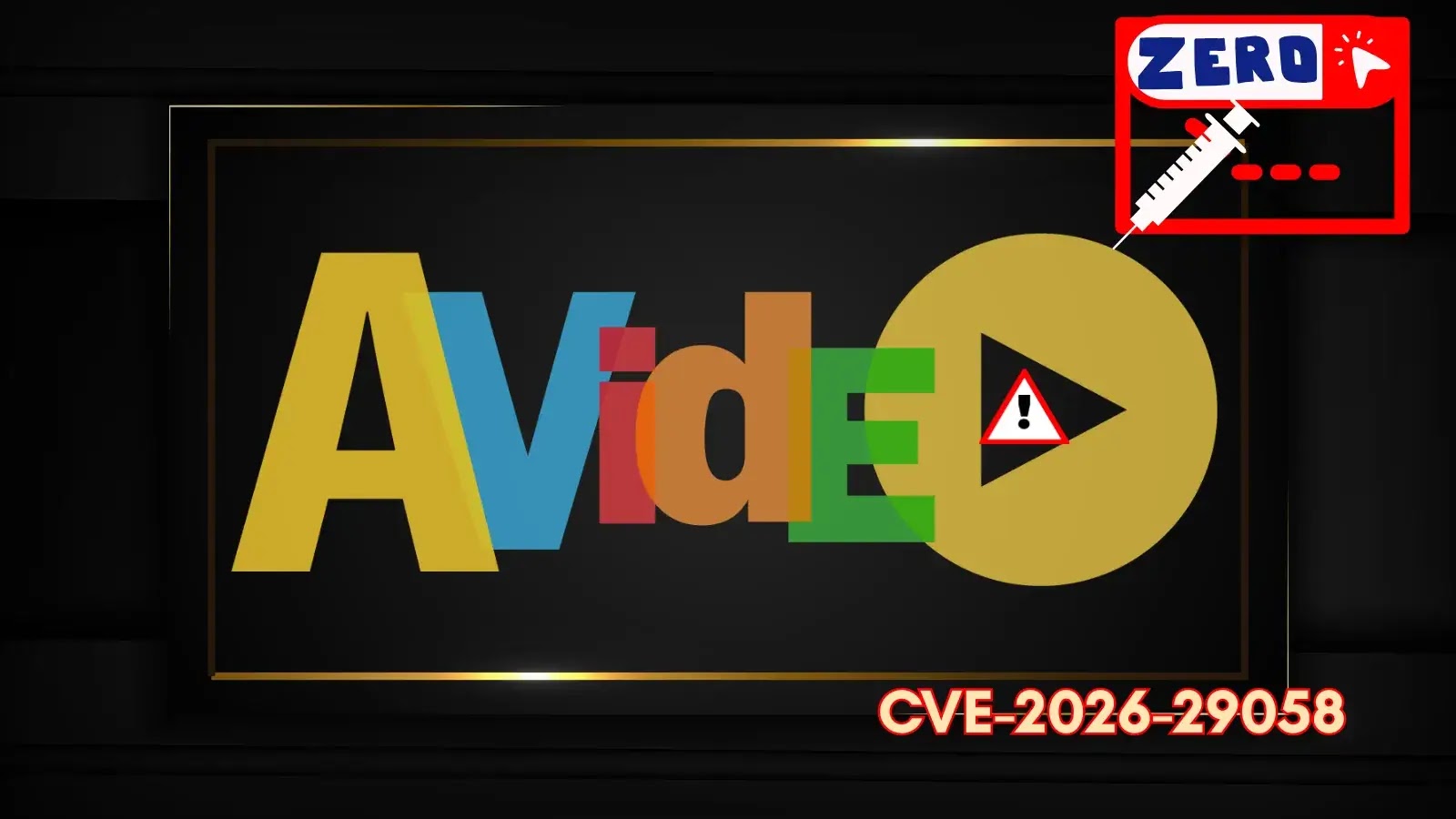
The digital streaming landscape is an invaluable part of modern communication and entertainment, making the security of platforms supporting it paramount. A recent disclosure has sent ripples through the AVideo community, revealing a critical zero-click command injection vulnerability identified as CVE-2026-29058. This flaw, discovered by security researcher Arkmarta, held the potential for unauthenticated attackers to execute arbitrary operating system commands, effectively enabling stream hijacking and complete server compromise on vulnerable AVideo installations.
Understanding the Zero-Click Threat in AVideo
A zero-click vulnerability, by its very nature, is among the most insidious and dangerous. It requires no interaction from the victim – no malicious links clicked, no infected files downloaded. In the case of CVE-2026-29058, an unauthenticated attacker could trigger the command injection directly by exploiting a weakness in AVideo version 6.0. This means that merely having an internet-accessible AVideo server running the affected version was sufficient for an attacker to gain control.
The implications of a command injection are severe. Successfully exploiting this type of flaw allows an attacker to run commands on the underlying operating system of the server hosting AVideo. This could lead to a variety of malicious activities:
- Stream Hijacking: Redirecting legitimate video streams to malicious content or entirely taking over broadcasting capabilities.
- Data Exfiltration: Accessing and stealing sensitive data stored on the server.
- Server Takeover: Gaining full administrative control over the server, potentially deploying ransomware, or using it as a launchpad for further attacks.
- Defacement: Altering website content or streaming interfaces uncontrollably.
Technical Insight: The Severity of CVE-2026-29058
The vulnerability in AVideo platform, tracked as CVE-2026-29058, was rated with the maximum possible severity. This reflects the ease of exploitation (zero-click, unauthenticated) and the catastrophic potential impact (arbitrary operating system command execution). For organizations and individuals relying on AVideo for their video hosting and streaming needs, this represented an immediate and critical threat to their operations and data integrity.
The flaw’s origin within AVideo version 6.0 highlights the continuous need for rigorous security testing and prompt patching in open-source projects, even those widely adopted. The discovery by Arkmarta underscores the invaluable role of security researchers in identifying and reporting such vulnerabilities before they can be broadly exploited by malicious actors.
Remediation Actions: Securing Your AVideo Platform
For any organization or individual operating an AVideo instance, immediate action is imperative to mitigate the risk posed by CVE-2026-29058. The good news is that the vulnerability has been officially patched.
Here are the critical steps to secure your AVideo deployment:
- Patch Immediately: The most crucial step is to update your AVideo platform to the latest stable version. This will include the official patch addressing CVE-2026-29058. Always refer to the official AVideo documentation or release notes for precise upgrade instructions.
- Isolate AVideo Deployments: If immediate patching is not possible, consider placing your AVideo server behind a Web Application Firewall (WAF) or implementing network segmentation to restrict direct internet access to vulnerable components. While not a permanent fix, this can buy time for proper patching.
- Regular Security Audits: Implement a routine schedule for security audits and vulnerability scanning of your AVideo instances and the underlying server infrastructure.
- Monitor Logs: Continuously monitor server logs and AVideo access logs for any anomalous activity that might indicate attempted or successful exploitation.
- Principle of Least Privilege: Ensure that the AVideo application runs with the minimum necessary operating system privileges to function correctly.
Tools for Detection and Mitigation
While direct detection of CVE-2026-29058 specifically would likely involve checking the AVideo version, general cybersecurity tools play a vital role in maintaining a secure posture.
| Tool Name | Purpose | Link |
|---|---|---|
| Nessus | Comprehensive vulnerability scanning and management | https://www.tenable.com/products/nessus |
| OpenVAS | Open-source vulnerability scanner | https://www.greenbone.net/ |
| ModSecurity | Web Application Firewall (WAF) for detecting and preventing web-based attacks | https://modsecurity.org/ |
| SNORT | Intrusion Detection/Prevention System (IDS/IPS) for real-time traffic analysis | https://www.snort.org/ |
| OWASP ZAP | Dynamic Application Security Testing (DAST) tool for finding vulnerabilities in web applications | https://www.zaproxy.org/ |
Conclusion
The discovery and subsequent patching of CVE-2026-29058 in AVideo serve as a stark reminder of the persistent and evolving threats in the cybersecurity landscape. A critical zero-click command injection vulnerability carries immense risk, potentially leading to complete system compromise and severe disruption of services. Operators of AVideo platforms must prioritize immediate patching to the latest stable versions. Ongoing vigilance, including regular security audits and robust monitoring, remains essential for protecting streaming infrastructure against both known and emerging threats. Staying informed and proactive is the strongest defense against such critical vulnerabilities.