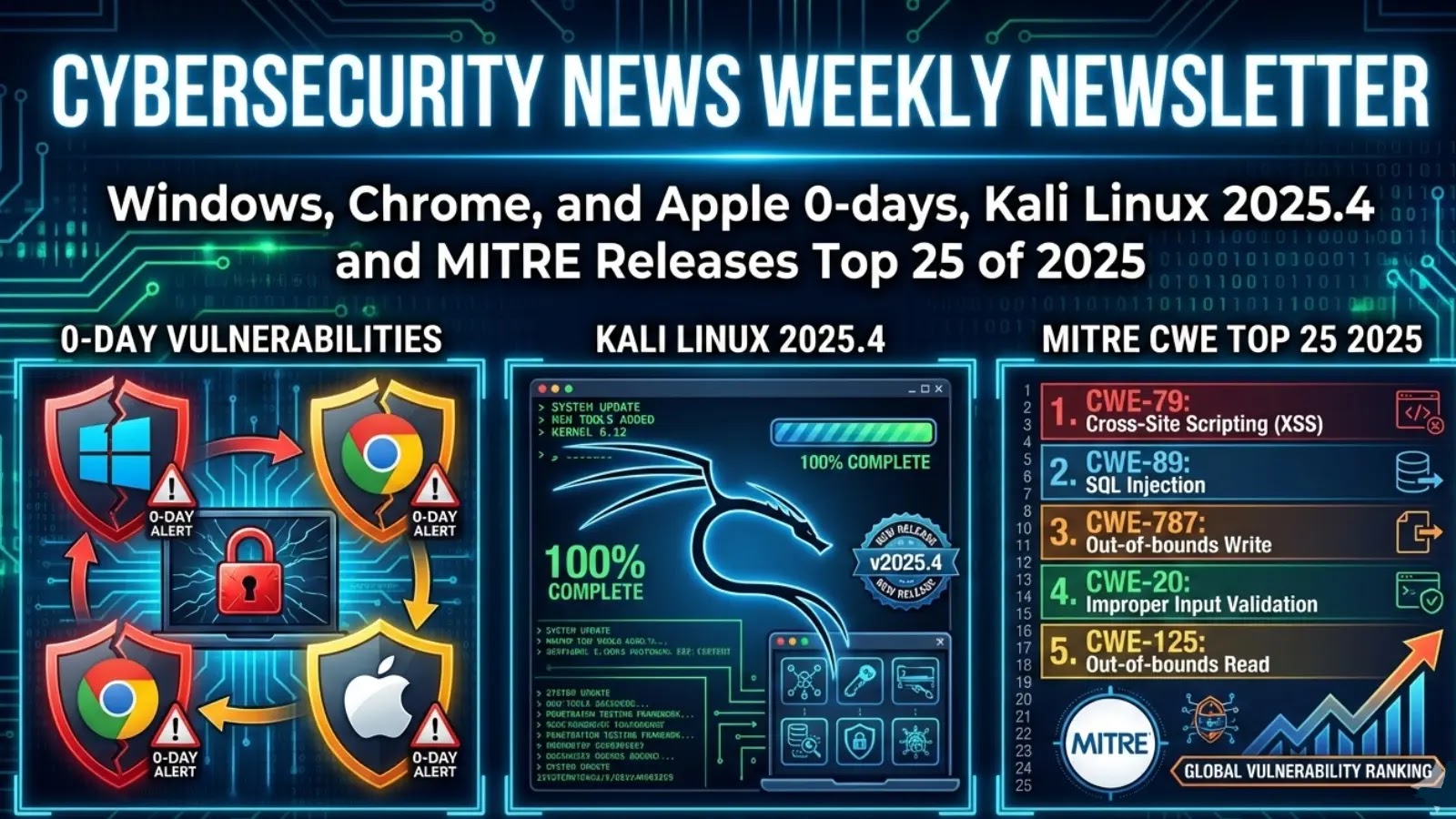
Cybersecurity News Weekly Newsletter – Windows, Chrome, and Apple 0-days, Kali Linux 2025.4, and MITRE Top 25
Navigating the Evolving Threat Landscape: Windows, Chrome, and Apple 0-Days Exposed
As 2025 draws to a close, the cybersecurity landscape continues its relentless pace of evolution. This week’s developments underscore the increasing sophistication of threats, with major zero-day vulnerabilities actively exploited in the wild, targeting critical platforms like Windows, Chrome, and Apple devices. These high-risk flaws highlight the enduring importance of rapid patching, robust layered defenses, and proactive threat intelligence for every organization and individual.
Windows Zero-Day Vulnerabilities: A Persistent Threat
Windows operating systems remain a prime target for attackers, and this week brought critical zero-day disclosures. These vulnerabilities, often exploited before patches are available, present a significant challenge to IT security teams. Attackers leverage these flaws to gain unauthorized access, elevate privileges, or execute malicious code, potentially leading to data breaches or system compromise.
Remediation Actions for Windows Zero-Days
- Immediate Patching: Prioritize the installation of all official security updates from Microsoft as soon as they are released. Zero-day patches are often emergency releases due to active exploitation.
- Endpoint Detection and Response (EDR): Utilize EDR solutions to monitor Windows endpoints for suspicious activities, unusual process behaviors, and potential exploitation attempts.
- Principle of Least Privilege: Enforce the principle of least privilege for all users and applications to limit the potential impact if a system is compromised.
- Network Segmentation: Isolate critical systems and sensitive data using network segmentation to prevent lateral movement of attackers within the network.
Chrome Zero-Day Exploits: Browser Security Under Attack
Google Chrome, a ubiquitous web browser, has also been a target for zero-day exploits. Browser vulnerabilities can be particularly potent, as they can be triggered simply by visiting a malicious website, leading to drive-by downloads or client-side compromise. These exploits often target rendering engines or JavaScript execution environments.
Remediation Actions for Chrome Zero-Days
- Keep Chrome Updated: Ensure Chrome is always running the latest version, as Google frequently releases security updates. Enable automatic updates where possible.
- Browser Isolation: Consider using browser isolation technologies that execute web content in a remote, disposable environment, shielding the endpoint from direct threats.
- Web Application Firewalls (WAFs) and Secure Web Gateways (SWGs): Implement WAFs and SWGs to filter malicious traffic and block access to known compromised sites.
- User Awareness Training: Educate users about the dangers of suspicious links, unsolicited downloads, and social engineering tactics that might trick them into visiting malicious sites.
Apple Zero-Days: Targeting the Ecosystem
Apple’s ecosystem, often perceived as more secure, is not immune to zero-day vulnerabilities. These exploits target iOS, macOS, iPadOS, and watchOS, impacting a wide range of devices. Given the widespread adoption of Apple products, these vulnerabilities pose a significant risk to personal and enterprise data alike.
Remediation Actions for Apple Zero-Days
- Prompt OS Updates: Install Apple’s security updates for all devices (iPhones, iPads, Macs, Apple Watches) immediately upon release.
- Mobile Device Management (MDM): For enterprise environments, leverage MDM solutions to enforce security policies, manage updates, and monitor device health across the Apple fleet.
- Application Sandboxing: Understand and leverage the sandboxing capabilities within Apple’s operating systems to limit the impact of compromised applications.
- Review App Permissions: Regularly review and restrict application permissions to only those absolutely necessary for their function.
Kali Linux 2025.4: Advancing Offensive Security Tools
Amidst the defensive challenges, the release of Kali Linux 2025.4 underscores the ongoing development in offensive security. Kali Linux, a Debian-derived distribution designed for digital forensics and penetration testing, consistently introduces new tools and enhancements. This latest version likely brings updated packages, improved hardware support, and potentially new utilities valuable for security researchers and ethical hackers in identifying vulnerabilities. Its updates invariably push the boundaries of what’s possible in security assessment and exploitation, reinforcing the need for defenders to stay equally abreast of emerging techniques.
MITRE Top 25: Common Weaknesses and Strategic Defenses
The MITRE Top 25 Common Weakness Enumeration (CWE) list serves as a critical guide for understanding and mitigating pervasive software vulnerabilities. This annually updated list highlights the most significant and widespread programming errors that lead to exploitable flaws. Familiarity with the MITRE Top 25 is essential for developers, security architects, and QA teams to build more resilient software from the ground up.
Strategic Approaches to the MITRE Top 25
- Secure Coding Practices: Implement secure coding guidelines and conduct regular code reviews to identify and remediate weaknesses early in the development lifecycle.
- Developer Training: Provide ongoing training for developers on secure coding principles, common vulnerabilities, and specifically the implications of the MITRE Top 25.
- Automated Static and Dynamic Analysis: Utilize Static Application Security Testing (SAST) and Dynamic Application Security Testing (DAST) tools to automatically detect many of the weaknesses outlined in the MITRE Top 25.
- Threat Modeling: Integrate threat modeling into the software development process to identify potential attack vectors and design flaws before they become vulnerabilities.
The Path Forward: Vigilance and Proactive Defense
The disclosures of zero-day exploits targeting Windows, Chrome, and Apple, coupled with the consistent evolution of tools like Kali Linux and critical guidance from MITRE, paint a clear picture: cybersecurity is a dynamic, continuous battle. Organizations and individuals must prioritize robust patching strategies, implement multi-layered security controls, invest in threat intelligence, and continually educate their teams. Staying informed and proactive is not merely recommended; it is fundamental to maintaining a secure posture in the face of ever-advancing threats.