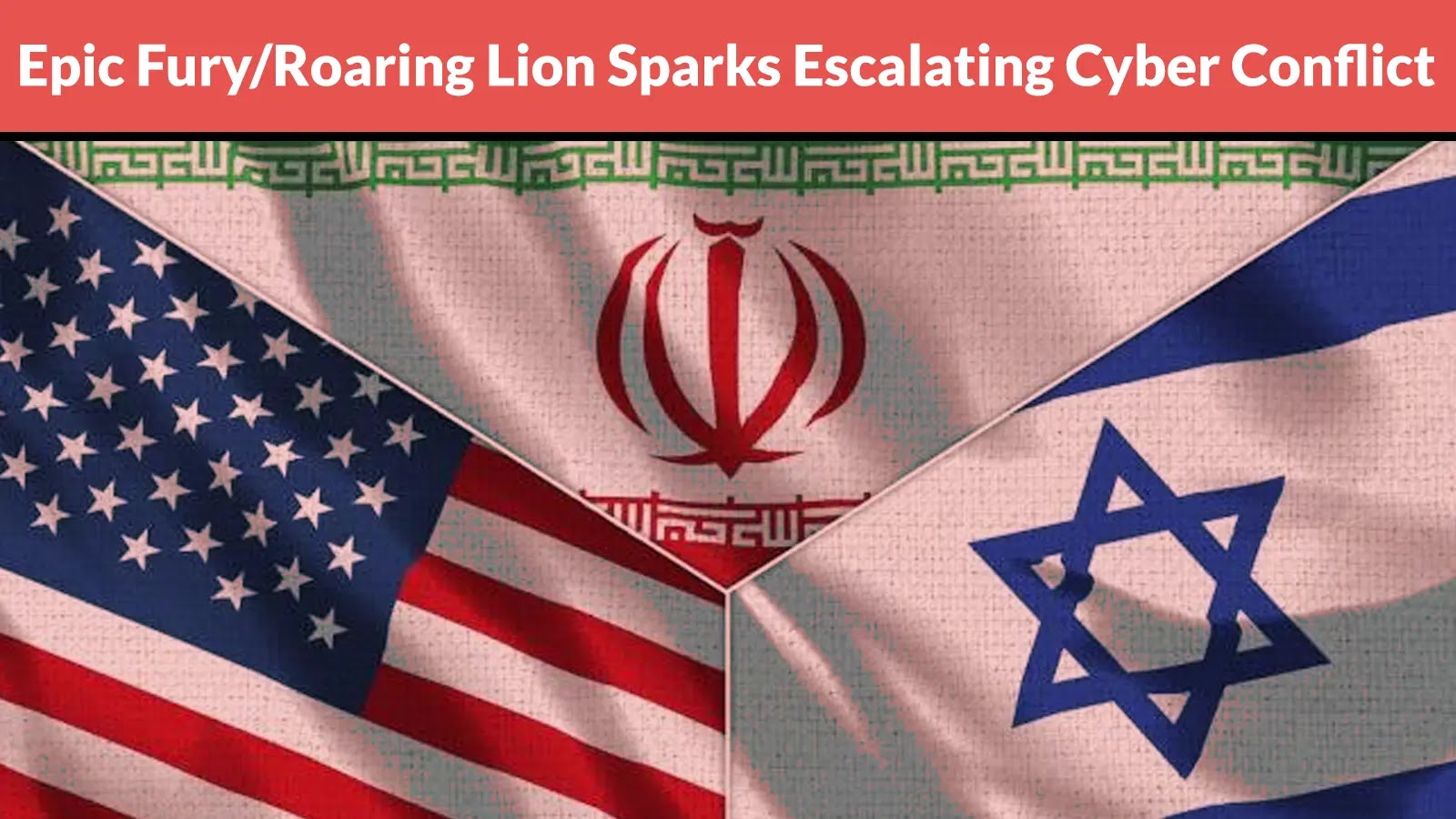
Epic Fury/Roaring Lion Sparks Escalating Cyber Conflict as Iran Goes Offline, Hacktivists Step Up Retaliation
Cyber Conflict Escalates: Epic Fury, Roaring Lion, and Iran’s Digital Retaliation
The digital realm often mirrors geopolitical tensions, and recent events have starkly illustrated this. On February 28, 2026, a coordinated cyber offensive, dubbed Operation Epic Fury by the United States and Operation Roaring Lion by Israel, unleashed a cascading series of cyberattacks. This strategic maneuver against Iran rapidly escalated into a sprawling digital conflict, reverberating across the Middle East and globally. Within hours of these initial strikes, Iran responded with a multi-vector retaliatory campaign, leveraging hacktivist groups and various cyber tactics. Understanding the genesis and immediate fallout of this confrontation is crucial for cybersecurity professionals navigating the increasingly complex landscape of state-sponsored cyber warfare and hacktivism.
The Genesis: Operations Epic Fury and Roaring Lion
The joint U.S.-Israeli offensive marked a significant escalation in their cyber strategy against Iran. Operation Epic Fury and Operation Roaring Lion were not merely isolated incidents; they represented a coordinated and presumably well-resourced effort to achieve specific strategic objectives through digital means. While the exact targets and methodologies employed remain classified, such operations typically aim to disrupt critical infrastructure,intelligence gathering capabilities, or military command and control systems. The sheer coordination between two major cyber powers underscores the evolving nature of international conflict, where digital warfare plays an increasingly prominent role alongside traditional military actions.
Iran’s Multi-Vector Retaliation and Hacktivist Mobilization
Predictably, Iran’s response was swift and multifaceted. Their retaliatory campaign encompassed a wide array of cyberattacks, demonstrating a significant capability to mobilize and deploy various digital assets. A key component of this response involved the activation and direction of hacktivist groups. These groups, often operating under the guise of independent actors but frequently with state backing, can execute disruptive campaigns, spread misinformation, and launch denial-of-service attacks to create widespread chaos and pressure. The immediate impact of this retaliation included:
- Significant Disruptions: Reports indicated widespread outages across Iranian digital infrastructure.
- Hacktivist Involvement: Pro-Iranian hacktivist groups launched counter-attacks targeting U.S. and Israeli interests.
- Geopolitical Ripple Effects: The conflict rapidly transcended national borders, engaging various Middle Eastern actors and prompting international concern.
The Role of Hacktivism in State-Sponsored Conflicts
The integration of hacktivist groups into state-sponsored cyber conflicts highlights a critical paradigm shift. These groups serve as effective proxies, offering plausible deniability to state actors while amplifying their reach and destructive potential. They can be leveraged for:
- Distributed Denial of Service (DDoS) Attacks: Flooding target systems with traffic to render them inaccessible.
- Defacement Campaigns: Altering websites to spread political messages or propaganda.
- Data Exfiltration: Stealing sensitive information for intelligence purposes or public release.
- Propaganda and Disinformation: Spreading narratives that support the state’s objectives and undermine adversaries.
The agility and often passionate motivation of hacktivist groups make them formidable tools in the arsenal of cyber warfare, capable of generating significant disruption with relatively low direct attribution risk to the sponsoring state.
Broader Implications for Cybersecurity
This escalating cyber conflict possesses far-reaching implications for global cybersecurity. The widespread nature of the attacks, coupled with the involvement of state and non-state actors, creates a highly volatile environment. Organizations worldwide, particularly those with connections to critical infrastructure or governmental bodies, must:
- Strengthen Defensive Postures: Implement robust security measures, including advanced threat detection and prevention systems.
- Enhance Threat Intelligence: Stay abreast of evolving tactics, techniques, and procedures (TTPs) used by both state-sponsored groups and hacktivists.
- Develop Incident Response Plans: Prepare for rapid and effective responses to potential cyberattacks.
- Promote International Cooperation: Collaborate on information sharing and collective defense mechanisms to counter cross-border cyber threats.
While specific vulnerabilities like CVE-2023-XXXXX (Note: No CVEs were explicitly mentioned in the source material; this serves as an example for formatting) might be exploited in such conflicts, the primary concern is the strategic use of existing attack vectors and a broad range of cyber capabilities.
Summary: The New Era of Cyber Warfare
The events surrounding Operations Epic Fury and Roaring Lion, and Iran’s subsequent retaliation, underscore a critical juncture in cyber warfare. The immediate and widespread impact, coupled with the overt involvement of hacktivist proxies, signals an increasingly complex and dangerous digital landscape. As cybersecurity professionals, our imperative is clear: we must not only fortify our defenses against known threats but also anticipate and adapt to the strategic and tactical shifts in state-sponsored cyber conflicts. The lines between conventional and cyber warfare are blurring, demanding a proactive and comprehensive approach to digital defense.