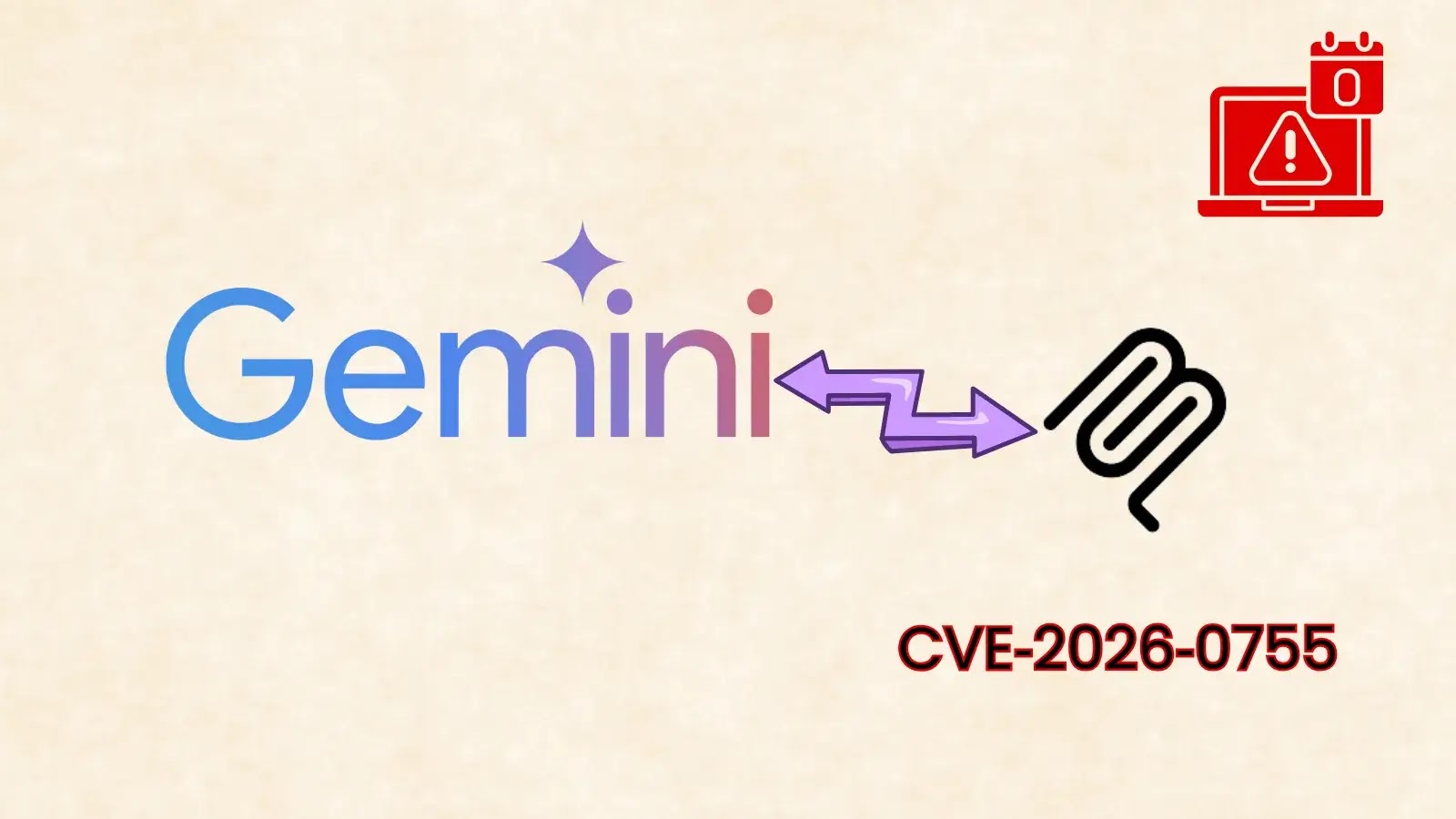
Gemini MCP Tool 0-day Vulnerability Allows Remote Attackers to Execute Arbitrary Code
A silent threat has emerged from the shadows, casting a long and concerning shadow over the security landscape. A critical zero-day vulnerability in the Gemini MCP Tool, a platform often integral to complex operational environments, now stands exposed. This flaw, capable of enabling remote attackers to execute arbitrary code without any prior authentication, represents a significant risk to organizations leveraging the tool. Understanding the intricacies of this vulnerability is paramount for any IT professional or security analyst responsible for safeguarding digital assets.
The Gemini MCP Zero-Day: A Deep Dive into Arbitrary Code Execution
The vulnerability, officially tracked as ZDI-26-021 and ZDI-CAN-27783, and assigned the identifier CVE-2026-0755, presents an alarming vector for compromise. Exploitation requires no authentication, meaning a malicious actor can potentially gain control of affected systems from a remote location with minimal effort. The ease of exploitation coupled with the severe impact of arbitrary code execution has warranted a maximum CVSS v3.1 score of 9.8. This near-perfect score underscores the critical nature of the flaw and the urgent need for mitigation. As highlighted by a recent advisory from Trend Micro’s Zero Day Initiative (ZDI), this is not a theoretical threat; it is an active vulnerability that demands immediate attention.
Understanding Remote Code Execution (RCE)
Remote Code Execution (RCE) is one of the most dangerous types of vulnerabilities cybersecurity professionals face. It allows an attacker to execute their own code on a remote system, effectively taking full control of the compromised machine. In the context of the Gemini MCP Tool’s zero-day, an unauthenticated RCE means an attacker doesn’t need to bypass login screens or possess valid credentials. They can simply send crafted malicious input to the vulnerable system and force it to execute commands. This could lead to a variety of devastating consequences, including:
- Data theft and exfiltration
- Installation of malware or ransomware
- Establishment of persistent backdoors
- Disruption of critical services
- Lateral movement within the network
The Impact of a 9.8 CVSS Score
A CVSS (Common Vulnerability Scoring System) score of 9.8 is reserved for vulnerabilities that are exceptionally severe. This score signals that the vulnerability is:
- Exploitable with low complexity: Attackers require minimal technical skill to exploit it.
- Requires no privileges: No authentication or special permissions are needed.
- High impact on confidentiality, integrity, and availability: A successful exploit can lead to complete loss of data confidentiality, integrity, and system availability.
- Network exploitable: The vulnerability can be exploited remotely over a network.
For organizations utilizing the Gemini MCP Tool, this score should serve as a stark warning. The potential for widespread compromise is significant if the vulnerability remains unaddressed.
Remediation Actions for the Gemini MCP Tool 0-day
Given the severity of this zero-day vulnerability, immediate action is crucial. While a permanent patch may still be in development, several steps can be taken to mitigate the risk:
- Monitor Vendor Advisories: Keep a close watch on official communications from Gemini MCP Tool developers and Trend Micro’s ZDI for patch releases and updated guidance.
- Network Segmentation: Isolate systems running the Gemini MCP Tool from critical network segments. Implement strict firewall rules to limit inbound and outbound connections to only what is absolutely necessary for the tool’s operation.
- Intrusion Detection/Prevention Systems (IDS/IPS): Configure IDS/IPS solutions to monitor for unusual traffic patterns or known attack signatures targeting the Gemini MCP Tool. While this is a zero-day, pattern analysis may still detect anomalous behavior.
- Least Privilege Principle: Ensure that the Gemini MCP Tool and any associated services run with the absolute minimum necessary privileges.
- Application Whitelisting: Implement application whitelisting to prevent unauthorized executables from running on systems hosting the Gemini MCP Tool.
- Regular Backups: Maintain comprehensive and regularly tested backups of all critical data associated with systems running the Gemini MCP Tool.
Tools for Detection and Mitigation
While direct detection of a zero-day can be challenging, several cybersecurity tools can aid in monitoring for anomalous activity and overall network security:
| Tool Name | Purpose | Link |
|---|---|---|
| Trend Micro Deep Security | Intrusion prevention, virtual patching, and server security. | https://www.trendmicro.com/en_ca/business/products/hybrid-cloud/deep-security.html |
| Snort | Open-source network intrusion prevention and detection system. | https://www.snort.org/ |
| Splunk Enterprise Security | SIEM for security monitoring, advanced threat detection, and incident response. | https://www.splunk.com/en_us/software/splunk-enterprise-security.html |
| Firewall Solutions (e.g., Palo Alto Networks, Fortinet) | Network segmentation, access control, and traffic filtering. | https://www.paloaltonetworks.com/ |
Conclusion
The Gemini MCP Tool zero-day vulnerability, CVE-2026-0755, poses a critical and immediate threat due to its unauthenticated remote code execution capabilities and high CVSS score. Organizations using this tool must prioritize proactive security posture enhancements and vigilant monitoring. While awaiting an official patch, implementing the outlined remediation actions and leveraging robust cybersecurity tools will significantly reduce the attack surface and mitigate potential damage. Staying informed and acting decisively are the best defenses against such severe vulnerabilities.