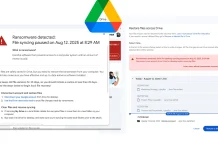
Google Unveils Ransomware Detection and File Restoration for Google Drive
Google Fortifies Drive with Advanced Ransomware Detection and File Restoration
In an era where ransomware attacks plague organizations across all sectors, cybersecurity posture is paramount. Google has significantly bolstered its defenses for Google Drive users, announcing the general availability of its advanced ransomware detection and file restoration features. This critical enhancement, initially previewed in beta in September 2023, delivers a formidable shield against sophisticated malware targeting both local systems and cloud synchronization pipelines, marking a pivotal step in securing cloud-based data.
Enhanced Security Against Cloud-Synchronized Malware
The proliferation of ransomware has made cloud storage a lucrative target for attackers. Malicious software, often delivered via phishing attacks or exploited vulnerabilities, can encrypt local files that then propagate to synchronized cloud drives. Google’s new solution directly addresses this threat. By integrating intelligent detection mechanisms within Google Drive, the system actively monitors for suspicious activity indicative of ransomware encryption.
This proactive approach helps mitigate the devastating impact of data loss and business disruption. When ransomware activity is detected, the system is designed to alert users and administrators, providing a crucial window to isolate affected systems and prevent wider infection. The underlying artificial intelligence model, driving this release, has undergone significant performance improvements since its beta phase, ensuring more accurate and faster detection capabilities.
Rollback Capabilities for Ransomware Recovery
Beyond detection, the most compelling feature of this update is its file restoration functionality. Should a ransomware incident occur, organizations can leverage Google Drive’s new capabilities to roll back affected files to a pre-encryption state. This feature is a game-changer for business continuity, drastically reducing recovery times and the potential need to pay ransoms.
The ability to restore clean versions of files directly from Google Drive minimizes the operational overhead associated with traditional disaster recovery processes. It essentially provides an integrated, cloud-native backup solution specifically tailored for ransomware scenarios, giving organizations a vital safety net against these debilitating attacks.
Key Benefits for Organizations and IT Professionals
The general availability of Google Drive’s ransomware detection and file restoration offers several compelling advantages for enterprises and IT professionals:
- Proactive Protection: Real-time monitoring and advanced AI detect ransomware patterns before widespread damage occurs.
- Reduced Downtime: Rapid file restoration capabilities significantly cut down recovery times post-attack.
- Cost Savings: Mitigates potential financial losses associated with ransom payments, data loss, and operational disruptions.
- Enhanced Data Integrity: Ensures the availability of uncorrupted data, safeguarding critical business information.
- Simplified Security Management: Integrates seamlessly within the Google Drive ecosystem, simplifying security posture management for administrators.
Remediation Actions: Fortifying Your Google Drive Defenses
While Google’s new features offer robust protection, a multi-layered security strategy remains essential. Here are key actions IT professionals should take:
- Educate Users: Conduct regular security awareness training emphasizing phishing prevention and the dangers of suspicious links or attachments.
- Implement Strong Authentication: Enforce multi-factor authentication (MFA) for all Google accounts to prevent unauthorized access.
- Regularly Review Access Permissions: Ensure that users only have access to the files and folders necessary for their roles, adhering to the principle of least privilege.
- Maintain Local Endpoint Protection: Deploy and regularly update robust antivirus and anti-malware solutions on all local machines that sync with Google Drive.
- Backup Critical Data: While Google Drive offers restoration, maintaining separate, offline backups of critically sensitive data adds another layer of resilience.
- Monitor Google Workspace Logs: Regularly analyze audit logs within Google Workspace for unusual activity or unauthorized access attempts.
Conclusion: A Stronger Defense in the Cloud
Google’s full rollout of ransomware detection and file restoration for Google Drive represents a significant advancement in cloud security. By combining advanced AI-driven threat detection with robust recovery mechanisms, Google is providing organizations with powerful tools to combat one of today’s most prevalent cyber threats. This moves Google Drive from merely a storage solution to a more secure platform for critical business data, giving IT professionals and businesses greater peace of mind in their cloud-first strategies.