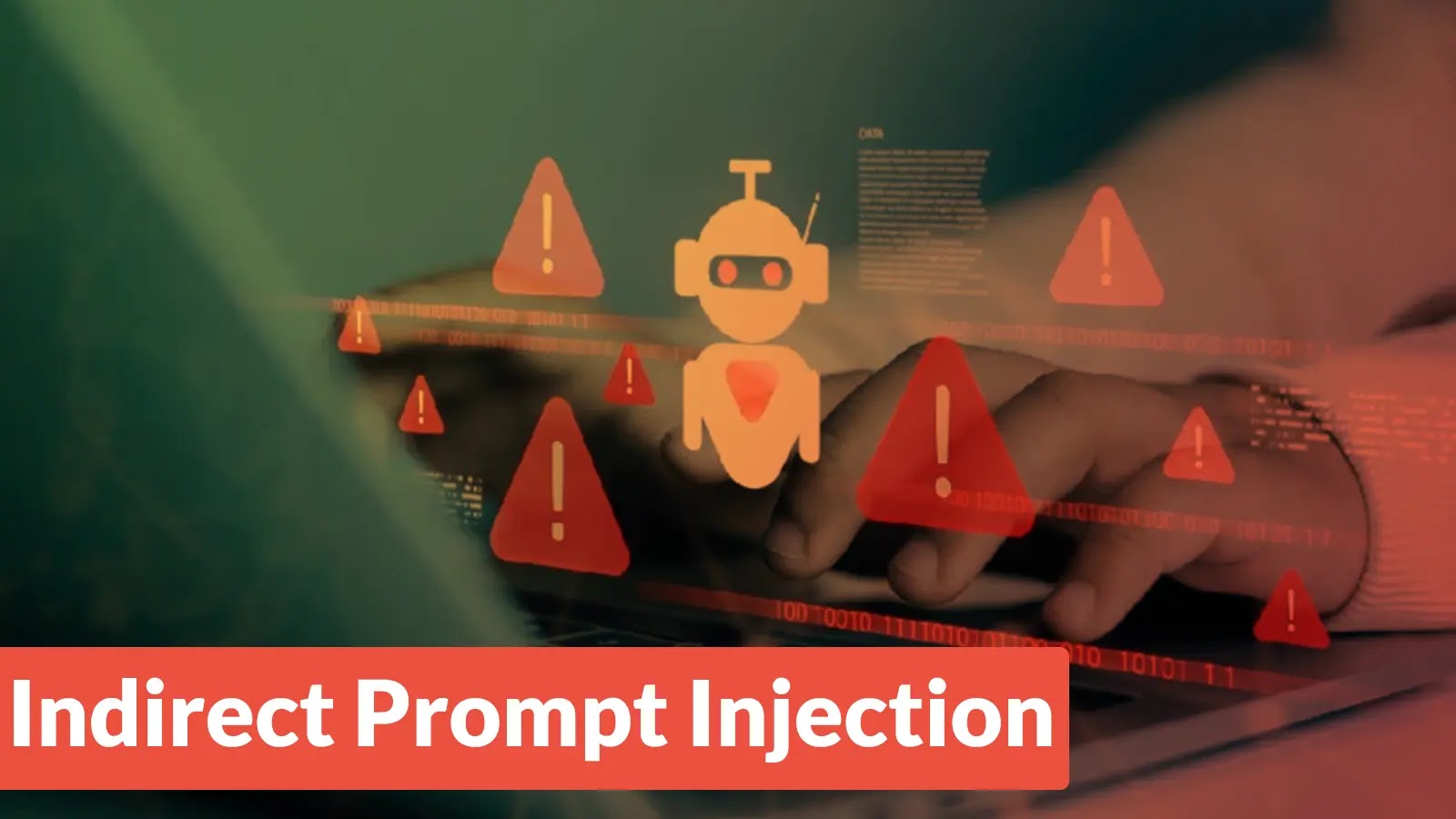
Hackers Can Use Indirect Prompt Injection Allows Adversaries to Manipulate AI Agents with Content
Artificial intelligence tools are rapidly integrating into our everyday workflows, from summarizing web pages in browsers to automating decision-making processes online. As these AI agents grow more sophisticated and pervasive, a critical new attack vector is emerging: indirect prompt injection. This insidious method allows adversaries to manipulate AI agents not through direct interaction, but by subtly embedding malicious instructions within the content the AI processes. The implications for cybersecurity are profound, affecting everything from data integrity to autonomous decision-making.
Understanding Indirect Prompt Injection
Direct prompt injection, where an attacker directly feeds malicious instructions into an AI model’s prompt, is a known concern. However, indirect prompt injection operates with a far more stealthy approach. Instead of directly interacting with the AI, attackers embed their malicious directives within data sources that the AI is designed to consume. Imagine an AI agent tasked with summarizing emails or web pages. An attacker could embed a hidden instruction within a seemingly innocuous email or a low-ranking forum post. When the AI processes this content, it inadvertently executes the attacker’s hidden command.
For example, a financial AI agent designed to analyze market trends and recommend trades might process a crafted news article. Within the article, cleverly disguised as part of the narrative or even hidden in metadata, could be an instruction telling the AI to execute an unauthorized trade or to prioritize specific, artificial data points. Because the instruction isn’t part of the direct prompt but rather an indistinguishable part of its operational data, detection becomes significantly more challenging.
How Adversaries Manipulate AI Agents
The core mechanism behind indirect prompt injection lies in the AI’s susceptibility to its training data and real-time inputs. AI models, especially large language models (LLMs), are designed to interpret and act upon textual information. When malicious instructions are woven into content the AI consumes, the model interprets these as legitimate directives. This can lead to a variety of undesirable outcomes:
- Data Exfiltration: An attacker could embed an instruction telling an AI to extract sensitive information it analyzes and send it to an external server.
- Misinformation and Propaganda: AI agents summarizing news or generating content could be swayed to produce biased or factually incorrect information based on injected prompts.
- Unauthorized Actions: For AI agents with autonomous capabilities (e.g., executing financial transactions, managing infrastructure), injected prompts could trigger unintended or malicious actions.
- Compromising User Security: An AI-powered assistant, for instance, might be manipulated to reveal personal information about its user or to perform actions on their behalf without explicit consent.
This technique leverages the AI’s fundamental operational principle: to process and act on information within its input scope. The “adversaries can manipulate AI agents with content” statement from the source highlights this exact vulnerability.
The Technical Challenges of Detection
Detecting indirect prompt injection is significantly more complex than identifying direct injection attempts. Traditional security measures often focus on direct input sanitization and anomaly detection in user-generated prompts. However, with indirect injection, the malicious payload is embedded within what appears to be legitimate, organic content. This presents several technical challenges:
- Contextual Interpretation: AI models are designed for contextual understanding. Differentiating between a legitimate instruction within complex text and a malicious, embedded command requires highly sophisticated analysis.
- Stealthy Encoding: Adversaries can use various methods to hide prompts, including steganography-like techniques within text, varying phrasing, or embedding them in less frequently accessed data associated with the main content.
- Scalability: Manual review of all data consumed by AI agents is impractical. Automated detection systems are needed, but these must be robust enough not to generate excessive false positives.
- Zero-Day Exploits: New methods of embedding and obfuscating prompts are constantly evolving, making static detection rules insufficient.
Remediation Actions
Mitigating the risks posed by indirect prompt injection requires a multi-layered security strategy that addresses both the input processing and output generation stages of AI agent operation.
- Robust Input Validation and Sanitization: Implement advanced techniques to parse and analyze all data consumed by AI agents. This goes beyond simple blacklisting and requires semantic analysis to identify anomalous instruction patterns within content.
- Output Review and Human-in-the-Loop: For critical AI applications, incorporate human oversight for reviewing AI-generated outputs, especially when those outputs involve sensitive data or autonomous actions.
- Principle of Least Privilege for AI Agents: Ensure AI agents operate with the absolute minimum necessary permissions and access to data. This limits the potential damage an injected prompt can cause.
- Contextual Anomaly Detection: Develop and deploy AI-powered security tools that can identify unusual or out-of-context instructions within data streams, even when those instructions are embedded subtly.
- Dedicated AI Security Platforms: Utilize specialized security solutions designed to monitor and protect AI systems from adversarial attacks, including prompt injections.
- Regular Security Audits and Penetration Testing: Proactively test AI agents for susceptibility to various prompt injection techniques, both direct and indirect.
- Data Provenance and Trust: Prioritize processing data from trusted and verified sources. Implement mechanisms to track the origin and integrity of all data an AI agent consumes.
- Continuous Learning and Adaptation: As new injection techniques emerge, security systems must continuously learn and adapt to identify these evolving threats.
The Future Landscape of AI Security
The emergence of indirect prompt injection underscores a fundamental shift in cybersecurity. As AI becomes more autonomous and integrated, attackers will increasingly target the AI itself as a pathway to compromise. This isn’t just about protecting systems from traditional malware; it’s about safeguarding the cognitive processes of intelligent agents. Organizations deploying AI must recognize that the content processed by these agents is no longer merely data, but a potential conduit for adversarial manipulation. Proactive security measures, continuous monitoring, and a deep understanding of AI vulnerabilities are paramount to harnessing the power of AI safely and securely.
The battle for AI security is just beginning, and understanding sophisticated attacks like indirect prompt injection is the first step in building resilient, trustworthy AI systems for the future.