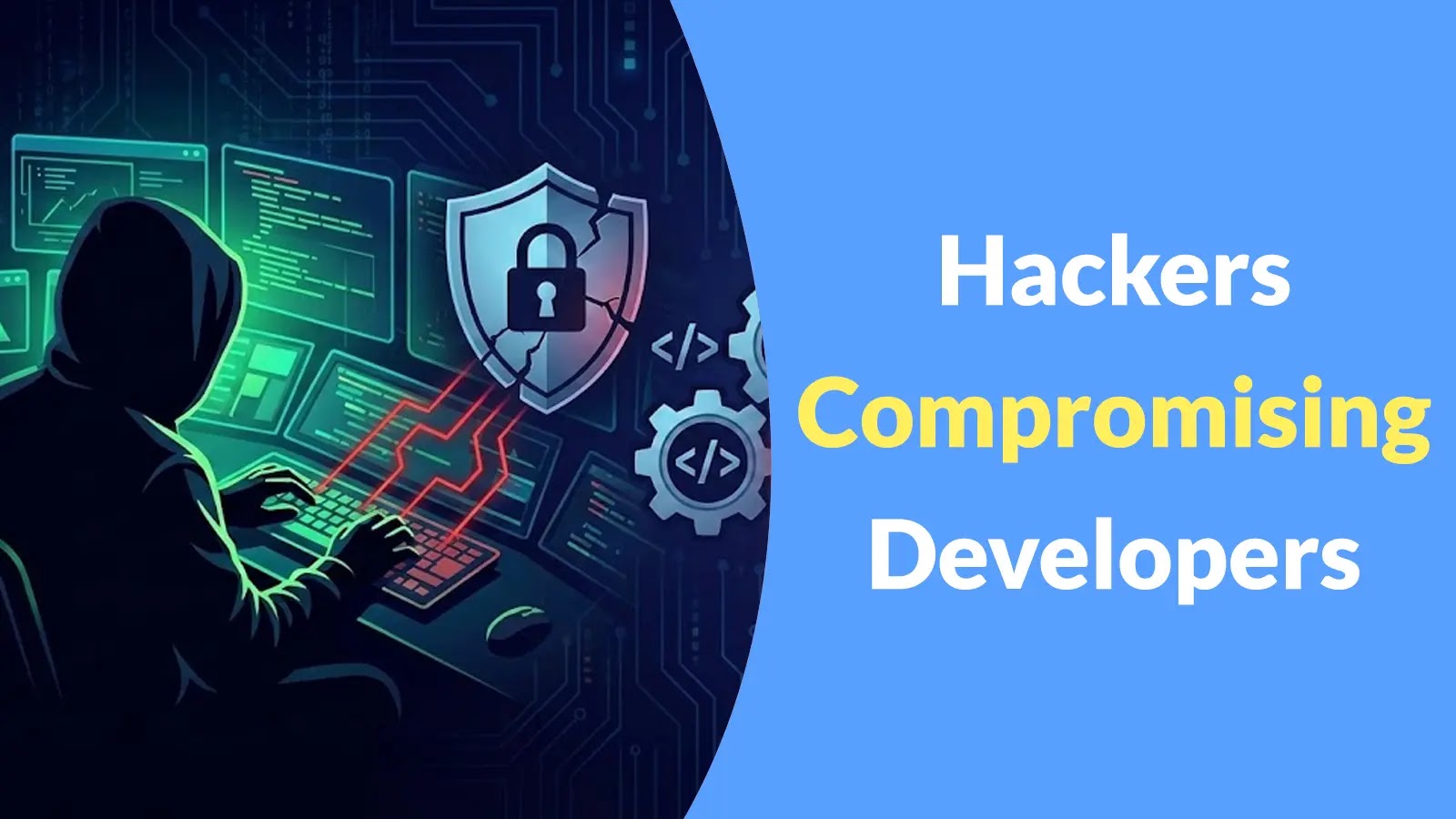
Hackers Compromising Developers with Malicious VS Code, Cursor AI Extensions
The code that builds our digital world is under attack. Developers, the architects of modern software, are increasingly becoming prime targets for sophisticated cybercriminals. This isn’t just about phishing emails anymore; attackers are now compromising the very tools developers rely on daily: integrated development environments (IDEs) like Visual Studio Code and AI-powered platforms such as Cursor AI. These compromised tools, particularly through their vast extension marketplaces, introduce a critical and often overlooked vulnerability in the software supply chain.
Unlike regular end-users, developers possess a goldmine of sensitive access: source code repositories, cloud credentials, production environments, and proprietary data. A successful breach at this level can cascade, compromising entire organizations and their user base. This blog post delves into how malicious extensions for VS Code and Cursor AI are being leveraged by attackers, the profound implications for software supply chain security, and crucial remediation strategies.
The Developer as a High-Value Target
Developers are often seen as the gatekeepers of innovation, but this pivotal role also places them squarely in the crosshairs of cyber adversaries. The reason is simple: elevated access. Through their daily work, developers interact with, create, and manage resources that are incredibly valuable to attackers:
- Source Code Repositories: Access to an organization’s intellectual property, secrets, and potential vulnerabilities.
- Cloud Infrastructure Credentials: Keys to critical cloud environments, databases, and sensitive data stores.
- Production Systems: The ability to deploy malicious code directly into live applications and services.
- Internal Networks: A potential pivot point for lateral movement within an organization’s infrastructure.
- Supply Chain Injection Points: The capacity to introduce backdoors or compromises into software before it even reaches end-users.
Compromising a developer’s workstation or their development environment provides attackers with a direct pathway to these high-value assets, often bypassing layers of perimeter defenses.
Malicious Extensions: A New Frontier for Attackers
The extensibility of modern IDEs, while a boon for productivity, has opened a dangerous new attack surface. Visual Studio Code, with its immense popularity and a marketplace boasting thousands of extensions, is particularly vulnerable. Similarly, newer AI-powered IDEs like Cursor AI, designed to enhance developer workflows, are also susceptible.
Attackers exploit the trust developers place in these extensions. A malicious extension, once installed, can:
- Exfiltrate Credentials: Harvest API keys, access tokens, and other authentication data stored on the developer’s machine or accessed during development.
- Inject Malicious Code: Modify source code during development, introducing backdoors or vulnerabilities that will then be compiled and deployed.
- Establish Persistence: Create remote shells, launch reverse connections, or install additional malware on the developer’s workstation.
- Manipulate Build Processes: Interfere with build scripts or CI/CD pipelines to subtly alter deployed software.
These attacks are particularly insidious because the malicious code often masquerades as legitimate functionality, making detection challenging. The reference provided by Cyber Security News highlights the severity of this threat, emphasizing that these attacks target the very heart of the software development lifecycle.
The Software Supply Chain Under Threat
The compromise of developer tools directly impacts the integrity of the software supply chain. Every piece of software we use today relies on a complex web of libraries, components, and tools. If any link in this chain is compromised, the entire edifice is at risk.
A malicious VS Code or Cursor AI extension essentially allows an attacker to inject malware at the earliest possible stage: during development. This can lead to:
- Widespread Distribution of Malware: If a compromised developer contributes to a popular open-source project or an internal company product, the malicious code can quickly propagate to thousands or millions of users.
- “Trojan Horse” Attacks: Legitimate software updates can unwittingly carry malicious payloads introduced by an attacker.
- Reputational Damage: Companies whose software is compromised due to a supply chain attack can face severe reputational and financial consequences.
Understanding and mitigating this threat requires a shift in focus from solely protecting production environments to securing the entire development ecosystem.
Remediation Actions for Developers and Organizations
Protecting against malicious VS Code and Cursor AI extensions requires a multi-layered approach involving technical controls, process changes, and continuous vigilance.
For Developers:
- Scrutinize Extensions: Before installing any extension, check its publisher, reviews, download count, and permissions requested. Be wary of extensions with few downloads or suspicious permissions.
- Limit Privileges: Run your development environment with the principle of least privilege. Avoid using administrator accounts for daily coding tasks.
- Regularly Update Tools: Keep VS Code, Cursor AI, and all installed extensions updated to benefit from the latest security patches.
- Isolate Development Environments: Consider using virtual machines or containers for critical development work, isolating them from your primary OS.
- Monitor Network Traffic: Be alert to unusual outgoing network connections from your IDE or development processes.
- Educate Yourself: Stay informed about the latest threats targeting developer tools and supply chain attacks.
For Organizations:
- Establish Whitelists/Blacklists: Implement policies to approve or restrict certain extensions in IDE marketplaces.
- Implement Code Signing: Ensure all internal code is signed, and verify signatures for third-party dependencies.
- Static and Dynamic Analysis: Use SAST (Static Application Security Testing) and DAST (Dynamic Application Security Testing) tools throughout the development lifecycle to detect anomalies and vulnerabilities.
- Dependency Scanning: Regularly scan your project dependencies for known vulnerabilities (e.g., using tools that check against CVE-XXXX-XXXXX entries).
- Endpoint Detection and Response (EDR): Deploy EDR solutions on developer workstations to detect and respond to suspicious activity.
- Security Awareness Training: Provide regular training for developers specifically on supply chain risks and secure coding practices.
- Supply Chain Risk Management: Develop a comprehensive strategy for managing risks associated with third-party components and tools.
Detection and Mitigation Tools
Leveraging the right tools can significantly enhance your ability to detect and mitigate malicious extensions and supply chain vulnerabilities.
| Tool Name | Purpose | Link |
|---|---|---|
| Snyk | Dependency scanning, SAST, secret detection, open-source vulnerability management | https://snyk.io/ |
| TruffleHog | Finds secrets and credentials embedded in code and commit history | https://trufflesecurity.com/trufflehog/ |
| GitGuardian | Real-time secret detection and remediation across the development lifecycle | https://www.gitguardian.com/ |
| VS Code Marketplace Web Interface | Review extension details, publisher info, and permissions | https://marketplace.visualstudio.com/vscode |
| VirusTotal | Analyze suspicious files or URLs (e.g., extension packages) for malware | https://www.virustotal.com/gui/home/upload |
Note: Regular security audits and penetration testing of your development environment should also be part of your overall security strategy. For example, staying informed about vulnerabilities like CVE-2022-26134, which affected Atlassian products, demonstrates the importance of monitoring all components of the development ecosystem.
Conclusion
The targeting of developers through malicious IDE extensions represents a significant evolution in cyberattack strategies. As the initial entry point into the software supply chain, a compromised development environment can have catastrophic consequences for organizations, leading to data breaches, intellectual property theft, and widespread trust erosion. By understanding these sophisticated threats and implementing robust security practices—from individual developer vigilance to organizational-level controls and advanced tooling—we can collectively build a more resilient and secure software ecosystem. Protecting our developers is not just good practice; it is essential for the security of our digital future.