Hackers Exploiting React Native’s Metro Server in the Wild to Attack Developers
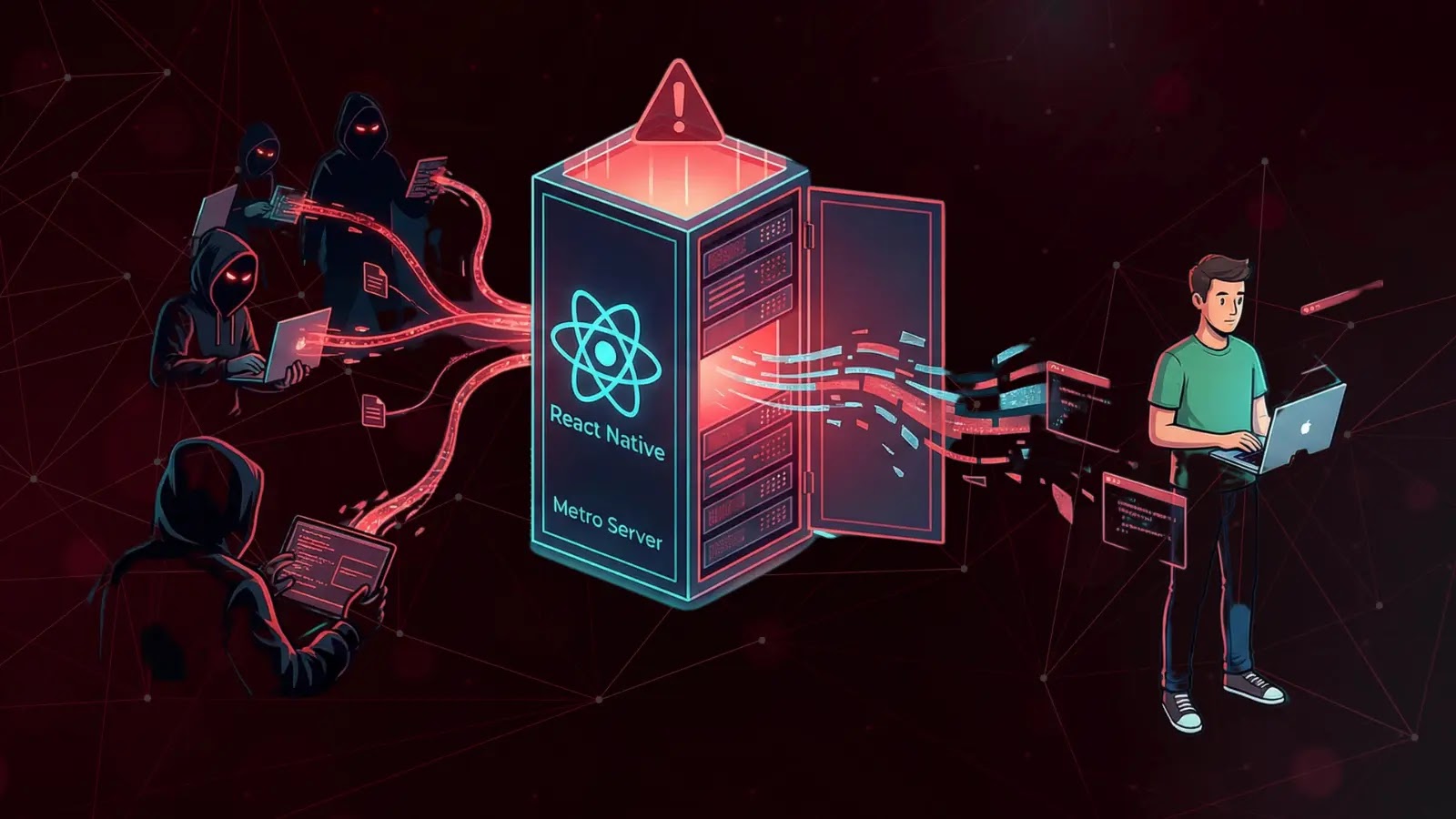
A disturbing trend has emerged in the cybersecurity landscape: threat actors are actively leveraging a critical remote code execution (RCE) vulnerability within React Native’s Metro Development Server. This isn’t theoretical; we’re witnessing live, in-the-wild exploitation to deliver sophisticated malware payloads, targeting developer systems running both Windows and Linux.
The implications of such an attack are significant, potentially compromising development environments, stealing intellectual property, and establishing persistent footholds within organizations. Understanding this vulnerability and implementing timely countermeasures is paramount for any organization utilizing React Native.
Understanding the “Metro4Shell” Exploitation
The vulnerability, tracked as CVE-2025-11953 and dubbed “Metro4Shell” by researchers, centers on React Native’s Metro Development Server. This server, essential for bundling JavaScript for React Native applications, appears to have a critical flaw allowing for remote code execution. This means an attacker can force the server to run malicious code on a developer’s machine without authorization.
Detection of this exploitation first occurred on December 21, 2025, through VulnCheck’s Canary honeypot network. What started as an initial detection has evolved into continued attacks observed throughout January 2026. Despite this sustained activity, the vulnerability remains largely unpatched in many environments, leaving a wide attack surface open to threat actors.
The Threat: Advanced Malware to Developer Systems
The primary concern with “Metro4Shell” is its use as a conduit for delivering advanced malware. Threat actors are not simply defacing systems; they are installing sophisticated software designed for reconnaissance, data exfiltration, and potentially, broader network compromise. Developers, often with elevated permissions and access to source code and sensitive data, represent high-value targets for attackers.
The ability to deliver malware across both Windows and Linux operating systems indicates a versatile and well-resourced adversary. This cross-platform capability magnifies the potential impact, as development teams often utilize a mix of operating systems.
Remediation Actions
Immediate action is crucial to mitigate the risks associated with CVE-2025-11953. Developers and organizations using React Native must prioritize these steps:
- Patch Immediately: The most critical step is to apply any available patches or updates for the Metro Development Server. Monitor official React Native announcements and security advisories for the official fix for CVE-2025-11953.
- Isolate Development Environments: Implement network segmentation to isolate development machines and servers from less trusted networks. This can limit the lateral movement of an attacker if a system is compromised.
- Restrict Network Access: Ensure that the Metro Development Server is not directly exposed to the internet. If external access is absolutely necessary, secure it with strong authentication and strict IP whitelisting.
- Implement Least Privilege: Developers should operate with the lowest possible privileges required for their tasks. This minimizes the potential damage if their system is compromised.
- Monitor for Suspicious Activity: Deploy Endpoint Detection and Response (EDR) solutions on development machines to detect and alert on unusual process activity, network connections, or file modifications.
- Educate Developers: Reiterate best security practices for developers, including vigilance against phishing, suspicious links, and unexpected script executions.
- Review Supply Chain Security: Evaluate the broader software supply chain. A compromise in third-party libraries or dependencies could introduce new vulnerabilities.
Security Tools for Detection and Mitigation
Leveraging appropriate tools can significantly enhance an organization’s ability to detect and mitigate threats like “Metro4Shell.”
| Tool Name | Purpose | Link |
|---|---|---|
| YARA Rules | Malware detection based on pattern matching | https://virustotal.github.io/yara/ |
| Endpoint Detection and Response (EDR) Solutions | Detecting and responding to sophisticated threats on endpoints | (Vendor-specific, e.g., CrowdStrike, SentinelOne) |
| Network Intrusion Detection Systems (NIDS) | Monitoring network traffic for malicious activity | (e.g., Snort, Suricata) |
| Vulnerability Scanners | Identifying unpatched software and configurations | (e.g., Nessus, OpenVAS) |
| Firewalls & Web Application Firewalls (WAFs) | Controlling network access and protecting web applications | (Various commercial & open source options) |
Conclusion
The ongoing exploitation of React Native’s Metro Development Server via CVE-2025-11953, or “Metro4Shell,” represents a clear and present danger to development teams. The delivery of advanced malware to both Windows and Linux systems underscores the sophisticated nature of these attacks. Proactive patching, rigorous network segmentation, and stringent security practices are essential to protect development environments from this critical threat. Organizations must act decisively to secure their React Native infrastructure and safeguard their intellectual property against these persistent adversaries.