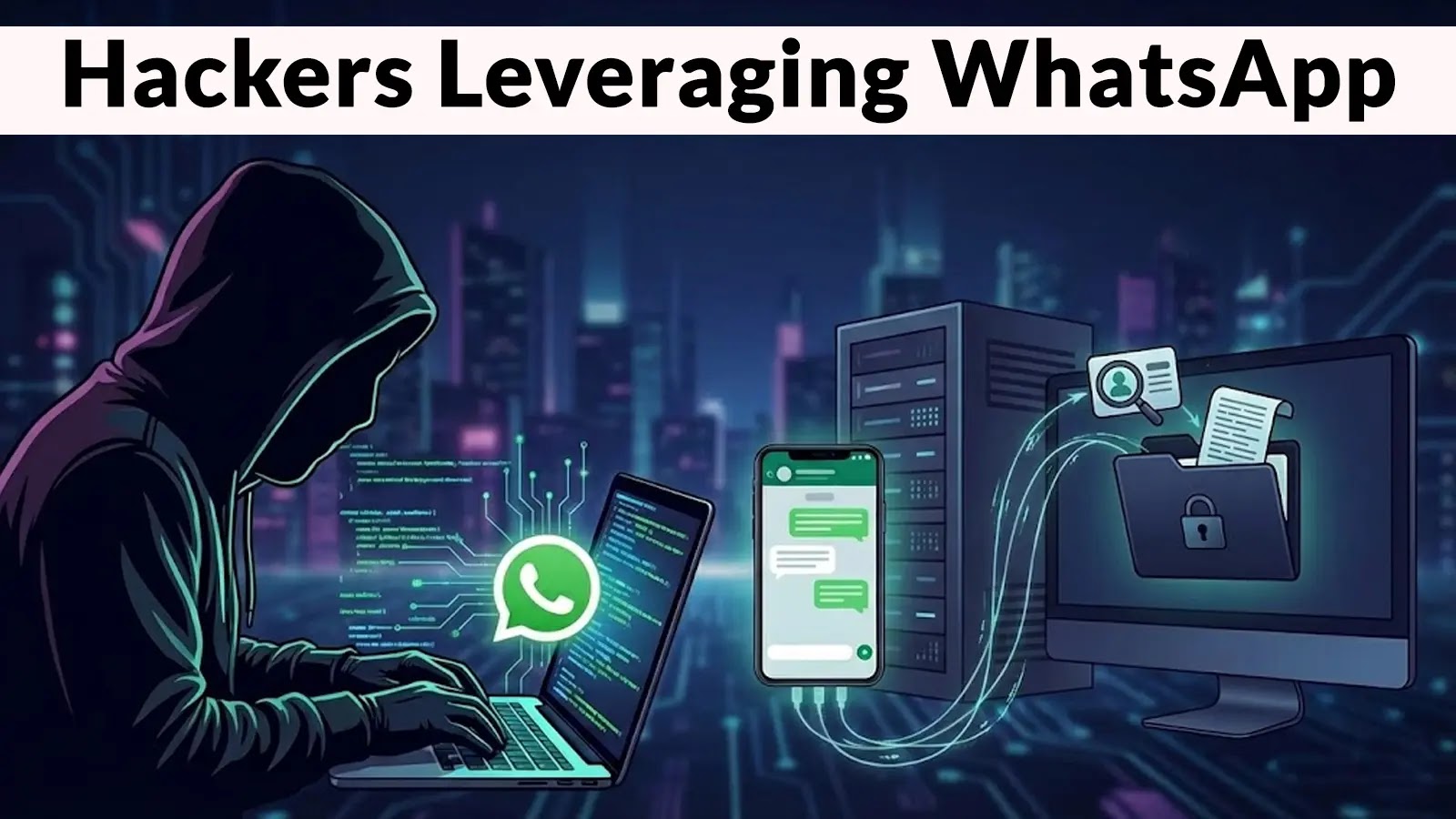
Hackers Leveraging WhatsApp That Silently Harvest Logs and Contact Details
A disturbing new cyber campaign is exploiting the trust users place in their WhatsApp contacts, silently siphoning off sensitive data and financial information. This sophisticated attack, primarily targeting Brazilian users, leverages social engineering tactics to distribute banking trojans and compromise personal privacy.
The Devious Campaign: How WhatsApp Becomes a Weapon
This latest threat highlights a critical vulnerability in human behavior: our inherent trust in familiar communication channels. Attackers are weaponizing WhatsApp, turning a platform designed for connection into a conduit for compromise. The campaign initiates with cunning phishing emails, often disguised to appear legitimate, containing archived VBS (Visual Basic Script) files. Once a user is lured into executing these seemingly innocuous files, the infection chain begins, ultimately leading to the installation of potent banking trojans.
Social Engineering: The Key to Initial Access
The success of this malware campaign hinges on sophisticated social engineering. Attackers meticulously craft their phishing emails and subsequent WhatsApp messages to appear as if they originate from trusted contacts or legitimate organizations. This calculated deception preys on victims’ assumptions, leading them to open malicious attachments or click on harmful links. The VBS files, often bundled with seemingly harmless documents, act as the initial gateway for the malware to establish a foothold on the victim’s device.
Banking Trojans and Data Harvesting
Once activated, the banking trojans deployed in this campaign are designed for maximum damage. Their primary objectives include:
- Credential Theft: Capturing login details for online banking platforms and other financial services.
- Financial Fraud: Initiating unauthorized transactions or diverting funds.
- Sensitive Data Exfiltration: Silently harvesting contact lists, call logs, SMS messages, and other personal information stored on the device.
- Persistent Access: Establishing backdoor access to maintain control over the compromised system.
The stealthy nature of these trojans means victims often remain unaware of the compromise until significant financial losses or privacy breaches have occurred.
Remediation Actions: Fortifying Your Digital Defenses
Protecting against such intricate attacks requires a multi-layered approach emphasizing both technological safeguards and user awareness:
- Exercise Extreme Caution with Emails: Always verify the sender of any email, especially those containing attachments or links. Look for inconsistencies in sender addresses, grammatical errors, and suspicious requests.
- Inspect WhatsApp Messages: Even if a message appears to come from a known contact, be wary of unexpected attachments, links, or unusual requests for information. Directly contact the sender through an alternative, trusted channel to confirm legitimacy if something seems off.
- Disable VBS Script Execution (where feasible): For IT professionals managing corporate environments, consider policies that restrict or disable the execution of VBS scripts from untrusted sources. This can be a significant hurdle for many initial access vectors.
- Maintain Updated Antivirus/Anti-Malware Software: Ensure all devices have robust and up-to-date security software. Regularly scan your systems for threats.
- Enable Multi-Factor Authentication (MFA): Implement MFA on all critical accounts, especially banking and email services. This adds an essential layer of security even if credentials are compromised.
- Regular Data Backups: Periodically back up your important data to an external drive or cloud service. This mitigates the impact of data loss in case of a successful attack.
- Educate Users: Conduct regular cybersecurity awareness training to inform users about the latest social engineering tactics and phishing techniques.
Tools for Detection and Mitigation
Deploying the right tools is crucial for both preventing and responding to these types of threats:
| Tool Name | Purpose | Link |
|---|---|---|
| Endpoint Detection and Response (EDR) Solutions | Real-time threat detection, investigation, and response on endpoints. | (Consult your preferred EDR vendor) |
| Security Information and Event Management (SIEM) | Centralized logging and analysis to identify suspicious activity across the network. | (Consult your preferred SIEM vendor) |
| Email Security Gateways | Filters malicious emails, phishing attempts, and unwanted content before they reach inboxes. | (Consult your preferred email security vendor) |
| Threat Intelligence Platforms | Provides up-to-date information on emerging threats, IOCs, and attacker tactics. | (e.g., Mandiant, Recorded Future) |
| VirusTotal | Analyzes suspicious files and URLs for various malware signatures. | https://www.virustotal.com/ |
Insights and Key Takeaways
This incident underscores the evolving sophistication of cybercriminals and their adeptness at exploiting human psychology. The pivot to leveraging trusted platforms like WhatsApp for initial compromise marks a significant concern for both individual users and organizational security. The battle against these threats hinges on an informed user base, robust security infrastructure, and proactive threat intelligence. Remaining vigilant, questioning unsolicited communications, and adhering to cybersecurity best practices are paramount in safeguarding against these silent data harvests and financial depredations.