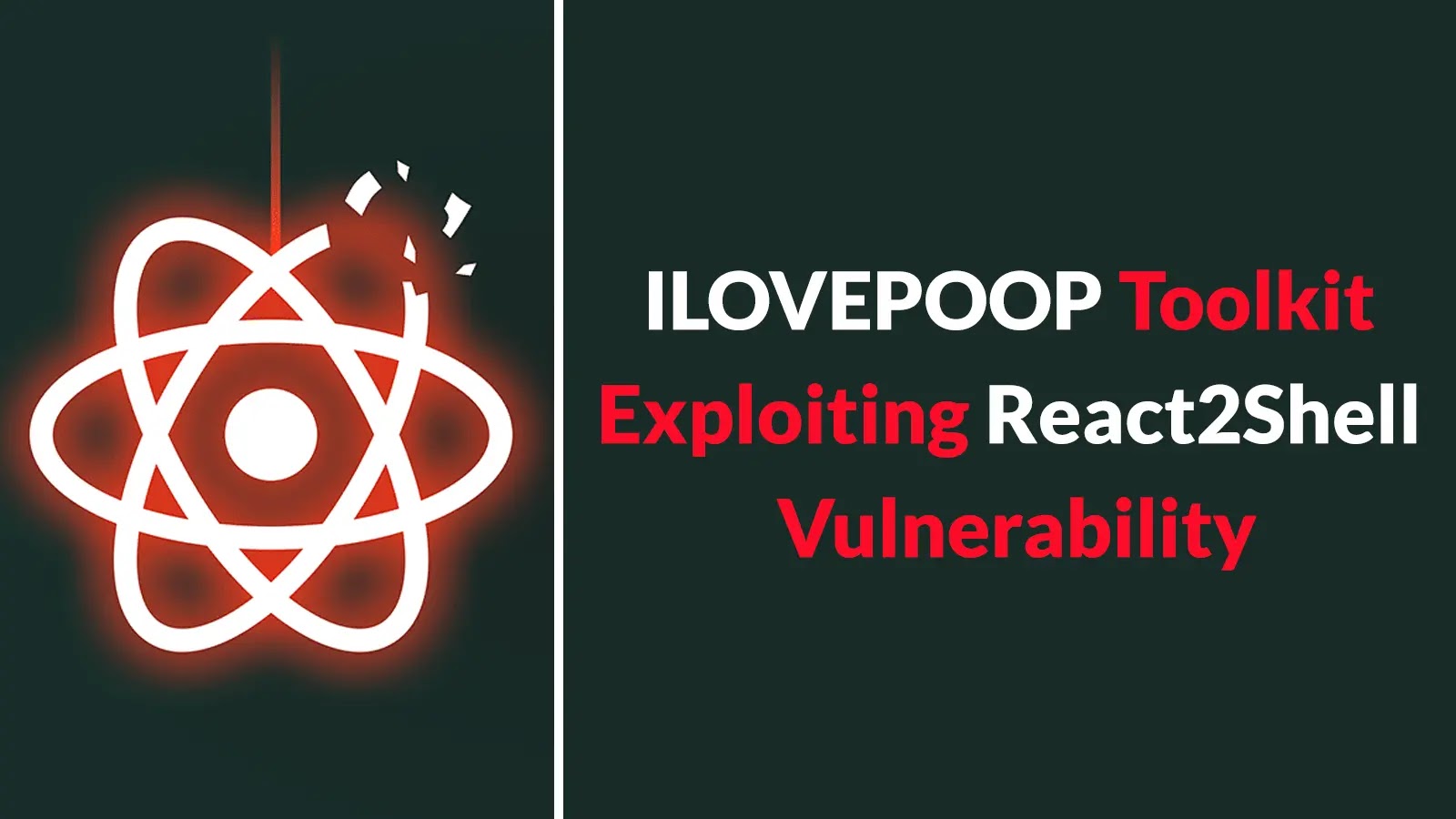
ILOVEPOOP Toolkit Exploiting React2Shell Vulnerability to Deploy Malicious Payload
Urgent Warning: ILOVEPOOP Toolkit Exploits React2Shell Vulnerability for Rapid Payload Deployment
The cybersecurity landscape has been rocked by the swift emergence of the “ILOVEPOOP” toolkit, leveraging the critical CVE-2025-55182 vulnerability, dubbed “React2Shell.” This flaw, affecting Next.js and React Server Components, has proven to be a significant threat, with threat actors mobilizing at an alarming pace to exploit internet-facing systems within mere hours of its public disclosure.
For IT professionals, security analysts, and developers, understanding the mechanics of this exploitation and implementing immediate countermeasures is paramount. This post delves into the specifics of React2Shell, the ILOVEPOOP toolkit’s utilization of it, and crucial steps to mitigate your systems against this urgent threat.
Understanding the React2Shell Vulnerability (CVE-2025-55182)
“React2Shell” (CVE-2025-55182) is a critical vulnerability that impacts applications built with Next.js and, more broadly, those utilizing React Server Components. Disclosed on December 4, 2025, this flaw presents a severe risk as it allows unauthenticated attackers to execute arbitrary code on vulnerable systems.
The core of React2Shell lies in its ability to bypass typical security mechanisms within these frameworks, enabling attackers to inject and run malicious commands. This type of vulnerability, often leading to Remote Code Execution (RCE), grants attackers extensive control over compromised servers, potentially leading to data exfiltration, service disruption, or further network penetration.
The ILOVEPOOP Toolkit: Weaponizing React2Shell
The speed at which threat actors weaponized CVE-2025-55182 is noteworthy. Within just 20 hours of its public disclosure, the “ILOVEPOOP” toolkit appeared, specifically designed to exploit React2Shell. This toolkit streamlines the attack process, allowing even less sophisticated attackers to target and compromise vulnerable Next.js and React Server Component deployments.
The ILOVEPOOP toolkit’s primary function is to deploy malicious payloads onto targeted systems. This could range from backdoors for persistent access, cryptocurrency miners, ransomware, or tools for establishing command-and-control (C2) communication. Its rapid development and deployment underscore the critical need for immediate defensive actions by organizations running affected technologies.
Impact of Successful React2Shell Exploitation
A successful exploitation of CVE-2025-55182 via the ILOVEPOOP toolkit can have devastating consequences:
- Full System Compromise: Attackers gain complete control over the affected server, enabling them to alter configurations, install malware, or delete critical data.
- Data Breach: Sensitive information, including user data, proprietary code, and intellectual property, can be exfiltrated.
- Service Disruption: Websites and applications can be defaced, taken offline, or used to launch further attacks.
- Financial Loss: Directly through ransomware, data loss penalties, or the costs associated with incident response and recovery.
- Reputational Damage: Loss of customer trust and significant harm to an organization’s brand.
Remediation Actions and Mitigation Strategies
Given the severity and active exploitation of , immediate action is crucial. Organizations must prioritize patching and implementing robust security measures.
- Patch Immediately: Apply all available security patches and updates for Next.js and any related React Server Component libraries as soon as they are released. Monitor official vendor announcements for patching schedules and instructions.
- Network Segmentation: Isolate systems running Next.js and React Server Components from the rest of your network to limit the blast radius in case of a compromise.
- Input Validation and Sanitization: While patches are primary, reinforce secure coding practices. Ensure all user inputs are rigorously validated and sanitized to prevent injection attacks, which might bypass future or unknown vulnerabilities.
- Web Application Firewall (WAF): Deploy and configure a WAF to detect and block suspicious requests targeting known React2Shell exploitation patterns. Regularly update WAF rulesets.
- Intrusion Detection/Prevention Systems (IDS/IPS): Implement and continuously monitor IDS/IPS solutions for indicators of compromise related to CVE-2025-55182 or the ILOVEPOOP toolkit’s activities.
- Regular Security Audits: Conduct frequent security audits and penetration testing on your Next.js applications to identify and address vulnerabilities proactively.
- Least Privilege Principle: Ensure that your Next.js applications and their underlying services run with the absolute minimum necessary privileges.
- Incident Response Plan: Have a well-defined and rehearsed incident response plan to quickly detect, contain, eradicate, and recover from potential exploitation.
Tools for Detection and Mitigation
| Tool Name | Purpose | Link |
|---|---|---|
| Next.js Official Updates | Primary source for patches and security advisories. | https://nextjs.org/blog (or official GitHub/security advisories) |
| OWASP ZAP | Automated web application security scanner for identifying vulnerabilities. | https://www.zaproxy.org/ |
| Burp Suite | Comprehensive toolkit for web security testing, including vulnerability scanning. | https://portswigger.net/burp |
| ModSecurity WAF | Open-source Web Application Firewall for protection against various attacks. | https://www.modsecurity.org/ |
| Snort/Suricata | Open-source intrusion detection/prevention systems. | https://www.snort.org/ (Snort) https://suricata-ids.org/ (Suricata) |
Conclusion
The emergence of the ILOVEPOOP toolkit, rapidly weaponizing the React2Shell vulnerability (CVE-2025-55182), underscores the zero-day to N-day exploitation challenge. Organizations leveraging Next.js and React Server Components must prioritize immediate patching and reinforce their existing security posture. Proactive monitoring, robust security tooling, and a well-prepared incident response capability are your strongest defenses against this rapidly evolving threat. Stay vigilant and ensure your systems are protected.