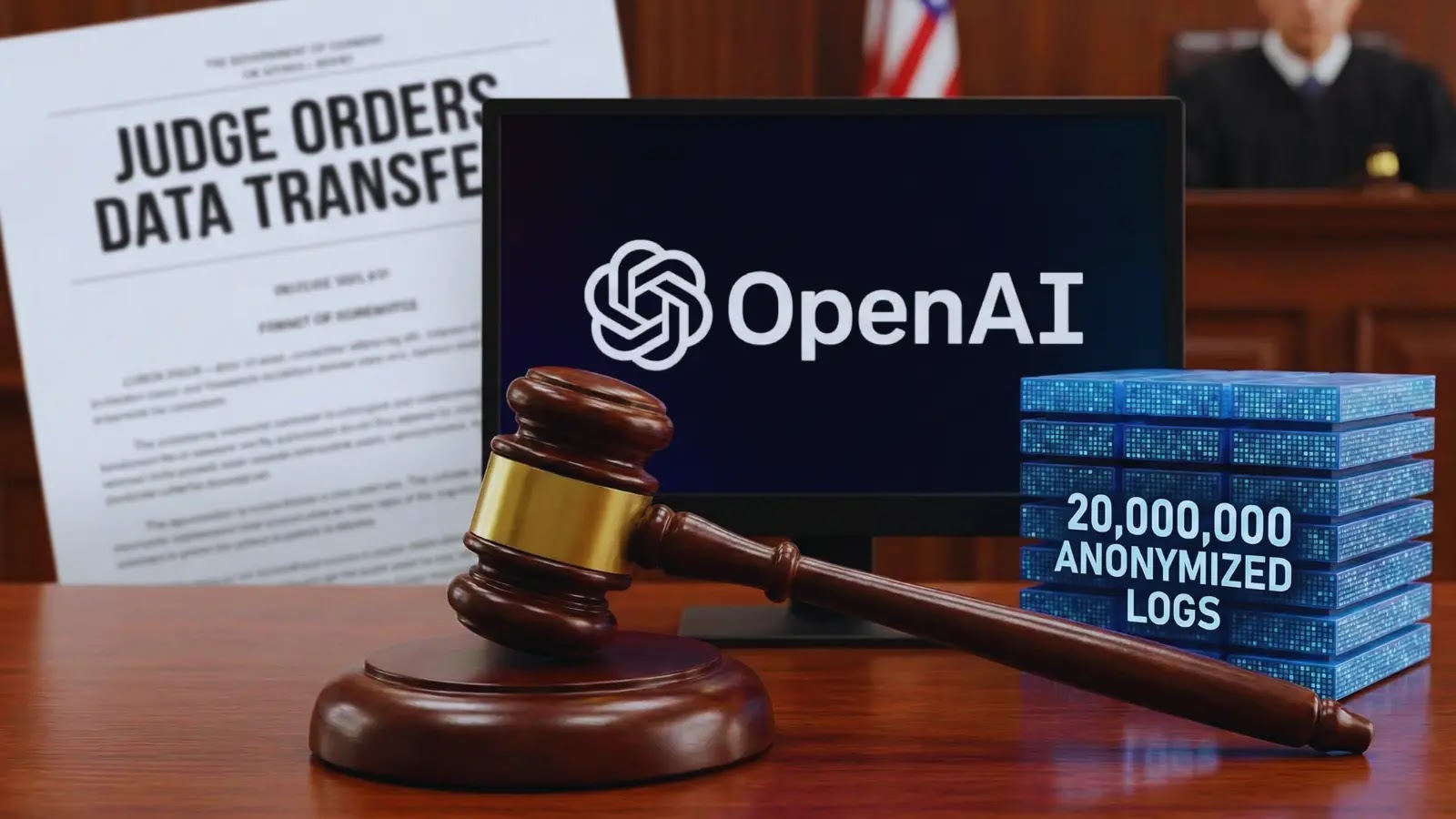
Judge Demands OpenAI to Release 20 Million Anonymized ChatGPT Chats in AI Copyright Dispute
The Unprecedented Demand: 20 Million Anonymized ChatGPT Logs Ordered in Copyright Showdown
The landscape of artificial intelligence is rapidly evolving, bringing with it a complex interplay of innovation and legal challenges. A recent federal court order has sent ripples through the AI community, demanding that OpenAI release 20 million anonymized user chats from ChatGPT. This directive, issued in a high-profile copyright lawsuit, underscores the intensifying scrutiny on how AI models are trained and the data they consume. For cybersecurity professionals, this isn’t just about copyright; it’s about data privacy, model transparency, and the precedent it sets for future AI development.
The Genesis of the Demand: A Landmark Copyright Suit
In a significant development, a federal judge in New York has compelled OpenAI to furnish anonymized logs of 20 million user interactions with its flagship generative AI model, ChatGPT. This decision stems from an ongoing copyright infringement lawsuit where plaintiffs allege that OpenAI’s models were trained using copyrighted material without proper authorization or compensation. The judge’s insistence on this data release, even in the face of OpenAI’s stated privacy concerns, reinforces an earlier ruling by a Magistrate Judge. This move highlights the judiciary’s growing intent to delve into the operational specifics of large language models (LLMs).
Understanding the Court’s Stance and OpenAI’s Concerns
District Judge Sidney H. Stein affirmed Magistrate Judge Ona T. Wang’s previous ruling, emphasizing the necessity for this data in the discovery phase of the lawsuit. The court views these anonymized chat logs as crucial evidence to ascertain the extent to which protected works may have influenced or appeared in ChatGPT’s outputs. OpenAI, while complying, has voiced reservations regarding user privacy. However, the court has prioritized the plaintiffs’ need for discovery, asserting that anonymization protocols will sufficiently mitigate privacy risks.
This ruling sets a critical precedent. While the data is anonymized, the sheer volume of 20 million interactions presents a colossal dataset for analysis. It raises questions about the definition and effectiveness of anonymization, particularly in machine learning contexts where re-identification risks, even with supposedly anonymized data, are a persistent concern. We’ve seen similar challenges in other data privacy contexts, though no specific CVE directly applies to this data disclosure, the implications for privacy and data handling are profound.
Implications for AI Development and Data Governance
The order for OpenAI to release 20 million chats carries significant implications for the broader AI industry:
- Increased Scrutiny on Training Data: This case will likely encourage more rigorous examination of the data used to train AI models. Developers may need to maintain more meticulous records of their training data sources and licensing agreements.
- The Efficacy of Anonymization: The focus on “anonymized” logs will test the boundaries of data privacy in large-scale AI applications. Cybersecurity teams will need to evaluate advanced anonymization techniques and re-identification risks more thoroughly.
- Transparency in AI: This decision pushes for greater transparency into the “black box” of AI model operations, particularly concerning how input data translates into output. This could lead to demands for more auditable AI systems.
- Legal Precedent: This ruling could serve as a blueprint for future copyright lawsuits against other AI developers, potentially leading to more widespread demands for training data or interaction logs.
The Cybersecurity Perspective: Data Privacy and Enterprise AI
From a cybersecurity standpoint, this ruling emphasizes the critical importance of robust data governance surrounding AI applications. Organizations deploying or developing AI solutions must consider:
- Data Minimization: Only collecting and retaining data absolutely necessary for AI functionality.
- Advanced Anonymization and Pseudonymization: Implementing state-of-the-art techniques to protect sensitive information within datasets, acknowledging that “anonymized” data isn’t always truly anonymous.
- Access Controls and Auditing: Strict controls over who can access AI training data and interaction logs, with comprehensive auditing capabilities.
- Legal Counsel Engagement: Proactive consultation with legal experts to understand copyright and data privacy implications when developing and deploying AI.
Key Takeaways for IT Professionals and AI Developers
The federal judge’s directive for OpenAI to release 20 million anonymized ChatGPT logs marks a pivotal moment in the intersection of AI, law, and data governance. This action underscores the growing judicial interest in the internal workings of AI models and the imperative for companies to demonstrate responsible data handling. For IT professionals, security analysts, and AI developers, the message is clear: understanding and mitigating the risks associated with AI training data, copyright infringement, and user privacy are no longer optional. Proactive attention to these areas will be crucial in navigating the evolving regulatory and legal landscape of artificial intelligence.