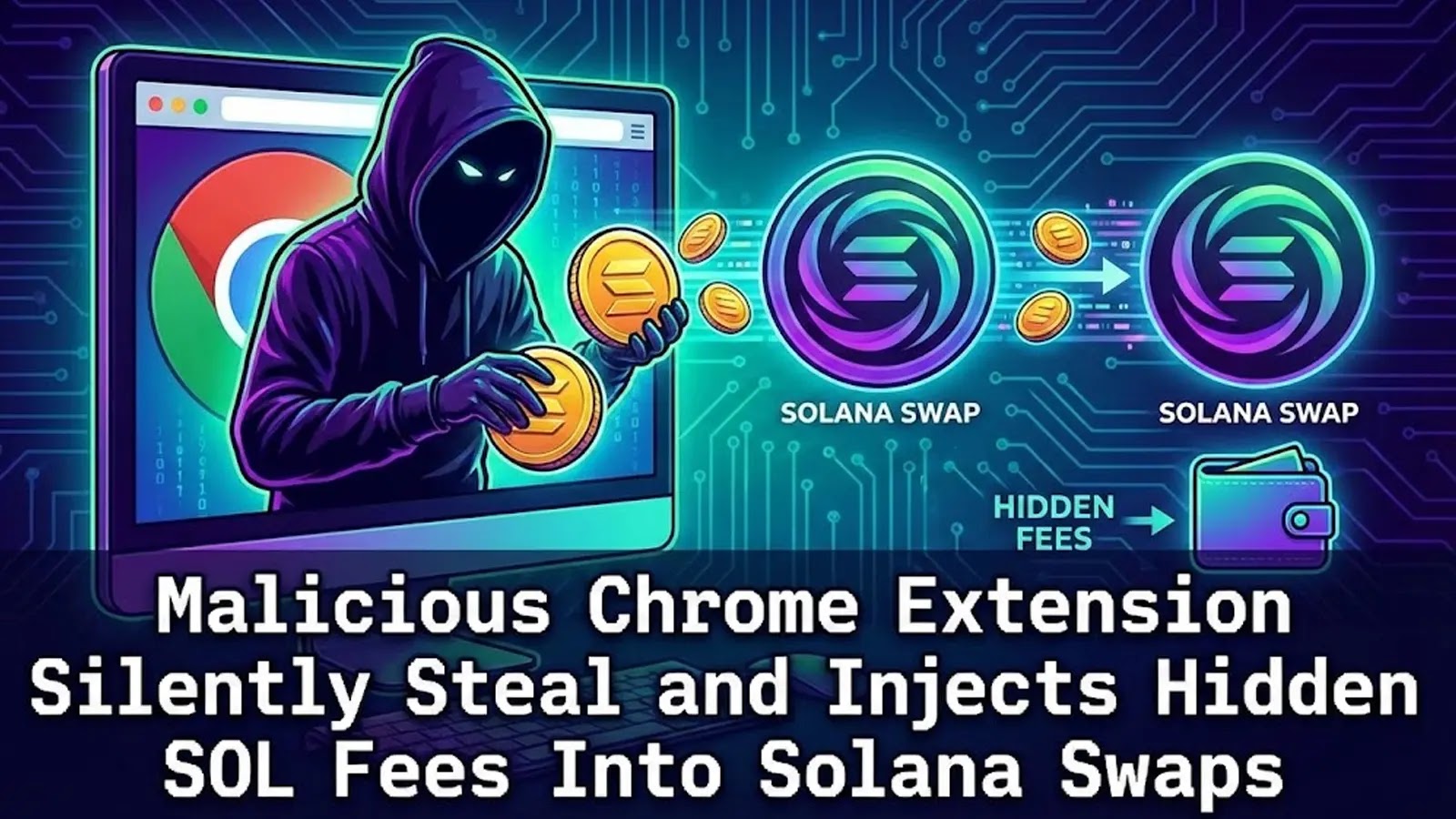
Malicious Chrome Extension Silently Steal and Injects Hidden SOL Fees Into Solana Swaps
The Silent Thief: Unmasking Malicious Chrome Extensions on Solana
In the vibrant, fast-paced world of cryptocurrency, convenience often comes at a hidden cost. For Solana traders, that cost recently manifested as a sophisticated supply chain attack executed through a seemingly innocuous Chrome extension. Security researchers have uncovered a new threat, “Crypto Copilot,” which masqueraded as a utility for Solana trading but silently siphoned funds by injecting hidden fees into transactions. This incident underscores the critical need for vigilance within the digital asset ecosystem and careful scrutiny of third-party browser extensions.
Crypto Copilot: A Wolf in Developer’s Clothing
The malicious Chrome extension, identified as Crypto Copilot, made its debut on the Chrome Web Store on June 18, 2024. Posing as a beneficial tool for managing Solana-based digital assets, its true purpose was far more sinister. Users who installed the extension unknowingly granted it the ability to intercept and manipulate their Solana transactions. While the extension promised features to streamline trading, its primary function was to inject an additional, hidden fee into swaps, effectively stealing a portion of the user’s SOL (Solana) during each transaction. This stealthy exfiltration allowed the perpetrators to accumulate funds over time, exploiting the trust users placed in a seemingly legitimate application.
The Mechanics of Deception: How the Attack Unfolded
The operational mechanism of Crypto Copilot involved leveraging its privileged position within the browser environment. Upon installation, the extension likely gained broad permissions, enabling it to monitor network requests and interact with Solana web applications. When a user initiated a Solana swap, Crypto Copilot would intercept the transaction data. Before the transaction was broadcast to the Solana blockchain, the extension would dynamically alter the transaction parameters, adding an extra fee designated for the attacker’s wallet. This fee was cleverly disguised or simply not displayed to the user during the approval process, making the theft virtually undetectable by the average trader. The sophistication lay in its ability to operate silently, remaining undetected for a period while draining user funds.
Implications for Solana Ecosystem Security
This incident carries significant implications for the broader Solana ecosystem and the cryptocurrency community at large. It highlights:
- Supply Chain Vulnerabilities: Browser extension marketplaces, despite their review processes, can be exploited to distribute malware, posing a significant supply chain risk for users interacting with decentralized applications (dApps).
- User Trust Erosion: Such attacks erode user trust in vital third-party tools that enhance the Web3 experience, potentially hindering wider adoption.
- The Need for Enhanced Scrutiny: Users must exercise extreme caution when installing any browser extension, especially those related to financial transactions or cryptocurrency management.
- Developer Responsibility: Developers of dApps and blockchain platforms must consider the peripheral risks introduced by browser extensions and educate their user base on best security practices.
Remediation Actions and Proactive Defense
Protecting yourself from similar threats requires a multi-layered approach to cybersecurity. Here are critical remediation and preventative actions:
- Uninstall Suspicious Extensions: Immediately remove any browser extension that you do not explicitly trust or have not thoroughly vetted, especially those appearing around the June 18, 2024, timeframe for Solana-related tools.
- Audit Your Extensions: Regularly review your installed Chrome extensions. Disable or remove any that are not actively used or whose permissions seem excessive.
- Verify Transaction Details: Always meticulously review transaction details, including recipient addresses and fee breakdowns, before confirming any cryptocurrency transfer. Use block explorers to double-check transactions after they are sent.
- Hardware Wallets: For significant holdings, always prefer hardware wallets (e.g., Ledger, Trezor) to sign transactions. These devices provide an isolated signing environment, making it much harder for malicious software on your computer to tamper with your transactions.
- Isolate Trading Environments: Consider using a dedicated, clean browser profile or even a separate operating system for cryptocurrency trading to minimize exposure to potentially compromised extensions or software.
- Stay Informed: Follow reputable cybersecurity news sources and community alerts to stay updated on emerging threats.
Tools for Detection and Mitigation
While direct detection tools for this specific malicious extension might be limited post-removal from the Chrome Web Store, general security practices and tools remain vital:
| Tool Name | Purpose | Link |
|---|---|---|
| Browser Extension Auditors (e.g., CRXcavator) | Analyzes Chrome extensions for security vulnerabilities and dangerous permissions. | https://crxcavator.io/ |
| Antivirus/Anti-Malware Software | Detects and removes malicious software from your system. | (Choose a reputable vendor like Malwarebytes, Avast, etc.) |
| Solana Block Explorers | Verify transaction details on the blockchain. | https://solscan.io/ (or https://solana.fm/) |
| Hardware Wallets | Securely sign transactions offline, preventing software-based tampering. | https://www.ledger.com/ (or https://trezor.io/) |
Conclusion
The Crypto Copilot incident serves as a stark reminder of the persistent and evolving threats within the cryptocurrency landscape. Malicious actors will continually seek new vectors to exploit, from sophisticated phishing campaigns to insidious browser extensions. For Solana users and all participants in the Web3 space, unwavering vigilance, coupled with a commitment to robust security practices, is paramount. Scrutinize every third-party tool, verify every transaction, and prioritize the security of your digital assets above all else. Remaining proactive is the most effective defense against these silent digital thieves.