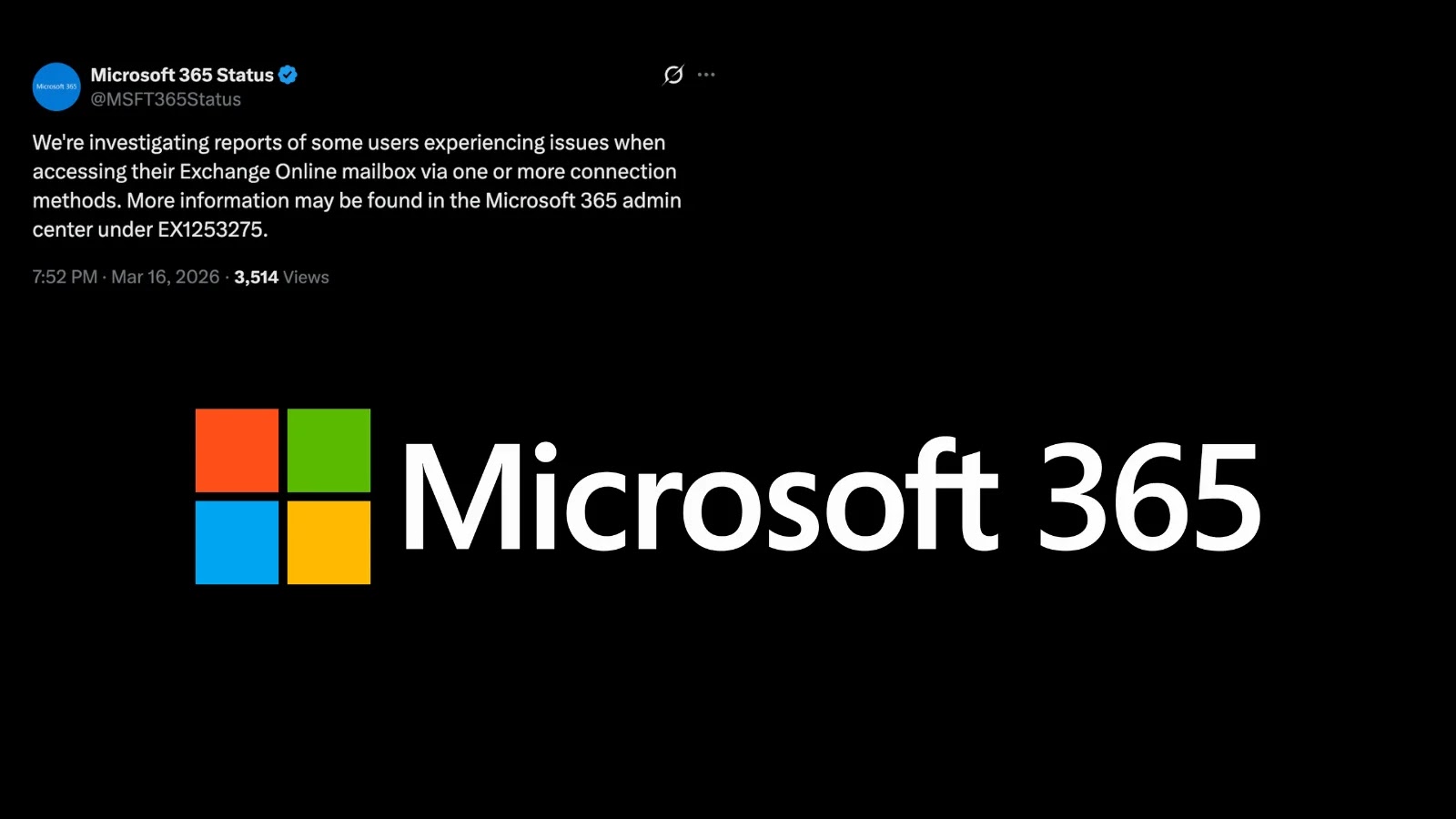
Microsoft Exchange Online Mailbox Access Outage Affects Users Globally
For organizations relying heavily on Microsoft Exchange Online for their communication and collaboration needs, even a temporary disruption can ripple through critical operations. This past Monday, March 16, 2026, many faced precisely that challenge as Microsoft reported a significant service outage impacting Exchange Online mailbox access globally. As cybersecurity analysts, understanding the implications and Microsoft’s response to such events is paramount, particularly as these pervasive services form the backbone of countless enterprises.
Microsoft Exchange Online Outage: A Glimpse into the Disruption
Reports began to surface earlier Monday, detailing users’ inability to access their Exchange Online mailboxes through various connection methods. Microsoft swiftly acknowledged the issue, initiating an investigation and tracking the incident via their Microsoft 365 service health dashboard. The severity of the disruption prompted multiple status updates throughout the day, indicating a complex or widespread problem rather than an isolated glitch.
The core issue revolved around difficulties accessing mailboxes, a fundamental function of Exchange Online. While specific root causes are often withheld during active investigations to prevent potential exploitation or to avoid premature conclusions, historical patterns suggest such outages can stem from a variety of sources:
- Software defects or bugs: Unexpected behavior in newly deployed code or a latent issue triggered by specific conditions.
- Infrastructure failures: Problems with underlying network components, servers, or storage that support the Exchange Online service.
- Configuration errors: Mistakes in service configuration that inadvertently block or disrupt user access.
- Load balancing issues: Inability to properly distribute user traffic across servers, leading to bottlenecks and access problems.
Impact on Global Users
The global reach of Microsoft Exchange Online means that any service disruption impacts a vast and diverse user base. For businesses, this translates to:
- Lost productivity: Employees unable to send or receive emails, access calendars, or utilize other critical communication features.
- Operational delays: Dependencies on email for business processes can bring operations to a standstill.
- Customer service interruptions: Inability to communicate with clients and customers, potentially damaging reputation and revenue.
- Compliance challenges: Certain industries have strict requirements for communication logging and availability, which an outage can compromise.
While the exact number of affected users or organizations was not immediately disclosed, the “global” nature of the outage underscores the critical role Exchange Online plays in the digital ecosystem. The incident highlights the inherent risks associated with relying on single points of failure, even for highly resilient cloud services.
Microsoft’s Response and Transparency
Microsoft’s use of its 365 service health dashboard and subsequent status updates demonstrates a commitment to transparency during service disruptions. For IT professionals and security analysts, these updates are vital for:
- Incident response planning: Understanding the scope and potential duration helps in activating internal contingencies.
- Stakeholder communication: Providing accurate information to internal teams and external customers.
- Post-incident analysis: Learning from Microsoft’s investigation to bolster internal resilience strategies.
As the incident unfolded, the cybersecurity news outlet Cyber Security News was among the first to report on the issue, tracking Microsoft’s formal announcements and the surfacing reports from users. This rapid dissemination of information is crucial in the cybersecurity landscape, enabling organizations to react promptly.
Recommendations for Organizations Using Exchange Online
While Microsoft works diligently to resolve these issues, organizations are not entirely helpless. Proactive measures can mitigate the impact of future Exchange Online outages:
- Implement a robust business continuity plan: This should include alternate communication channels (e.g., internal chat, crisis communication platforms) that are not reliant on Exchange Online.
- Educate users on outage protocols: Clearly define how employees should communicate and operate when email services are unavailable.
- Regularly review Microsoft 365 service health: Designate personnel to monitor the service health dashboard for proactive alerts and status updates.
- Consider multi-factor authentication (MFA) enforcement: While not directly related to connectivity, robust security postures protect accounts even during times of service instability. (Note: There is no CVE associated with this service outage, as it is an operational disruption, not a vulnerability).
- Maintain local backups or archives: Depending on regulatory requirements and business needs, consider solutions for local archiving of critical email data to ensure access even during cloud service interruptions.
Conclusion
The Microsoft Exchange Online mailbox access outage on March 16, 2026, served as a potent reminder of the interconnectedness of modern digital infrastructure and the potential cascading effects of service disruptions. For IT professionals and security analysts, such incidents underscore the importance of robust planning, continuous monitoring, and effective communication strategies. While cloud services offer unparalleled efficiency and scalability, organizations must remain vigilant and prepared for the inevitable, albeit infrequent, outages that can impact even the most sophisticated platforms.