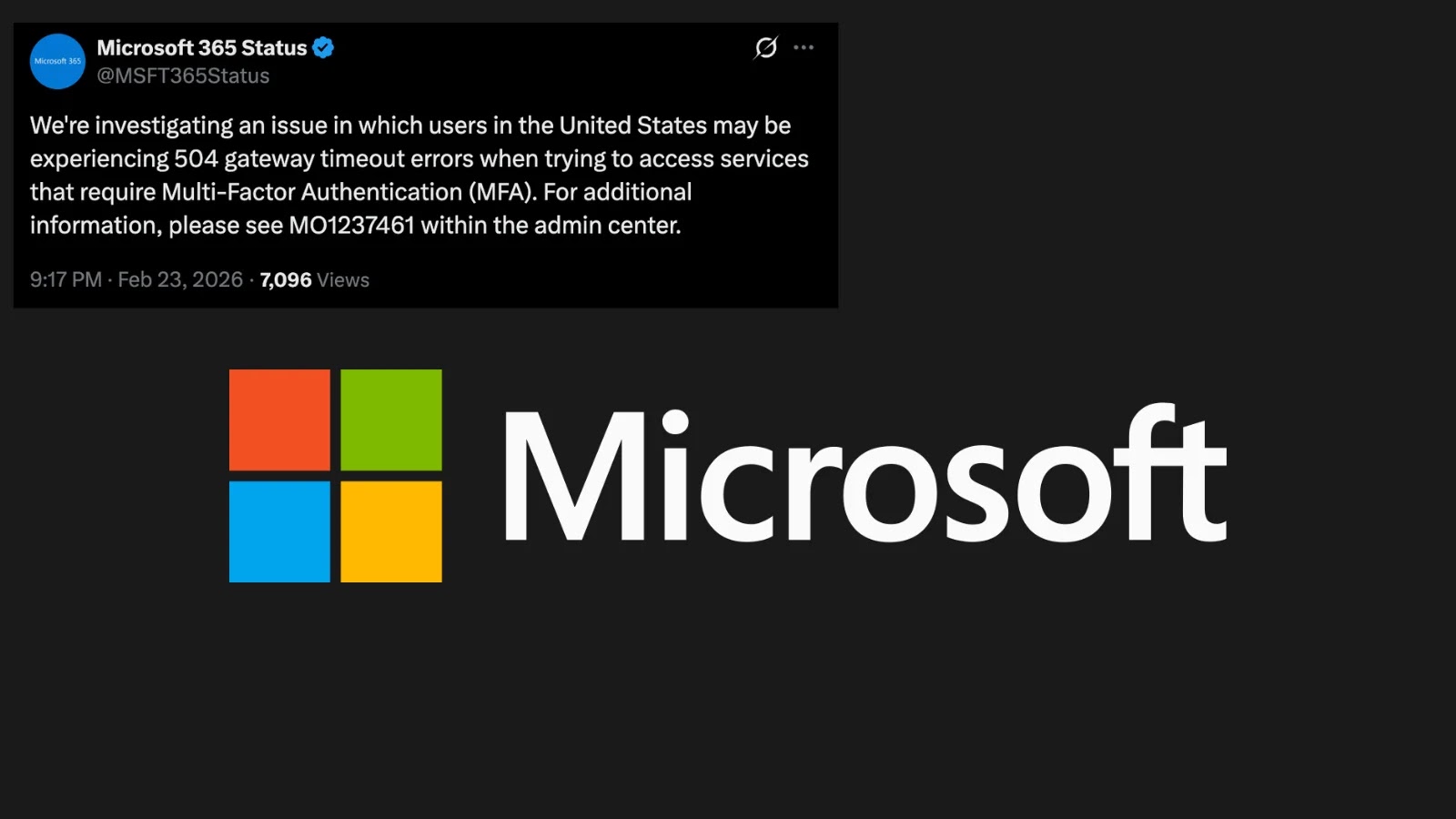
Microsoft MFA Down – 504 Gateway Timeout Errors Disrupting MFA Access for U.S. Users
The digital landscape relies heavily on robust authentication mechanisms. Multi-Factor Authentication (MFA) stands as a critical barrier against unauthorized access, safeguarding sensitive data and systems. When this vital layer experiences disruption, the impact can be immediate and severe, particularly for organizations heavily invested in cloud services. Recently, Microsoft 365 users in North America faced such a scenario, encountering widespread 504 Gateway Timeout errors that crippled access to MFA-protected services.
Microsoft MFA Outage: The Core of the Problem
On February 23rd, at approximately 8:22 PM IST (2:52 PM UTC), a significant service degradation began affecting Microsoft’s Multi-Factor Authentication infrastructure across its Microsoft 365 suite. The incident, internally tracked under issue ID MO1237461, predominantly impacted users within the North American region. Attempts to authenticate into MFA-secured applications and services were met with persistent 504 Gateway Timeout errors, effectively locking users out of their corporate resources.
Understanding 504 Gateway Timeout Errors in an MFA Context
A 504 Gateway Timeout error typically indicates that a server, while acting as a gateway or proxy, did not receive a timely response from another upstream server it needed to access to complete the request. In the context of MFA, this suggests that when a user attempted to log in, the Microsoft authentication service acting as the gateway was unable to communicate effectively with the backend systems responsible for verifying and processing the MFA challenge. This breakdown in communication prevented the successful completion of the authentication flow, leaving users unable to proceed.
Impact and Implications for Businesses
The ramifications of an MFA outage are extensive:
- Productivity Loss: Users unable to log in mean immediate and widespread disruption to daily operations. Critical business processes, collaboration, and access to essential tools cease.
- Security Concerns: While an outage prevents legitimate access, it doesn’t necessarily mean a security breach. However, any disruption to core security services can raise alarms and potentially force organizations to consider less secure, temporary workarounds, increasing their attack surface.
- Reputational Damage: For businesses relying on Microsoft 365, consistent outages can erode trust and confidence in essential cloud services.
- IT Overload: Internal IT teams are inundated with support requests, diverting resources from other critical tasks and creating significant operational pressure.
Microsoft’s Response and Investigation
Microsoft swiftly acknowledged the issue, initiating an investigation into the root cause of the service degradation. The public acknowledgment through their service health dashboard provides transparency to affected customers. While the exact cause at the time of the initial reports remains under investigation, such incidents often stem from infrastructure overloads, software bugs in authentication services, or network routing issues affecting specific geographic regions.
Remediation Actions for Organizations
While awaiting a full resolution from Microsoft, organizations can take several proactive and reactive steps to mitigate the impact of such an outage and enhance their overall resilience:
- Monitor Microsoft Service Health: Regularly check the Microsoft 365 Service Health Dashboard (via the admin center or https://status.office.com/) for official incident updates and resolution timelines.
- Communicate Internally: Keep employees informed about the outage, expected timelines, and any temporary workarounds or extended access procedures.
- Review Conditional Access Policies: In extreme, temporary circumstances, organizations might consider adjusting Conditional Access policies to allow limited access with alternative authentication methods for critical personnel, but this should be done with extreme caution and only as a last resort, with immediate reversion once MFA is restored.
- Implement Backup Authentication Methods: For highly critical applications, explore having alternative, secure authentication methods (e.g., hardware tokens for specific roles) that are independent of the potentially affected service.
- Geographic Diversity: For organizations with a global footprint, ensure that critical resources and authentication providers are distributed across different geographical regions to minimize the impact of regional outages.
- Enhance Monitoring: Improve internal monitoring for authentication failures and network latency to quickly identify and respond to similar incidents in the future.
Key Takeaways and Future Preparedness
The Microsoft MFA outage underscores a fundamental truth in cybersecurity: even robust, leading-edge services can experience disruptions. Organizations must adopt a proactive stance, understanding that relying solely on a single vendor for critical security infrastructure carries inherent risks. This incident serves as a powerful reminder for businesses to:
- Diversify Critical Services: Where feasible, consider diversifying core authentication and security services.
- Develop Strong Incident Response Plans: Have a clear, well-tested plan for responding to cybersecurity and service availability incidents, including communication strategies and potential workarounds.
- Educate Users: Ensure users understand the importance of MFA and how to react during outages, preventing panic and enabling quicker recovery.
- Regularly Review Security Architecture: Continuously assess and adapt security architecture to account for potential single points of failure in crucial services like MFA.
While Microsoft works to ensure the stability of its global services, businesses must build resilience through strategic planning and diversified security practices, ensuring business continuity even when critical components experience unforeseen interruptions.