Microsoft Teams to Share your Location With Your Employer Soon Based on Wi-Fi Network
Microsoft Teams to Pinpoint Your Work Location: A New Era for Workplace Monitoring?
The lines between professional and personal life continue to blur, especially in an increasingly hybrid work environment. A significant, and potentially controversial, update from Microsoft is poised to redefine how employers understand their workforce’s physical presence. Microsoft Teams is reportedly preparing to roll out a feature that automatically detects and displays a user’s physical work location based on the Wi-Fi network they connect to. This development, outlined in the Microsoft 365 Roadmap (ID 488800), has broad implications for privacy, security, and the evolving nature of workplace monitoring.
The Mechanics of Location Tracking in Microsoft Teams
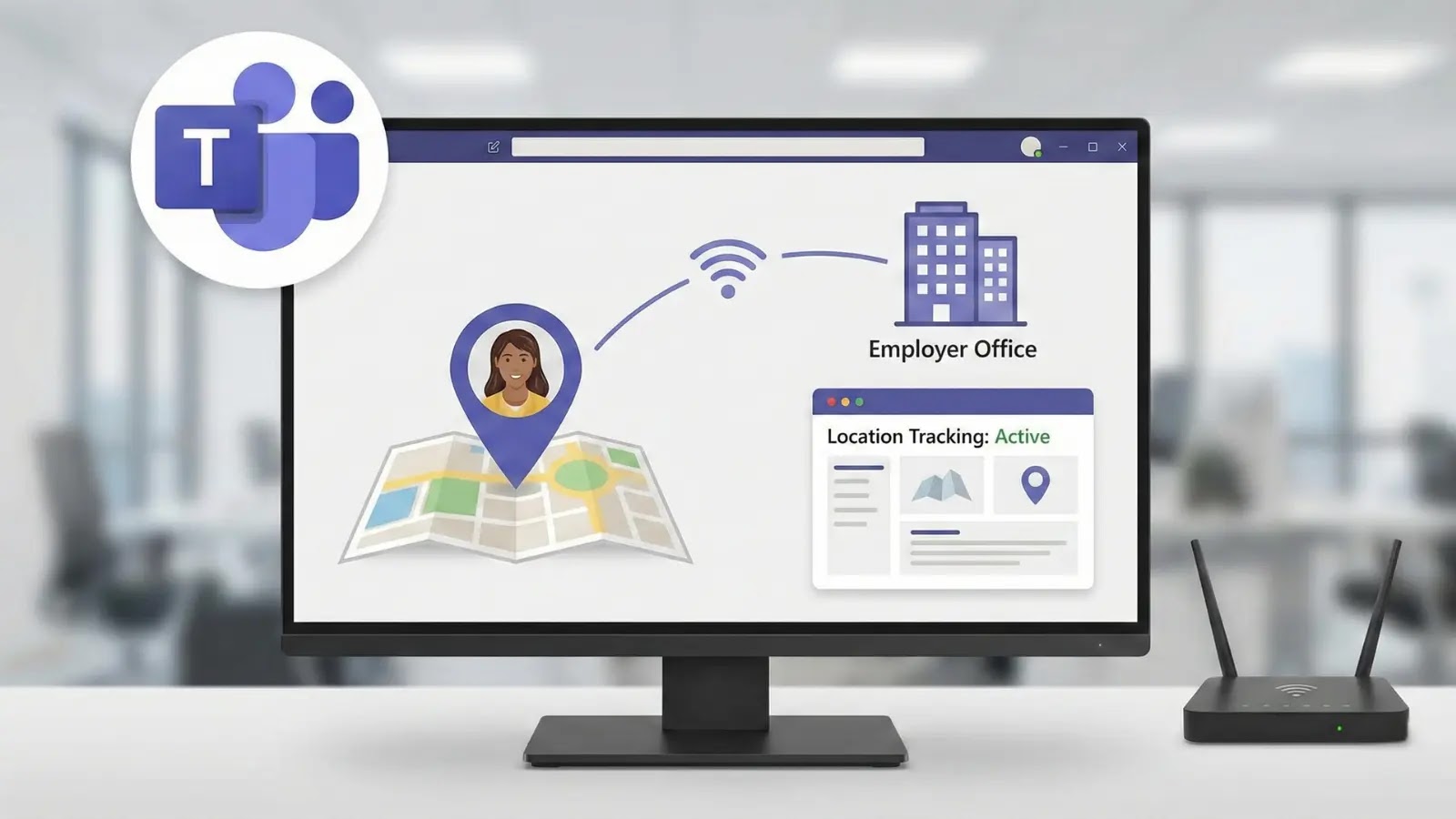
According to the information available, this new functionality within Microsoft Teams will leverage Wi-Fi network connectivity to determine a user’s current work location. For instance, if an employee connects to the corporate Wi-Fi at the main office, Teams would automatically register their presence as “In Office.” Conversely, connecting from a home network might be categorized as “Remote” or “Home Office.”
The rollout for this feature is slated to begin in March 2026. While the exact technical implementation details are still emerging, the core principle revolves around associating specific Wi-Fi SSIDs (Service Set Identifiers) with predefined work locations configured by the organization. This isn’t groundbreaking technology from a networking perspective, but its integration into a ubiquitous collaboration platform like Microsoft Teams marks a notable shift in employer oversight capabilities.
Potential Benefits for Employers and IT Departments
From an organizational standpoint, this feature could offer several advantages:
- Enhanced Resource Management: Knowing who is in the office can help with space planning, meeting room allocation, and managing on-site resources more efficiently.
- Improved Collaboration: Teams might be able to suggest relevant in-person collaboration opportunities or provide context about a colleague’s availability based on their location.
- Compliance and Reporting: For industries with specific regulatory requirements regarding employee location during work hours, this feature could streamline compliance reporting.
- Security Insights: Anomalous location data could potentially flag security concerns, such as an employee attempting to access sensitive resources from an unapproved or unknown location.
Privacy Concerns and Employee Backlash
While the benefits for employers are apparent, the potential for privacy infringement and employee discomfort cannot be overstated. Automatically sharing location data, even if based solely on Wi-Fi networks, raises critical questions:
- Scope of Data Collection: How granular will this location data be? Will it simply state “Office” or “Home,” or could it be used to infer more specific movements within a campus?
- User Control and Transparency: Will employees have the ability to opt-out, override, or easily view what location data is being shared? Transparency about how this data is collected, stored, and used will be paramount.
- Potential for Misuse: Organizations could potentially use this data for performance monitoring, attendance tracking, or even to enforce RTO (Return to Office) policies, leading to a feeling of constant surveillance.
- Trust Erosion: A lack of clear communication and ethical implementation could significantly damage trust between employers and employees, particularly in an era where work-life balance and digital privacy are highly valued.
Navigating the Ethical and Implementation Challenges
For organizations considering implementing this feature, a thoughtful approach is essential. Simply enabling it without considering the human element would be a misstep. Key considerations include:
- Clear Communication: Employers must transparently communicate to employees why this feature is being used, what data is collected, and how it will be utilized.
- Policy Development: Robust policies outlining the acceptable use of this location data, storage protocols, and employee rights must be established.
- Employee Consent: While the legal requirements for consent vary by region, seeking employee understanding and buy-in is crucial for a smooth transition.
- Minimizing Intrusion: Focus on using the data for its intended, beneficial purposes (e.g., resource management) rather than extending it to punitive or overly intrusive monitoring.
- Security of Location Data: As with any sensitive data, ensuring the security of Wi-Fi-based location information is paramount. Organizations must protect against unauthorized access or breaches.
There isn’t a specific CVE for this feature, as it’s a planned product update, not a vulnerability. However, any system handling sensitive user data, including location information, must adhere to stringent security practices to prevent data leakage or unauthorized access. Organizations should regularly review their cybersecurity posture in alignment with frameworks like NIST CSF or ISO 27001 to mitigate general risks associated with data handling.
Conclusion: A Future of Contextual Collaboration, or Constant Surveillance?
The impending Microsoft Teams update presents a dual-edged sword. On one side, it offers genuine opportunities for more contextual collaboration, efficient resource allocation, and potentially enhanced security insights. On the other, it introduces significant questions about employee privacy, employer trust, and the boundaries of digital monitoring in the workplace. As cybersecurity analysts and IT professionals, our role will be critical in guiding organizations through this new landscape, ensuring that technological advancements serve to empower, not alienate, the workforce. Proactive policy development, transparent communication, and an unwavering commitment to ethical data practices will be key to harnessing the benefits of this feature while safeguarding employee trust and privacy.