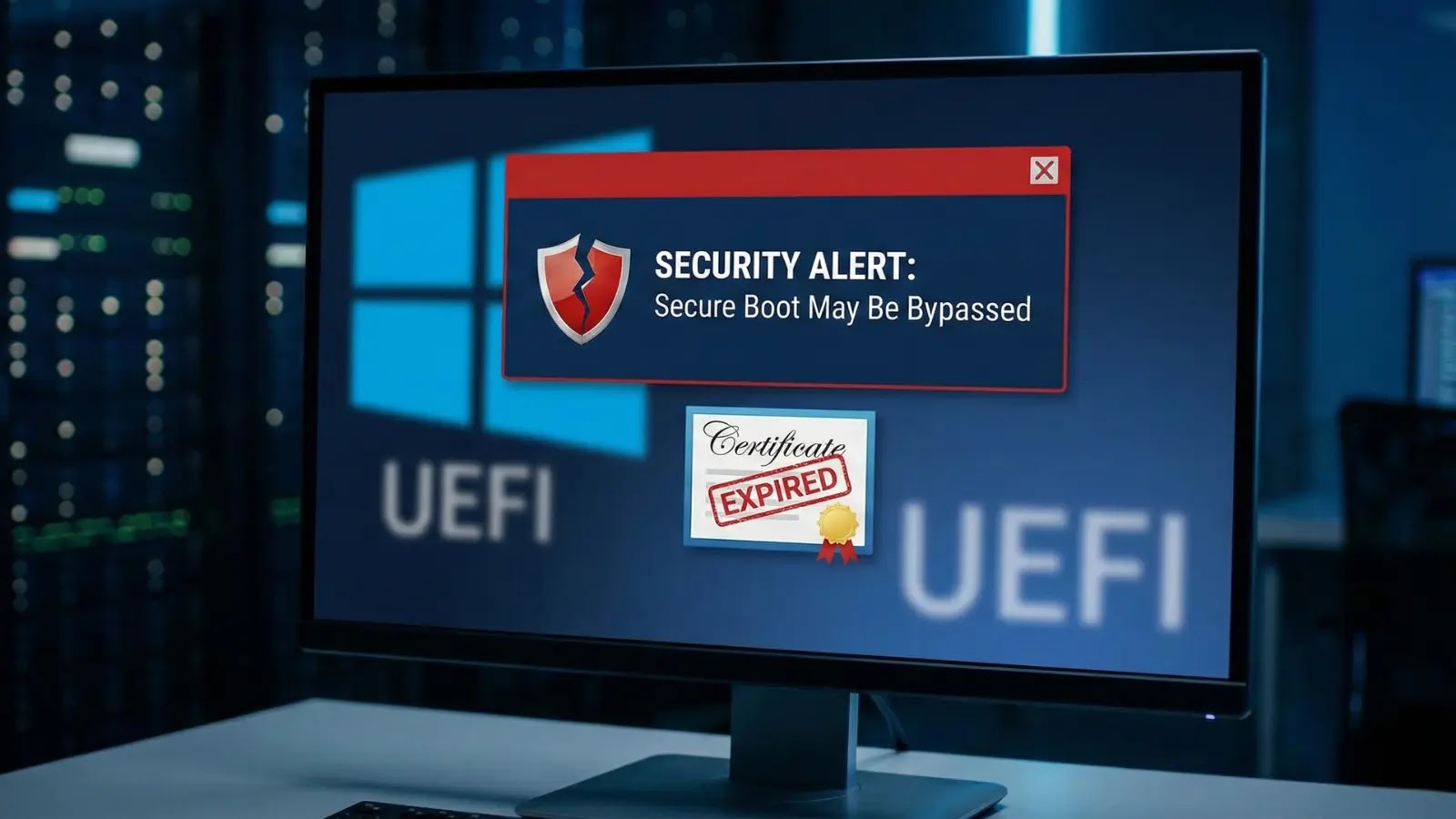
Microsoft Warns Secure Boot May Be Bypassed as Windows UEFI Certificates Expire
A silent threat has emerged from the foundational layers of Windows security, threatening the integrity of countless systems. Microsoft has issued a critical warning regarding potential bypasses in Secure Boot, a cornerstone of modern system security. The vulnerability, tracked as CVE-2026-21265, stems from the impending expiration of 2011-era UEFI certificates, which are fundamental to Secure Boot’s trust mechanisms. Unpatched systems could face a significant risk of boot integrity disruption, highlighting the urgent need for attention from IT professionals and security analysts.
Understanding the Secure Boot Vulnerability
Secure Boot is a critical security feature within the Unified Extensible Firmware Interface (UEFI) standard. Its primary function is to prevent malicious software, such as rootkits or bootkits, from loading during the system startup process. It achieves this by verifying the digital signatures of all boot components, including firmware drivers, EFI applications, and the operating system loader, against a database of trusted certificates. If a component’s signature is invalid or untrusted, Secure Boot blocks it from loading, ensuring that only legitimate software can initiate the operating system.
The vulnerability identified by Microsoft revolves around certain 2011-era certificates embedded within the Secure Boot trust chain. These certificates are crucial for validating the legitimacy of older, yet still widely used, boot components and operating system loaders. As these certificates approach their expiration date, any system relying on them without the necessary updates becomes susceptible. An attacker could potentially exploit this expiration to introduce unsigned or maliciously signed bootloaders, effectively bypassing Secure Boot’s protective measures and gaining deep control over the system before the operating system even fully loads.
CVE-2026-21265: The Critical Flaw
Microsoft has formally addressed this critical security feature bypass vulnerability as CVE-2026-21265. This vulnerability has been rated as “Important” with a CVSS v3.1 base score that underscores its potential impact. While a precise score for this vulnerability isn’t publicly detailed in the provided source, vulnerabilities categorized as “Important” typically indicate that exploitation could lead to data compromise, system denial of service, or significant security feature bypasses, albeit often requiring certain preconditions or user interaction.
The core issue is that if an attacker can manipulate the boot process to load a malicious component validated by an expired or otherwise compromised certificate, they can circumvent Secure Boot. This opens the door to persistent malware infections that are exceedingly difficult to detect and remove, as they operate at a level below the operating system. Such threats, often termed “bootkits,” can survive operating system reinstallation and maintain control over the system’s fundamental operations.
Impact of Expiring UEFI Certificates
The expiration of these fundamental UEFI certificates presents a multi-faceted risk:
- Boot Integrity Compromise: The most direct impact is the potential for an attacker to load unsigned or malicious code during the boot process. This could lead to rootkit installations that are highly resistant to detection by traditional antivirus software.
- Persistent Malware: Malware operating at the boot level can maintain persistence even after operating system reinstalls, making remediation extremely challenging.
- System Control: A successful bypass of Secure Boot grants attackers a profound level of control over the compromised system, allowing them to subvert security mechanisms and steal sensitive data.
- Wider Ecosystem Risk: Given the widespread adoption of Secure Boot across modern Windows systems, the potential attack surface is vast, affecting individuals, enterprises, and critical infrastructure alike if unpatched.
Remediation Actions
Addressing CVE-2026-21265 and safeguarding against the expiring UEFI certificates requires prompt action. Microsoft’s January 2026 Patch Tuesday updates are designed to mitigate this specific vulnerability.
- Apply Latest Windows Updates: The most critical step is to apply all available Windows updates, particularly those released during or after January 2026. These updates will include the necessary fixes and renew the relevant certificates.
- Firmware/BIOS Updates: While the primary fix comes from Windows updates, it’s also prudent to regularly check for and apply firmware/BIOS updates from your hardware vendor. These updates often include critical security patches related to UEFI and Secure Boot.
- Verify Secure Boot Status: Regularly verify that Secure Boot is enabled and functioning correctly on all affected systems. This can typically be done through the UEFI/BIOS settings or via Windows system information tools.
- Endpoint Detection and Response (EDR): Deploy and maintain robust EDR solutions. While Secure Boot operates at a lower level, EDRs can often detect anomalous boot behavior or post-boot malicious activity that might indicate a Secure Boot bypass.
- Least Privilege Principles: Continue to enforce least privilege principles at all levels to limit the potential impact of any successful compromise.
Tools for Detection and Mitigation
To assist security professionals in managing and monitoring Secure Boot integrity, several tools are available:
| Tool Name | Purpose | Link |
|---|---|---|
| Microsoft Update Catalog | Source for official Microsoft updates, including security patches. | Link |
| UEFI Tool | Analyzes UEFI firmwares for vulnerabilities and integrity issues. | Link |
| RWEverything | Allows observation and modification of many low-level system components, including UEFI variables (use with extreme caution). | Link |
| Endpoint Protection Platforms (EPP) with EDR | Broader security suites that can detect and respond to boot-level threats. (e.g., Microsoft Defender for Endpoint, CrowdStrike Falcon) | (Vendor Specific) |
Protecting Your System’s Foundation
The warning from Microsoft about CVE-2026-21265 underscores the continuous need for vigilance in cybersecurity, particularly at the foundational levels of system operation. Expiring UEFI certificates present a genuine threat to Secure Boot’s efficacy, potentially exposing systems to advanced persistent threats. By prioritizing the application of Microsoft’s January 2026 Patch Tuesday updates and adopting a proactive stance on firmware and system integrity, organizations and individuals can significantly strengthen their defenses against this critical vulnerability and ensure the continued security of their Windows environments.