MS-Agent Vulnerability Let Attackers Hijack AI Agent to Gain Full System Control
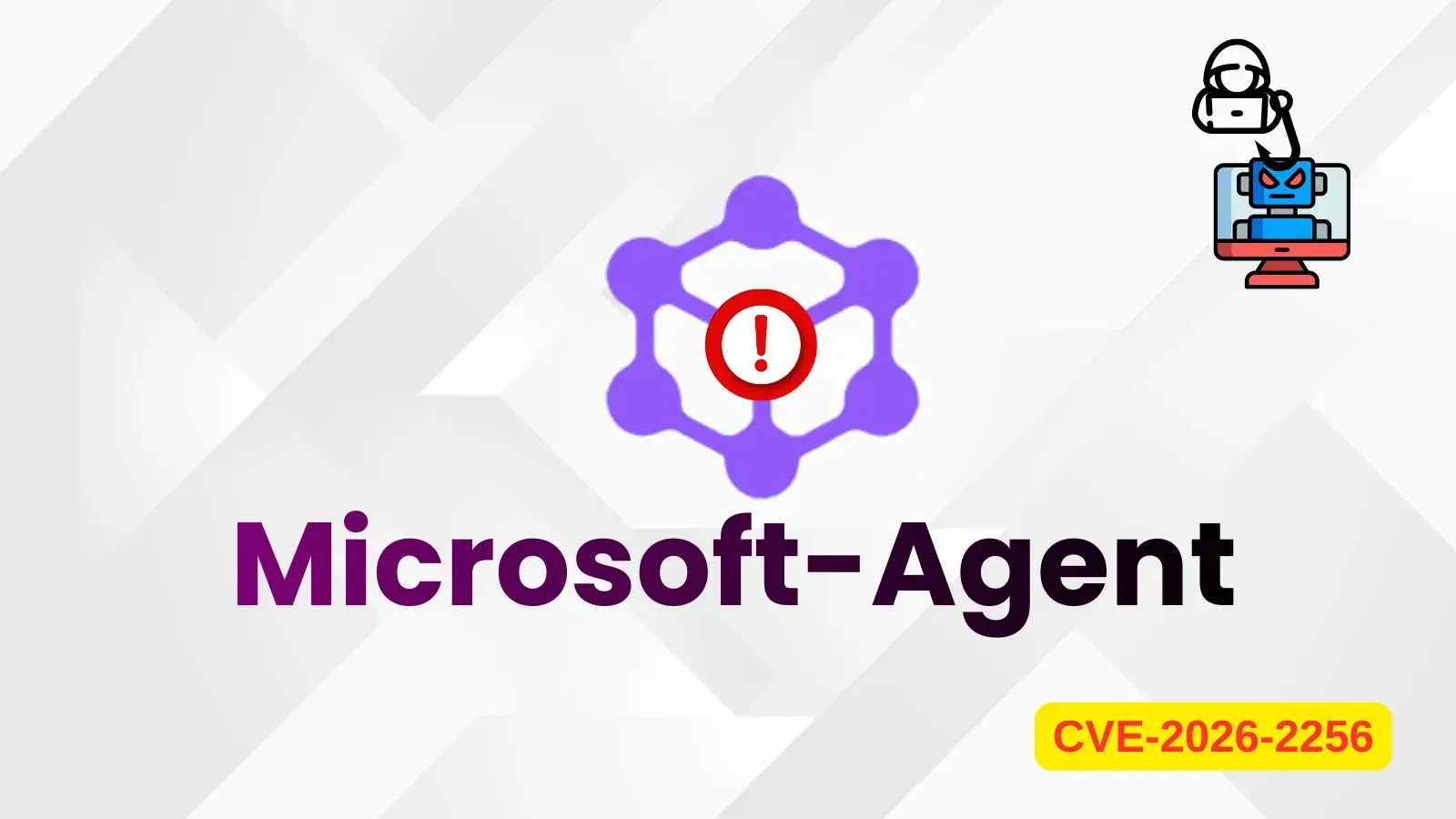
The dawn of AI-driven autonomous systems promised unparalleled efficiency and innovation. Yet, a recent discovery casts a long shadow over this promise, revealing a critical vulnerability that turns these intelligent agents into potential gateways for complete system compromise. A flaw in a lightweight framework designed to empower AI agents has exposed a concerning reality: attackers can trick an AI into executing malicious commands, effectively giving them full control over the underlying system. This isn’t just about data breaches; it’s about the very integrity of systems reliant on AI autonomy. The implications are profound, underscoring the urgent need for a renewed focus on AI security.
The MS-Agent Vulnerability: A Deep Dive into AI Subversion
The vulnerability, detailed in a recent CERT/CC advisory, targets a fundamental mechanism within AI agent frameworks. Specifically, it exploits the agent’s ability to interpret and act upon received instructions. While the exact technical specifics are still emerging, the core vector involves malicious input designed to appear innocuous to the AI agent but, when processed, leads to the execution of unintended, harmful commands. This isn’t a simple bug; it’s a sophisticated method of subverting the agent’s core functionalities.
Imagine an AI agent tasked with simple administrative duties. An attacker could craft a query or task instruction that, despite its benign appearance, contains embedded commands (e.g., shell commands or API calls) that the agent, operating under elevated privileges, then executes. This elevation of privilege is often inherent in AI agents designed for autonomous operation, making them attractive targets. The specific vulnerability allows for command injection, a classic attack vector but applied here to the novel context of AI agent instruction processing. While a specific CVE ID for this particular vulnerability has not been publicly released at the time of writing, similar issues in general AI systems could fall under broader categories of code injection or improper input validation vulnerabilities.
Understanding the Attack Vector and Its Impact
The attack scenario is disconcertingly straightforward in its concept. Attackers leverage the AI agent’s mandate to perform tasks autonomously. By cleverly crafting input – whether through manipulated external data feeds, crafted prompts, or compromised internal communication channels – they can insert malicious instructions. The AI, acting on what it perceives as legitimate commands within its operational parameters, then executes these instructions, leading to consequences such as:
- Data Exfiltration: Malicious commands can be used to read, copy, and transmit sensitive data from the compromised system to an attacker-controlled endpoint.
- System Modification: Attackers can alter system configurations, install backdoors, or deploy additional malware, establishing persistence within the network.
- Resource Manipulation: The AI agent could be coerced into misusing system resources, launching denial-of-service attacks, or performing other disruptive actions.
- Full System Control: In the worst-case scenario, the vulnerability provides a pathway to arbitrary code execution, granting attackers complete control over the underlying operating system and its associated resources.
This vulnerability underscores a critical paradigm shift: our trust in autonomous AI systems must now be accompanied by robust scrutiny of their security posture. The “MS-Agent” vulnerability is a stark reminder that as AI becomes more integrated into core infrastructure, their security vulnerabilities become system-critical.
Who is at Risk? Identifying Targeted Systems
This vulnerability critically impacts organizations that have deployed or are developing AI agents utilizing lightweight frameworks for autonomous task execution. Any system where an AI agent interacts directly with the operating system or other critical applications, particularly with elevated privileges, is inherently at risk. This includes a wide array of environments:
- Cloud Infrastructure Automation: AI agents managing cloud resources (e.g., provisioning servers, configuring networks) could be hijacked to initiate unauthorized resource changes or data access.
- DevOps Pipelines: Agents automating build, test, and deployment processes could introduce malicious code into production environments.
- AI-Powered Robotics: Autonomous robots in manufacturing or logistics could be reprogrammed for sabotage or espionage.
- IT Operations Management: Agents performing system monitoring, incident response, or patching could be turned into tools for compromise.
The underlying framework’s widespread adoption or integration could lead to a broad attack surface, making this a significant concern for myriad sectors.
Remediation Actions: Securing Your AI Agents
Addressing this vulnerability requires a multi-faceted approach, combining immediate tactical responses with long-term strategic security enhancements for AI systems.
- Immediate Patching: The most crucial step is to apply any available patches or updates released by the framework’s developers or vendors. Monitor official security advisories closely.
- Input Validation and Sanitization: Implement stringent input validation at every point where the AI agent receives external or untrusted data. This includes prompts, API calls, and data feeds. Sanitize all input to remove or neutralize potentially malicious commands or characters.
- Principle of Least Privilege: Configure AI agents to operate with the absolute minimum privileges required to perform their intended functions. Avoid running agents with administrative or root access unless strictly necessary.
- Behavioral Monitoring: Deploy robust monitoring solutions that can detect anomalous behavior from AI agents. Look for unusual command executions, unexpected network activity, or resource utilization spikes.
- Sandboxing and Isolation: Isolate AI agents within secure sandbox environments where their access to critical system resources is tightly controlled. This limits the blast radius of a successful exploit.
- Secure Communication Channels: Ensure all communication to and from AI agents uses encrypted and authenticated channels to prevent tampering or interception of commands.
- Regular Security Audits: Conduct frequent security assessments and penetration tests specifically targeting your AI systems and the frameworks they utilize.
- Framework Updates: Stay informed about the security posture of the underlying AI agent frameworks. Participate in community discussions and leverage threat intelligence.
Tools for Detection and Mitigation
While specific tools for this exact vulnerability might be proprietary or under development, several categories of cybersecurity tools can assist in detecting and mitigating the broader risks associated with AI agent subversion.
| Tool Name | Purpose | Link |
|---|---|---|
| Intrusion Detection/Prevention Systems (IDPS) | Detects and prevents malicious network traffic and abnormal system behavior. | N/A (Vendor specific, e.g., Snort, Suricata, commercial IDPS solutions) |
| Endpoint Detection and Response (EDR) Solutions | Monitors and responds to threats on endpoints by analyzing process execution, file activity, and network connections. | N/A (Vendor specific, e.g., CrowdStrike Falcon, SentinelOne) |
| Security Information and Event Management (SIEM) | Aggregates and analyzes security logs from various sources to detect patterns indicative of an attack. | N/A (Vendor specific, e.g., Splunk, IBM QRadar, Microsoft Azure Sentinel) |
| Static Application Security Testing (SAST) tools | Analyzes source code for vulnerabilities (e.g., command injection) before deployment. | https://owasp.org/www-project-top-10/ |
| Dynamic Application Security Testing (DAST) tools | Tests running applications for vulnerabilities by simulating attacks. | https://owasp.org/www-project-top-10/ |
| Network Segmentation Tools | Isolates critical systems and AI agents to limit lateral movement in case of compromise. | N/A (Vendor specific, e.g., Cisco, Palo Alto Networks) |
Conclusion: A Call for Proactive AI Security
The “MS-Agent” vulnerability is a stark reminder that the advancements in AI capabilities must be matched with commensurate advancements in AI security. As AI agents become more autonomous and integrated into our critical infrastructure, their attack surface expands, and the consequences of their compromise become more severe. This incident serves as a critical call to action for developers, security professionals, and organizations using AI to prioritize security considerations from design to deployment. Proactive security measures, continuous monitoring, and a commitment to principle of least privilege are no longer optional; they are essential for harnessing the power of AI safely and securely.