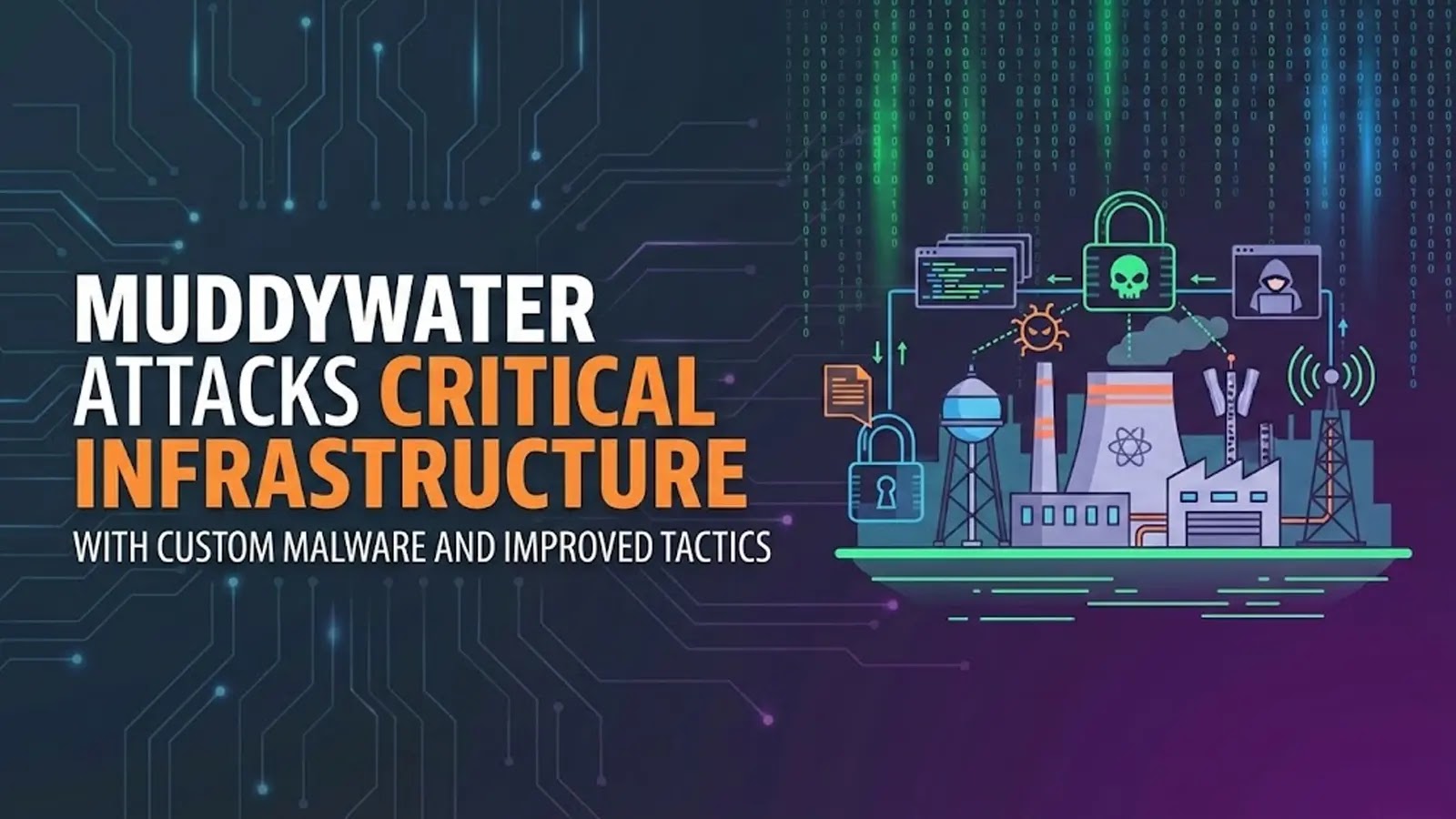
MuddyWater Attacks Critical Infrastructure With Custom Malware and Improved Tactics
Certainly, here’s the HTML-formatted blog post as requested, adhering to all the specified rules and containing the analysis of MuddyWater’s recent activities:
MuddyWater’s Evolved Threat: Targeting Critical Infrastructure in the Middle East
The digital landscape is a constant battlefield, and nation-state threat actors are among its most formidable adversaries. Recently, the Iran-aligned cyberespionage group known as MuddyWater (also tracked as Mango Sandstorm) has unleashed a sophisticated and highly targeted campaign against critical infrastructure in Israel and Egypt. This operation, observed from September 2024 through March 2025, signals a significant evolution in their operational capabilities and demands immediate attention from cybersecurity professionals.
Understanding MuddyWater’s Latest Campaign
MuddyWater is not a new player in the cyber threat arena. Known for its persistent and adaptable tactics, this group has consistently targeted organizations across various sectors, often with espionage as their primary objective. Their latest campaign, however, demonstrates enhanced operational maturity and a refined focus on high-value targets within critical infrastructure. The group zeroed in on diverse sectors, including engineering, utilities, local government, and technology, indicating a strategic effort to compromise systems vital to national functions and economic stability.
The selection of Israel and Egypt as primary targets aligns with geopolitical tensions and MuddyWater’s historical operational patterns, often focusing on countries perceived as adversaries or those with strategic influence in the Middle East. This strategic targeting underscores the necessity for organizations in these regions, particularly within critical infrastructure, to bolster their defenses.
Custom Malware and Tooling Advancements
A key indicator of MuddyWater’s evolving threat is their deployment of custom malware and improved tactics. While the specific names of their new malware strains aren’t detailed in the immediate source, the mention of “custom malware” implies a move away from easily detectable, off-the-shelf tools towards bespoke solutions designed to evade detection and achieve specific objectives. This often involves:
- Tailored Backdoors: Malware designed for persistent access and data exfiltration, uniquely crafted for the target environment.
- Advanced Evasion Techniques: Custom code often incorporates sophisticated obfuscation, anti-analysis, and anti-forensic capabilities to hinder detection and response.
- Improved Command and Control (C2): More resilient and stealthy communication channels, potentially leveraging legitimate services or highly encrypted protocols to blend in with normal network traffic.
The adoption of improved tactics suggests a more sophisticated approach to initial access, lateral movement, privilege escalation, and data exfiltration. This could include enhanced spear-phishing campaigns, supply chain compromises, or exploiting previously unknown vulnerabilities (zero-days), although the latter is not explicitly mentioned in this context.
Targeting Critical Infrastructure: A High-Stakes Threat
Targeting critical infrastructure carries severe implications. Successful breaches in sectors like utilities and engineering can lead to:
- Service Disruptions: Blackouts, water supply interruptions, or failures in telecommunications.
- Economic Damage: Significant financial losses due to operational downtime, recovery costs, and reputational damage.
- Public Safety Risks: Compromised systems in critical sectors can have direct impacts on public health and safety.
- Espionage and Data Theft: Acquisition of sensitive operational data, blueprints, or intelligence that could be used for further attacks or strategic advantage.
The extended operational period of this campaign, spanning six months, further highlights the group’s persistence and methodical approach. This prolonged presence within networks allows for extensive reconnaissance, careful planning of operations, and a deeper understanding of target environments.
Remediation Actions and Protective Measures
Organizations, especially those within critical infrastructure sectors, must adopt a proactive and multi-layered defense strategy to mitigate the risks posed by sophisticated groups like MuddyWater. While specific CVEs were not listed in the provided source for this campaign, general best practices are paramount:
- Robust Network Segmentation: Isolate critical operational technology (OT) and industrial control systems (ICS) networks from IT networks.
- Endpoint Detection and Response (EDR) Systems: Deploy advanced EDR solutions on all endpoints to detect and respond to suspicious activities in real-time.
- Multi-Factor Authentication (MFA): Implement MFA across all services, particularly for remote access and privileged accounts.
- Vulnerability Management: Regularly scan for and patch vulnerabilities. Stay updated on advisories from CISA, national CERTs, and security vendors.
- Employee Training: Conduct regular security awareness training, emphasizing the dangers of spear-phishing and social engineering tactics.
- Threat Intelligence Integration: Subscribe to and integrate high-quality threat intelligence feeds to stay informed about active threats, attacker TTPs (Tactics, Techniques, and Procedures), and indicators of compromise (IoCs).
- Incident Response Plan: Develop and regularly test a comprehensive incident response plan, ensuring clear communication channels and defined roles.
- Regular Backups: Implement a robust backup strategy for critical data and systems, ensuring backups are immutable and stored off-site.
Conclusion
MuddyWater’s latest campaign against critical infrastructure in Israel and Egypt underscores the persistent and evolving threat posed by nation-state actors. Their adoption of custom malware and improved tactics signifies a dangerous escalation, demanding a robust and adaptive defense posture from organizations at risk. By prioritizing layered security defenses, proactive threat intelligence, and continuous employee education, critical infrastructure entities can significantly enhance their resilience against such sophisticated cyberespionage operations.