New ChatGPT Flaws Allow Attackers to Exfiltrate Sensitive Data from Gmail, Outlook, and GitHub
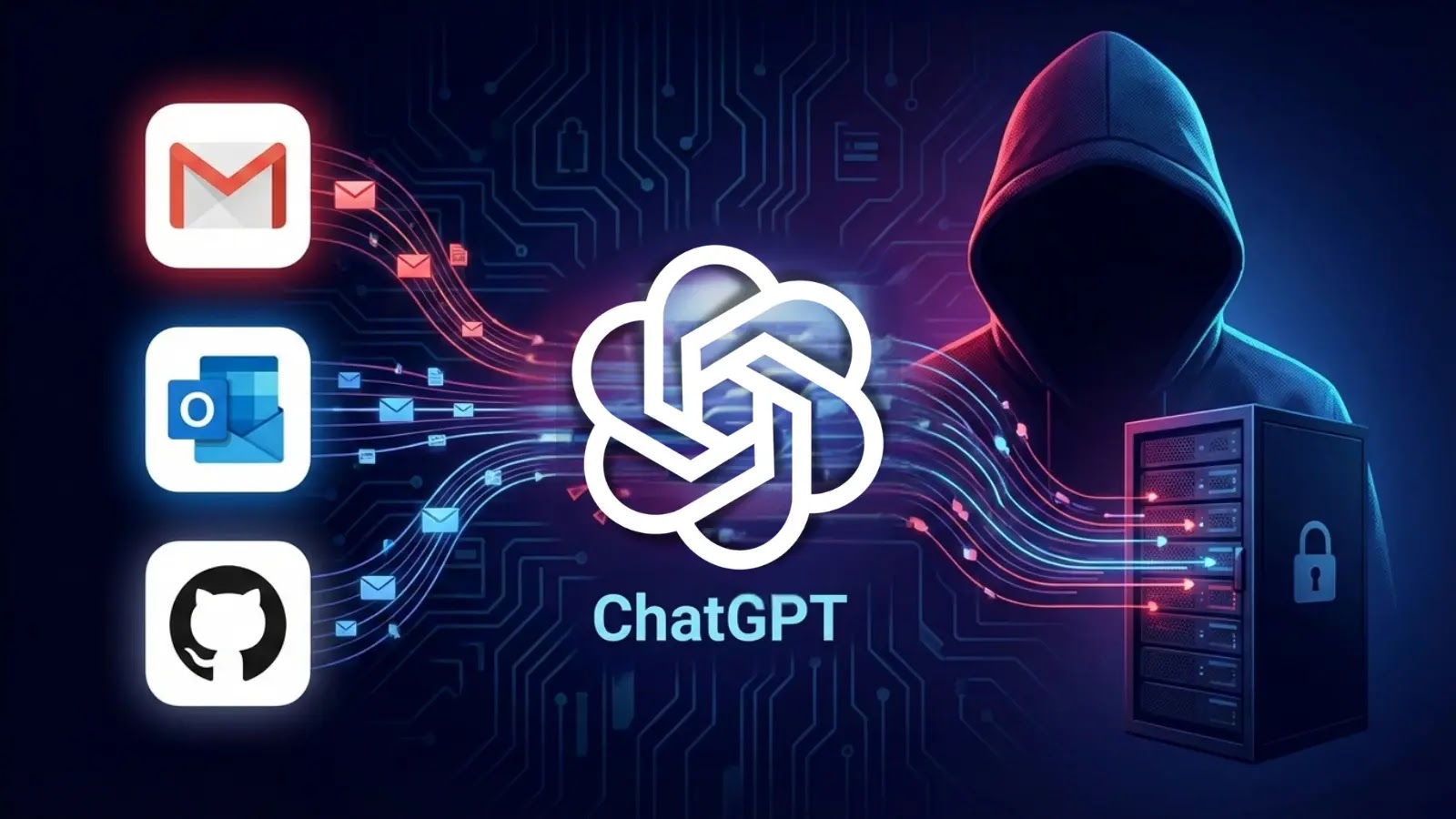
The artificial intelligence landscape, while revolutionary, continuously presents new and sophisticated security challenges. Recent discoveries have cast a significant shadow over one of the most widely adopted AI platforms: ChatGPT. Critical vulnerabilities, identified as ShadowLeak and ZombieAgent, have been found to present a severe risk of sensitive data exfiltration from integrated services such as Gmail, Outlook, and GitHub. These zero-click flaws exploit ChatGPT’s inherent features, threatening user privacy and corporate data integrity.
Understanding the ChatGPT Vulnerabilities: ShadowLeak and ZombieAgent
Researchers have uncovered two distinct yet equally concerning vulnerabilities in ChatGPT that leverage its advanced capabilities against its users. These flaws represent a new frontier in AI-driven cyber threats, demonstrating how attackers can weaponize integrated functionalities for malicious ends.
- ShadowLeak: This vulnerability primarily focuses on the exfiltration of sensitive information. By exploiting how ChatGPT’s “Connectors” interact with external services, attackers can trick the AI into revealing confidential data. Connectors, designed to integrate ChatGPT with platforms like Gmail, Jira, and GitHub, become unintended conduits for data leakage.
- ZombieAgent: Going a step further, ZombieAgent not only facilitates data exfiltration but also introduces elements of persistence and propagation. This means an attacker could maintain access to compromised systems or even spread their malicious influence across connected services without further user interaction, creating a self-sustaining attack vector.
The insidious nature of these attacks lies in their “zero-click” characteristic. Unlike traditional phishing campaigns that require user interaction, these vulnerabilities can be exploited without the victim clicking on a malicious link or downloading an infected file. This significantly lowers the barrier for attackers and increases the potential for widespread impact.
Exploiting Connectors and Memory for Data Exfiltration
A core aspect of ChatGPT’s utility is its ability to integrate with various third-party applications and services. This integration is powered by “Connectors,” which allow ChatGPT to access and process information from platforms like Gmail for email management, Outlook for calendar events, or GitHub for code repositories. These vulnerabilities weaponize this very capability.
When a user grants ChatGPT access to these external services, the AI’s “Memory” feature stores contextual information and previous interactions. Attackers can manipulate these features to craft prompts or leverage existing conversational data to coerce ChatGPT into divulging sensitive information it has access to through its connectors. This includes emails, calendar details, code snippets, private project information, and more, all without the user’s explicit consent for that specific data transfer.
The critical element here is the unauthorized access to data that resides within trusted, legitimate applications. The compromise isn’t of Gmail or GitHub directly, but rather of the AI intermediary given access to them, highlighting a significant supply chain risk within the AI ecosystem.
Impact on Users and Organizations
The implications of these vulnerabilities are far-reaching for individuals and organizations alike. For personal users, the risk includes the exposure of private communications, financial details, and other sensitive personal identifiers stored in email accounts or cloud services linked to ChatGPT. For businesses, the threat escalates to intellectual property theft, compromise of confidential business communications, and unauthorized access to development pipelines managed through GitHub or similar platforms.
- Data Breach Risk: Direct exfiltration of private emails, documents, code, and project management data.
- Reputational Damage: For organizations, a breach via an AI tool can erode customer trust and brand reputation.
- Compliance and Regulatory Penalties: Exposure of sensitive data can lead to significant fines under regulations such as GDPR or CCPA.
- Lateral Movement Potential: ZombieAgent’s propagation capabilities mean an initial compromise could lead to wider network infiltration.
Remediation Actions and Best Practices
OpenAI has been informed of these vulnerabilities, and users should stay informed about any official patches or recommendations they release. In the meantime, proactive measures are crucial to mitigate the risks associated with ShadowLeak and ZombieAgent.
- Review Connector Permissions: Regularly audit and revoke unnecessary permissions granted to ChatGPT or any other AI integration with external services. Only grant the minimum necessary access for the AI to perform its intended function.
- Exercise Caution with AI Interactions: Be mindful of the information you share with AI models, especially when they are connected to sensitive accounts. Avoid inputting confidential data unless absolutely necessary and verified as secure.
- Implement Least Privilege: For organizational use, ensure that AI services are configured with the principle of least privilege, granting them access only to the data and systems they absolutely require to function.
- Monitor for Suspicious Activity: Keep a vigilant eye on activity logs for connected services like Gmail, Outlook, and GitHub for any unusual access patterns or data transfers that could indicate an exploitation.
- Stay Updated: Ensure all AI applications, plugins, and integrated services are kept up to date with the latest security patches.
- Employee Training: Educate employees on the risks associated with AI integrations and the importance of secure interaction practices.
Threat Detection and Mitigation Tools
While no silver bullet exists for novel AI vulnerabilities, several categories of tools can assist in detecting or mitigating the general risks associated with compromised access to cloud services.
| Tool Name | Purpose | Link |
|---|---|---|
| Cloud Access Security Brokers (CASBs) | Monitor and enforce security policies for cloud application usage, including data loss prevention. | Gartner CASB Guide |
| Data Loss Prevention (DLP) solutions | Identify and prevent sensitive data from leaving defined network perimeters or applications. | McAfee DLP |
| Security Information and Event Management (SIEM) | Aggregate and analyze security logs from various sources to detect suspicious activity. | Splunk Enterprise Security |
| Identity and Access Management (IAM) Platforms | Manage and secure user identities and their access to enterprise resources and applications. | Okta Identity Cloud |
Conclusion
The discovery of ShadowLeak and ZombieAgent in ChatGPT underscores the evolving threat landscape in the age of advanced AI. These vulnerabilities highlight the critical need for a proactive and layered security approach when integrating AI tools into personal and professional workflows. By understanding these risks and implementing the recommended remediation actions, users and organizations can better protect their sensitive data from sophisticated AI-driven exfiltration attempts. Vigilance, informed decision-making, and continuous security posture assessments are paramount in navigating the complex world of artificial intelligence security.