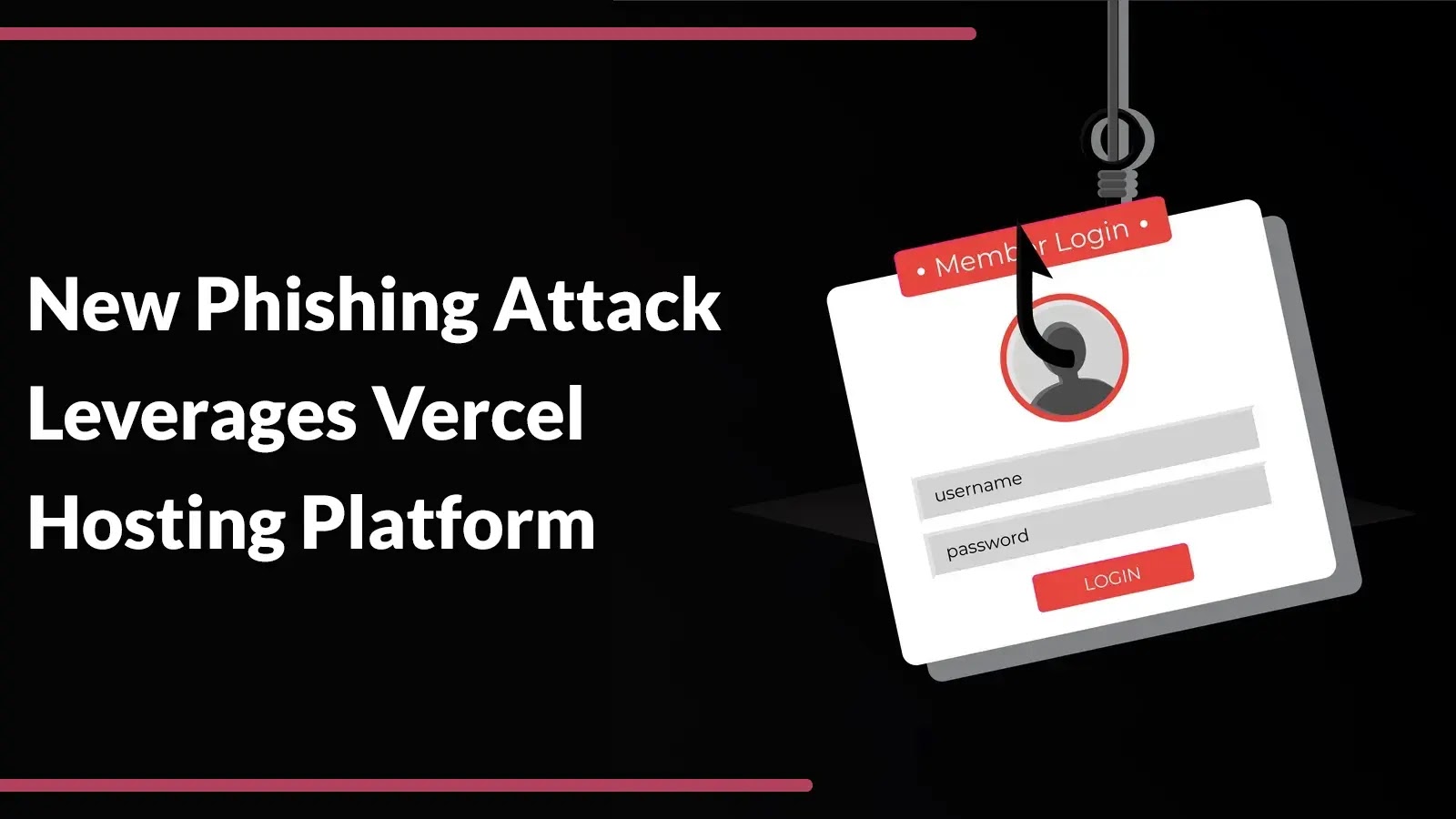
New Phishing Attack Leverages Vercel Hosting Platform to Deliver a Remote Access Tool
In the evolving landscape of cyber threats, attackers continually refine their tactics, often leveraging trusted platforms to enhance the efficacy of their campaigns. A recent and particularly insidious phishing campaign, active between November 2025 and January 2026, exemplifies this trend by exploiting Vercel’s legitimate hosting infrastructure to distribute sophisticated Remote Access Tools (RATs) to unsuspecting victims. This method of exploiting trusted domains presents a significant challenge for traditional security mechanisms, warranting immediate attention from cybersecurity professionals and developers alike.
This post delves into the mechanics of this novel attack, highlighting how social engineering combined with legitimate infrastructure exploitation creates a potent threat. We’ll explore the attack chain, its implications, and crucial remediation strategies to bolster your defenses.
The Vercel Phishing Attack: A Deep Dive
The core of this phishing campaign lies in its deceptive simplicity and the strategic use of Vercel, a popular and legitimate platform for hosting web applications. By utilizing Vercel’s robust infrastructure, attackers bypass common email security filters that might flag suspicious domains. The financially themed lures employed in the phishing emails are designed to maximize user engagement and trust, leading victims to click on malicious links hosted on Vercel.
- Social Engineering: Attackers craft compelling phishing emails. While the exact financial lures were not detailed, typical examples include fake invoices, payment notifications, shipping confirmations, or urgent financial alerts, all designed to provoke an immediate, uncritical response from the target.
- Trusted Domain Exploitation: By hosting their malicious payloads on Vercel, the attackers leverage the platform’s reputation. Emails containing links to
.vercel.appdomains often appear less suspicious than those directing to obscure or newly registered domains, thus increasing the likelihood of a successful click-through. - Remote Access Tool (RAT) Delivery: Upon clicking the malicious link, victims are unknowingly prompted to download and execute a RAT. These tools grant attackers unauthorized remote control over the compromised system, allowing for data exfiltration, further malware deployment, or system manipulation.
This tactic blurs the lines between legitimate and malicious activity, making it exceptionally difficult for users and automated security systems to differentiate between a genuine Vercel-hosted application and a weaponized one. The ease with which Vercel accounts can be created and utilized for development purposes also makes it an attractive platform for threat actors seeking to quickly deploy and distribute their malicious payloads.
Implications for Organizations and Individuals
The successful deployment of a Remote Access Tool through this vector can have severe ramifications:
- Data Breach and Confidentiality Loss: RATs are designed to exfiltrate sensitive data, including login credentials, financial information, intellectual property, and personal identifiable information (PII).
- Financial Fraud: With access to systems, attackers can initiate fraudulent transactions or compromise financial accounts.
- Ransomware Deployment: A RAT often serves as the initial foothold for more devastating attacks, such as ransomware, encrypting critical data and demanding payment.
- Reputational Damage: For organizations, a successful breach can lead to severe reputational harm, customer distrust, and regulatory penalties.
- Supply Chain Compromise: If employees of a software vendor are targeted, it could lead to a broader supply chain attack, impacting numerous downstream customers.
This specific attack does not correspond to a single CVE as it describes a campaign utilizing a platform, rather than a specific software vulnerability. Instead, it highlights a sophisticated abuse of a legitimate service.
Remediation Actions and Best Practices
Defending against phishing campaigns that exploit trusted platforms requires a multi-layered security approach focusing on both technological controls and user education. Organizations and individuals must be proactive in their cybersecurity posture.
For Organizations:
- Enhanced Email Security: Implement advanced email security gateways that perform deep analysis of URLs, even those pointing to legitimate hosting services. Look for unusual subdomains or referral patterns.
- Security Awareness Training: Regularly train employees on how to identify phishing attempts, emphasizing vigilance even with links that appear to come from trusted sources or platforms. Teach them to recognize common social engineering tactics.
- Endpoint Detection and Response (EDR): Deploy EDR solutions that can detect and respond to suspicious activity on endpoints, such as the execution of unusual processes or attempts to establish remote connections.
- Network Traffic Monitoring: Monitor network traffic for unusual outbound connections or data exfiltration attempts through compromised devices.
- Principle of Least Privilege: Limit user permissions to only what is necessary for their role, reducing the potential impact of a compromised account.
- Multi-Factor Authentication (MFA): Enforce MFA for all accounts, especially for access to critical systems and applications, to mitigate the impact of stolen credentials.
For Individuals:
- Verify Sender Identity: Always double-check the sender’s email address. Even if the name appears legitimate, the actual email address might reveal it as a spoof.
- Hover Before You Click: Before clicking on any link, hover your mouse over it (without clicking) to reveal the actual URL. Be suspicious if the URL doesn’t match the context.
- Report Suspicious Emails: Use your email client’s reporting features or forward suspicious emails to your IT department or security provider.
- Use Reputable Antivirus/Anti-Malware Software: Keep your security software up-to-date to detect and block known RATs and other malicious payloads.
- Be Skeptical of Urgency: Phishing emails often create a sense of urgency or fear to pressure you into acting without thinking. Take a moment to verify any urgent requests.
Tools for Detection and Mitigation
Several tools can aid in the detection and mitigation of sophisticated phishing attacks and the threats they carry:
| Tool Name | Purpose | Link |
|---|---|---|
| PhishTank | Community-based phishing URL verification | https://www.phishtank.com/ |
| Urlscan.io | Website scanner for analyzing URLs and identifying malicious activity | https://urlscan.io/ |
| Microsoft Defender for Endpoint | Endpoint Detection and Response (EDR) solution | https://www.microsoft.com/en-us/security/business/threat-protection/microsoft-defender-endpoint |
| CrowdStrike Falcon Insight | Cloud-native EDR and Extended Detection and Response (XDR) | https://www.crowdstrike.com/products/endpoint-security/falcon-insight-xdr/ |
| Proofpoint Email Protection | Advanced email gateway and threat protection | https://www.proofpoint.com/us/products/email-protection |
Conclusion
The campaign exploiting Vercel for RAT distribution underscores a critical shift in adversary tactics: the move towards leveraging legitimate services to circumvent established security measures. This approach amplifies the importance of user education, skepticism, and robust security frameworks that can detect anomalies beyond simple domain blacklisting. By understanding the intricacies of such attacks and implementing proactive defenses, organizations and individuals can significantly reduce their risk exposure and maintain a stronger security posture against these evolving threats.