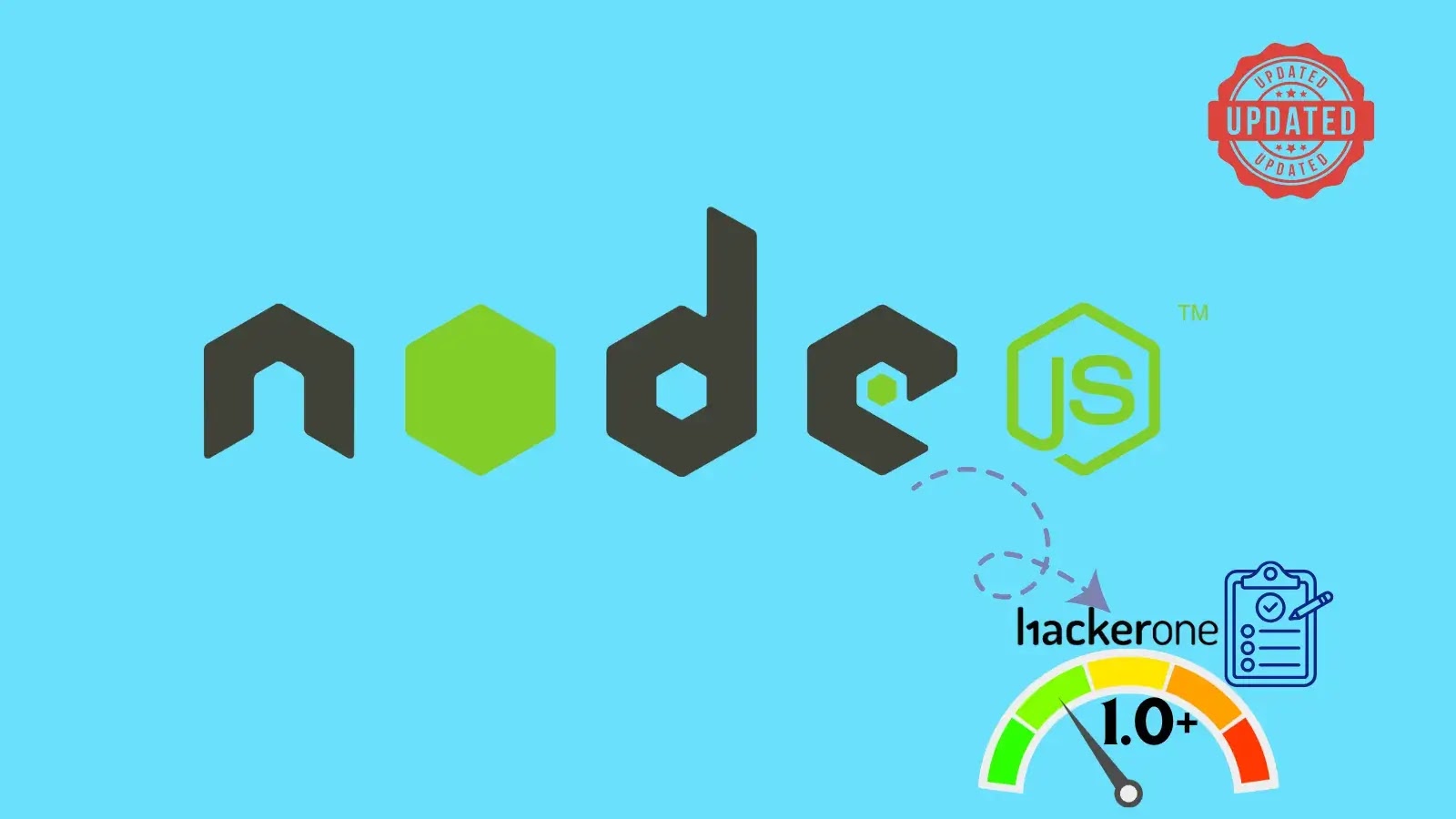
Node.js Updated HackerOne Program to Require a Signal of 1.0 or Higher to Submit Vulnerability Reports
Elevating Vulnerability Disclosure: Node.js Demands Higher Signal Scores on HackerOne
The landscape of open-source software security relies heavily on the diligence of security researchers and the effectiveness of vulnerability disclosure programs. In a move to streamline this critical process, Node.js, the popular JavaScript runtime environment, has recently announced a significant update to its HackerOne bug bounty program. This change mandates that researchers submitting vulnerability reports must now possess a minimum Signal score of 1.0 or higher. This initiative is designed to combat the influx of low-quality submissions and enhance the overall efficiency of vulnerability processing, ultimately strengthening Node.js security.
Understanding the Node.js HackerOne Program Update
Node.js has long leveraged HackerOne, a leading vulnerability disclosure platform, to engage with the security community and identify potential weaknesses in its extensive codebase. This collaborative approach has been instrumental in maintaining the integrity and security of a platform used by millions globally. The new requirement for a minimum Signal score of 1.0 marks a strategic shift aimed at optimizing this vital feedback loop.
The core of this update, as reported by Cybersecurity News, is an effort to filter out submissions that consume valuable resources without contributing meaningful security insights. By implementing this threshold, Node.js aims to receive higher-quality reports, allowing its security team to focus on legitimate and impactful vulnerabilities rather than sifting through noise.
What is HackerOne Signal?
Signal is an intrinsic scoring system within the HackerOne platform designed to rate the quality and impact of a security researcher’s past vulnerability submissions. It acts as a reputation metric, reflecting a researcher’s track record of accuracy, clarity, and the overall benefit their reports bring to program owners.
- Quality of Submissions: Signal scores are influenced by factors such as the validity of reported vulnerabilities, the clarity of the report, and the reproducibility of the issue.
- Impact of Discoveries: Reports leading to significant security patches or identifying critical exploitable flaws contribute positively to a researcher’s Signal.
- Program Participation: Consistent engagement, adherence to program rules, and constructive communication also play a role in building a robust Signal score.
A higher Signal score indicates a researcher’s proficiency and reliability, making their submissions more valuable and trustworthy to organizations like Node.js.
The Rationale Behind the 1.0 Signal Threshold
The decision by Node.js to set a minimum Signal score of 1.0 is not arbitrary. It’s a calculated move to address several common challenges faced by large-scale vulnerability disclosure programs:
- Reducing Noise: Many programs grapple with a high volume of low-quality or irrelevant submissions, often due to automated scanners, misconfigurations, or a lack of understanding of the target system. These reports divert resources away from critical issues.
- Improving Processing Efficiency: By receiving pre-vetted, higher-quality reports, the Node.js security team can accelerate the triage, validation, and remediation process, leading to faster patch releases and a more secure ecosystem.
- Rewarding Skill and Diligence: This change indirectly rewards experienced and meticulous security researchers, encouraging them to continue contributing while establishing a higher bar for new or less experienced participants.
- Enhancing Trust: A higher Signal score requirement builds greater trust between program owners and researchers, fostering a more productive collaboration environment.
Implications for Security Researchers and Developers
For security researchers active in the Node.js bug bounty program, this update necessitates a focus on quality over quantity. Researchers with a Signal score below 1.0 will need to participate in other HackerOne programs, improve the quality of their reports, and demonstrate a track record of valuable contributions before being able to submit to Node.js.
Developers who rely on Node.js stand to benefit significantly. A more efficient vulnerability disclosure program means quicker identification and remediation of security flaws, leading to a more robust and secure runtime for their applications. While specific vulnerability examples are not directly tied to this policy change, the enhanced program efficiency will help address threats more rapidly. For instance, addressing issues similar to those outlined in general Node.js security advisories, such as CVE-2023-39325 (HTTP Request Smuggling) or CVE-2023-39331 (HTTP Response Splitting), becomes more streamlined when accurate reports are prioritized.
Best Practices for Security Researchers on HackerOne
To maintain or improve one’s HackerOne Signal score and ensure effective vulnerability reporting, researchers should adhere to these best practices:
- Thorough Research: Fully understand the scope of the program and the target application before submitting.
- Clear and Concise Reports: Provide a detailed description of the vulnerability, including step-by-step reproduction instructions.
- Proof of Concept (PoC): Always include a reliable PoC to demonstrate the vulnerability’s existence and impact.
- Impact Assessment: Clearly explain the potential security implications of the discovered vulnerability.
- Professional Communication: Engage respectfully and constructively with security teams.
- Avoid Duplicates: Verify that the vulnerability has not already been reported.
- Stay Updated: Keep abreast of the latest security trends and attack vectors relevant to the technologies you are testing.
Conclusion: A Sharper Focus on Node.js Security
Node.js’s decision to require a minimum Signal score of 1.0 for its HackerOne program is a progressive step towards optimizing security and efficiency in vulnerability disclosure. By establishing a higher bar for report quality, Node.js strengthens its ability to swiftly identify and mitigate potential threats, ensuring a more secure environment for its vast user base. This change underscores the evolving nature of cybersecurity collaboration, where quality and trust are paramount in the collective effort to build and maintain secure software.