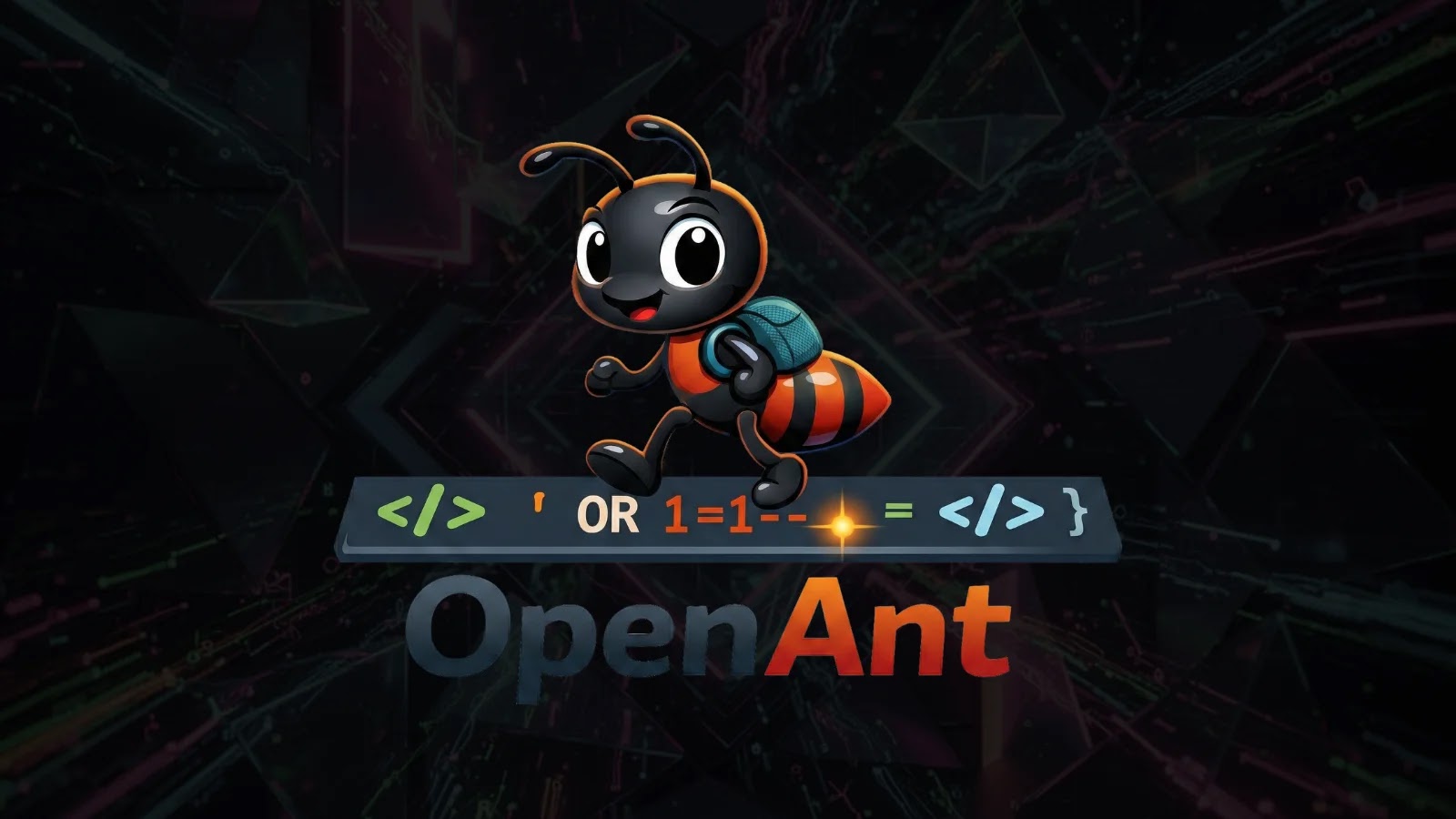
OpenAnt – AI Based vulnerability Scanner to Detect Vulnerabilities
The landscape of software development relies heavily on open-source contributions. While fostering innovation, this reliance also introduces a critical challenge: the proliferation of vulnerabilities within these widely adopted components. Traditional vulnerability scanning often struggles to keep pace with the sheer volume and complexity of open-source codebases, frequently yielding high rates of false positives or, worse, missing critical flaws entirely. This is where OpenAnt steps in, marking a significant evolution in proactive security.
Introducing OpenAnt: AI-Powered Vulnerability Discovery
OpenAnt is an open-source, LLM-based vulnerability discovery tool designed to refine how security teams and open-source maintainers identify and address security flaws. Released under the Apache 2.0 license and readily available on GitHub, OpenAnt directly confronts the escalating challenge of AI-discovered vulnerabilities in open-source software. Its core mission is to provide accurate, verified security insights with minimal false positives and false negatives, thereby streamlining remediation efforts and bolstering the overall security posture of projects relying on open-source code.
The Imperative for AI in Vulnerability Scanning
The sheer scale of open-source code and the dynamic nature of software development necessitate more intelligent and efficient vulnerability detection methods. Manual code reviews are time-consuming and often miss subtle logical flaws. Rule-based static analysis tools, while valuable, can be limited by predefined patterns and struggle with novel attack vectors. Large Language Models (LLMs) offer a transformative approach by understanding context, semantics, and potential exploit chains in a way that traditional methods cannot. OpenAnt leverages this capability to analyze codebases, identify suspicious patterns, and even predict potential vulnerabilities before they are widely exploited.
How OpenAnt Works: LLM at the Core
While specific architectural details of OpenAnt’s LLM implementation are not extensively detailed in the public domain, the premise involves training sophisticated language models on vast datasets of code, known vulnerabilities (including historical CVEs), and secure coding practices. This training enables OpenAnt to:
- Contextual Understanding: Analyze code snippets not just for keywords, but for their functional context within the broader application logic.
- Pattern Recognition: Identify subtle deviations from secure coding patterns that could indicate a vulnerability, even if no direct “signature” exists.
- Semantic Analysis: Understand the intent behind code and pinpoint areas where that intent could be maliciously subverted.
- Reduced Noise: By understanding code context more deeply, OpenAnt aims to significantly reduce the classic problem of false positives that plague many static analysis tools.
OpenAnt’s Impact on Open-Source Security
The release of OpenAnt under an open-source license is a strategic move. It encourages community collaboration, allowing security researchers and developers to contribute to its improvement, expand its capabilities, and incorporate new vulnerability types as they emerge. For open-source maintainers, OpenAnt provides a powerful, free-to-use tool to proactively scan their projects, ensuring higher code quality and reducing the risk of critical zero-day discoveries by malicious actors. For security teams within organizations leveraging open-source components, it offers an additional layer of assurance, helping to identify and patch vulnerabilities before they become exploitable in production environments.
Why OpenAnt Matters for Your Security Posture
Integrating OpenAnt into your development and security workflows can yield substantial benefits:
- Proactive Discovery: Identify vulnerabilities early in the development lifecycle rather than reacting to post-deployment exploits.
- Enhanced Accuracy: Minimize time wasted on false positives, allowing security teams to focus on genuine threats.
- Cost-Efficiency: Being open-source, OpenAnt offers a powerful scanning solution without licensing costs, democratizing advanced vulnerability detection.
- Community-Driven Improvement: Benefit from ongoing contributions and enhancements from a global community of security experts.
- Adaptability: LLM-based approaches inherently possess a greater capacity to adapt to new coding patterns and emerging vulnerability classes compared to purely signature-based scanners.
Remediation Actions
While OpenAnt helps identify vulnerabilities, effective remediation is equally crucial:
- Prioritize Findings: Address critical and high-severity vulnerabilities first, especially those exposed to external networks. For example, if OpenAnt flags a potential injection vulnerability (e.g., related to CVE-2022-XXXXX for SQLi), ensure immediate developer attention.
- Validate Findings: Although OpenAnt aims for low false positives, always validate critical findings through manual review or penetration testing.
- Patch and Update: Implement recommended patches or code changes. Ensure all dependencies are also updated to their latest secure versions.
- Developer Training: Educate developers on secure coding practices based on common vulnerability types identified by OpenAnt.
- Continuous Scanning: Integrate OpenAnt into your CI/CD pipeline for continuous monitoring of your codebase.
Tools for Vulnerability Management
| Tool Name | Purpose | Link |
|---|---|---|
| OpenAnt | Open-source, LLM-based vulnerability discovery for proactive detection. | GitHub – OpenAnt |
| OWASP ZAP | Dynamic Application Security Testing (DAST) for finding vulnerabilities in running web applications. | zaproxy.org |
| Snyk | Developer-first security for finding and fixing vulnerabilities in dependencies, code, and containers. | snyk.io |
| Trivy | Comprehensive scanner for vulnerabilities in OS packages, application dependencies, IaC, and more. | aquasecurity.github.io/trivy |
The Future is AI-Driven Security
OpenAnt represents a significant stride towards more intelligent and autonomous security tooling. By harnessing the power of Large Language Models, it offers a pragmatic solution to a complex problem, empowering both individual developers and large organizations to build and maintain more secure software. The shift from reactive patching to proactive, AI-assisted detection is not just an enhancement; it is a fundamental reorientation of modern cybersecurity strategy. Adopting tools like OpenAnt is essential for staying ahead in the relentless pursuit of software integrity.