Operation DupeHike Attacking Employees Using Weaponized Documents DUPERUNNER Malware
Operation DupeHike: Unmasking the Weaponized Documents Targeting Corporate Russia
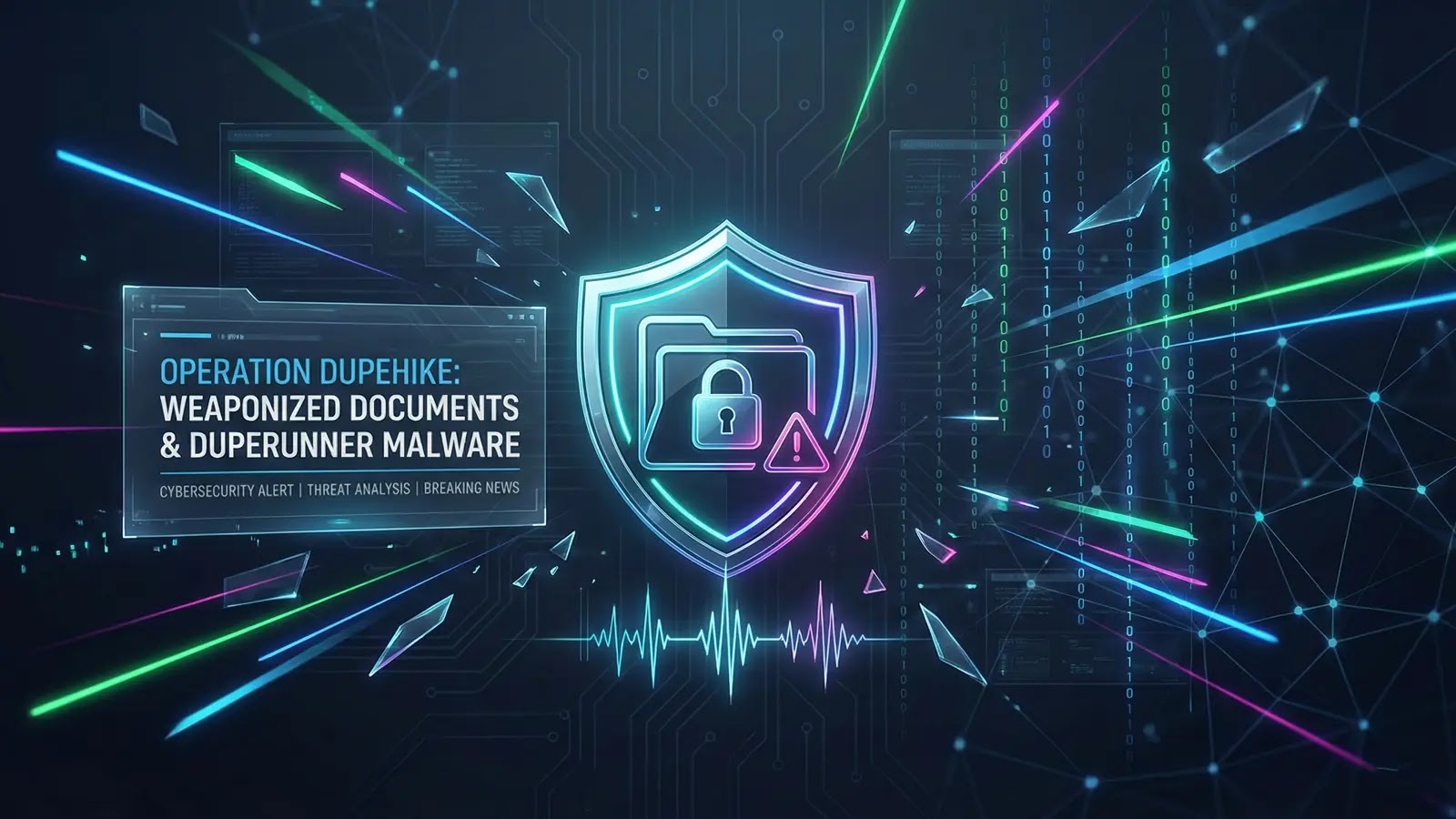
A new, sophisticated attack campaign, dubbed Operation DupeHike, is actively compromising Russian corporate environments. This operation, attributed to the formidable threat group UNG0902, specifically targets high-value personnel within human resources, payroll, and administrative departments. At its core, Operation DupeHike leverages meticulously crafted weaponized documents designed to appear as legitimate internal communications, ultimately leading to the deployment of the previously unknown DUPERUNNER malware.
The Deceptive Lure: Weaponized Documents and Social Engineering
UNG0902’s tactics hinge on highly effective social engineering. The attackers craft decoy documents that resonate deeply with the target audience, centering around sensitive topics like employee bonuses and internal financial policies. These documents are not merely convincing; they are engineered to exploit inherent trust in internal communications. Once opened, these weaponized documents initiate a multi-stage infection process, bypassing initial security layers by masquerading as genuine business-related content.
DUPERUNNER: A New Malware in the UNG0902 Arsenal
The primary payload delivered by Operation DupeHike is DUPERUNNER, a previously unidentified piece of malware. While specific details about DUPERUNNER’s full capabilities are still emerging, its initial deployment through weaponized documents suggests a focus on establishing persistence, exfiltrating sensitive data, and potentially enabling further network compromise. The novelty of DUPERUNNER poses a significant challenge for traditional signature-based detection mechanisms, emphasizing the need for advanced behavioral analysis and threat intelligence.
Target Profile: HR, Payroll, and Administrative Departments
The deliberate targeting of human resources, payroll, and administrative departments highlights UNG0902’s strategic objectives. These departments hold access to a wealth of sensitive corporate data, including employee personal identifiable information (PII), financial records, and internal policies. Compromise of these systems can lead to severe data breaches, financial fraud, and significant operational disruption. The attackers aim to exploit internal trust relationships and access privileged information critical to an organization’s functioning.
Attribution and Threat Actor UNG0902
The attribution of Operation DupeHike to the UNG0902 threat group underscores the persistent and evolving nature of cyber threats. While detailed public profiles of UNG0902 may be limited, their operational sophistication, demonstrated by the development of custom malware like DUPERUNNER and their adept social engineering techniques, positions them as a significant and capable adversary. Organizations must recognize the persistent threat posed by such advanced persistent threat (APT) groups.
Remediation Actions and Protective Measures
Organizations, particularly those operating in the targeted regions or with similar corporate structures, must take immediate steps to mitigate the risks posed by Operation DupeHike. The following remediation actions are crucial:
- Employee Awareness Training: Conduct regular, up-to-date cybersecurity awareness training, specifically focusing on identifying phishing attempts, weaponized documents, and social engineering tactics. Emphasize the risks associated with opening unsolicited attachments, even if they appear to be from internal sources.
- Email and Attachment Security: Implement robust email security solutions with advanced threat protection, sandboxing capabilities, and attachment scanning. Configure these solutions to aggressively detect and block suspicious attachments, especially those with macros or embedded scripts.
- Endpoint Detection and Response (EDR): Deploy EDR solutions across all endpoints. EDR can monitor for suspicious activities, such as malicious process execution, unauthorized data access, and unusual network connections, which are indicative of malware like DUPERUNNER.
- Principle of Least Privilege: Enforce the principle of least privilege for all users and systems. Limit user access to only the resources absolutely necessary for their job functions, thereby restricting the potential lateral movement and impact of a compromised account.
- Patch Management: Ensure all operating systems, applications, and security software are routinely updated and patched to address known vulnerabilities. While DUPERUNNER is new, exploits often leverage existing, unpatched vulnerabilities.
- Backup and Recovery: Implement comprehensive data backup and recovery strategies. Regular, immutable backups are essential for recovering from successful ransomware attacks or data integrity breaches.
- Incident Response Plan: Develop and regularly test a detailed incident response plan. A well-defined plan ensures a swift and effective response to security incidents, minimizing damage and recovery time.
Conclusion
Operation DupeHike represents a serious and immediate threat to corporate security, particularly within specific sectors and regions. The campaign’s reliance on weaponized documents and the deployment of DUPERUNNER malware highlight the need for a multi-layered defense strategy. Proactive employee training, robust technical controls, and a vigilant security posture are paramount in defending against sophisticated adversaries like UNG0902 and their evolving tactics.