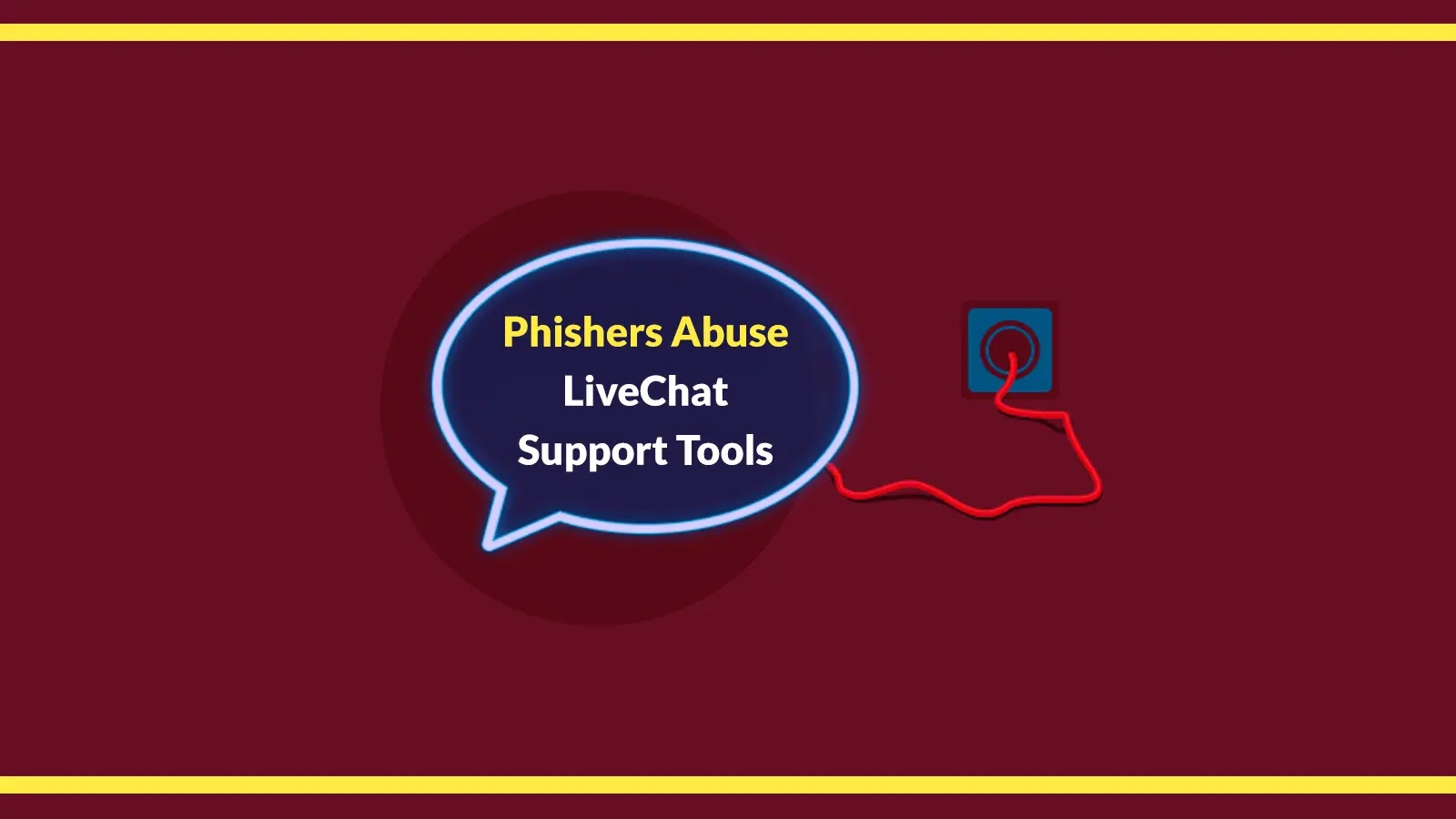
Phishers Abuse LiveChat Support Tools to Steal Sensitive Data in New SaaS-Based Attack Tactic
The landscape of cyber threats is constantly shifting, with attackers finding ingenious ways to weaponize everyday tools. A new and particularly insidious phishing campaign has been identified, showcasing a clear evolution in tactics. Threat actors are now exploiting legitimate customer service software, specifically LiveChat – a popular Software-as-a-Service (SaaS) platform – to steal sensitive user data. This marks a concerning shift, turning a trusted communication channel into a vector for highly credible and effective phishing operations against unsuspecting victims.
The Evolution of Phishing: LiveChat as a Weapon
Traditional phishing often relies on generic email templates or malicious links. However, this emergent campaign demonstrates a sophisticated understanding of user trust and operational workflows. By abusing LiveChat, attackers leverage a platform designed for real-time customer support, making their malicious interactions appear far more legitimate. The inherent trust users place in a company’s live support channel is being exploited, creating an environment ripe for credential harvesting and data theft.
This tactic bypasses many standard email security controls, as the interaction originates from what appears to be a legitimate support portal. The real-time nature of LiveChat also adds a layer of urgency, pressuring victims into making quick decisions without proper scrutiny.
How the SaaS-Based Attack Unfolds
The core of this attack lies in its ability to mimic genuine customer service interactions. Attackers likely gain access to or create fraudulent LiveChat accounts, presenting themselves as legitimate support agents. They might initiate conversations with targets, posing as representatives from a known service or company. During these interactions, they can:
- Request “verification” of personal or account details.
- Direct users to fake login pages indistinguishable from authentic ones.
- Coax users into providing sensitive information, such as passwords, credit card numbers, or personally identifiable information (PII).
- Leverage the real-time chat interface to maintain a convincing conversational flow, adapting their approach based on user responses.
Because LiveChat is a SaaS platform, the infrastructure is already trusted by businesses globally. This shared trust creates a significant blind spot for many users who are accustomed to interacting with support directly through their website or application.
Remediation Actions and Proactive Defense
Addressing this new threat requires a multi-faceted approach, combining user education, enhanced security protocols, and vigilant monitoring.
- User Education: Train employees and customers to be suspicious of any unsolicited requests for sensitive information, even within a seemingly legitimate chat interface. Emphasize verification procedures for all support interactions.
- Verify Identity: Encourage users to always verify the identity of a support agent through an independent channel (e.g., calling a known customer service number) if they feel a request is unusual or if sensitive data is being requested.
- Multi-Factor Authentication (MFA): Mandate MFA for all internal accounts and strongly encourage its use for customer-facing applications. This substantially mitigates the impact of stolen credentials.
- Website Security: Ensure DMARC, DKIM, and SPF records are properly configured to prevent email spoofing, as these LiveChat attacks might be preceded by email-based social engineering.
- Monitoring and Logging: Implement robust logging and monitoring for all SaaS applications, including LiveChat instances. Look for suspicious login patterns, unusual chat activity, or unauthorized account creation.
- Security Awareness Training: Regularly update security awareness training to include examples of these new, evolving phishing techniques.
- Reporting Mechanisms: Establish clear internal and external reporting mechanisms for suspicious activity on customer support platforms.
Tools for Detection and Mitigation
While this particular attack vector currently lacks a specific CVE as it exploits a platform’s legitimate functionality rather than a software vulnerability, several tools can aid in detection and mitigation efforts against the broader phishing threat.
| Tool Name | Purpose | Link |
|---|---|---|
| Phishing Simulators (e.g., KnowBe4, Cofense) | Train users to identify and report phishing attempts, including sophisticated social engineering. | https://www.knowbe4.com/ |
| Security Information and Event Management (SIEM) Solutions (e.g., Splunk, Microsoft Sentinel) | Aggregate and analyze logs from various sources, including SaaS applications, to detect suspicious activity and accelerate incident response. | https://www.splunk.com/ |
| Endpoint Detection and Response (EDR) Solutions (e.g., CrowdStrike Falcon, SentinelOne) | Monitor endpoints for malicious activity, including the execution of malware delivered via phishing links. | https://www.crowdstrike.com/ |
| Web Application Firewalls (WAFs) | Protect web applications from common attacks and can filter malicious requests, although less direct for LiveChat abuse. | https://www.cloudflare.com/waf/ |
Key Takeaways
The abuse of LiveChat support tools for phishing represents a significant escalation in attacker sophistication. This method leverages trusted platforms and real-time interaction to bypass traditional defenses and exploit inherent user trust. Organizations must prioritize comprehensive security awareness training, implement robust verification protocols, and maintain vigilant monitoring of all customer-facing communication channels. Proactive defense against social engineering, coupled with strong authentication mechanisms, is the best strategy to protect sensitive data from these evolving SaaS-based threats.