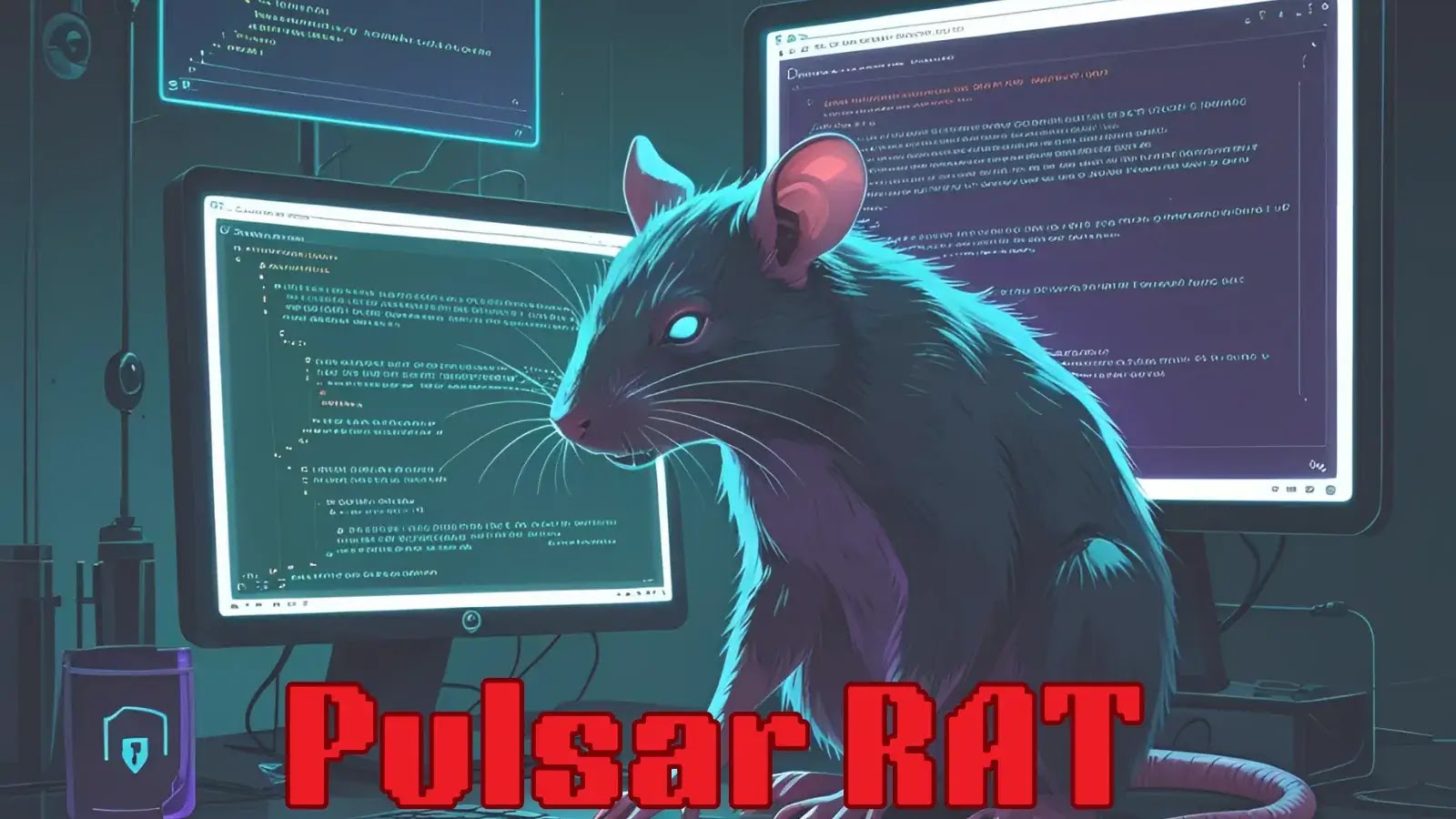
Pulsar RAT Using Memory-Only Execution & HVNC to Gain Invisible Remote Access
The landscape of cyber threats continuously evolves, with attackers developing increasingly sophisticated methods to evade detection and maintain persistence. Among these, the emergence of Pulsar RAT marks a significant escalation in the capabilities of remote administration tools (RATs). This advanced variant, derived from the open-source Quasar RAT, leverages groundbreaking techniques like memory-only execution and Hidden Virtual Network Computing (HVNC) to achieve an unprecedented level of stealth, posing a severe challenge to conventional cybersecurity defenses.
Understanding Pulsar RAT: A New Breed of Threat
Pulsar RAT is not merely another remote administration tool; it represents a specialized and highly potent derivative of the publicly available Quasar RAT. Developed with a focus on stealth and persistence, Pulsar RAT integrates a suite of dangerous enhancements. Its modular design, specifically targeting Windows operating systems, allows attackers to dynamically load functionalities, making it a highly adaptable and formidable weapon in their arsenal. The core danger lies in its ability to operate largely undetected, providing attackers with invisible remote access to compromised systems.
The Power of Memory-Only Execution
One of Pulsar RAT’s most defining and dangerous features is its reliance on memory-only execution. Traditional malware typically writes its components to disk, leaving file-based indicators that security solutions can detect. Pulsar RAT circumvents this by loading its malicious payload directly into the system’s memory, avoiding any persistent footprint on the hard drive. This technique makes it exceptionally difficult for signature-based antivirus software or endpoint detection and response (EDR) solutions that rely on disk-based forensic analysis to identify and neutralize the threat. Attackers can control the compromised system without leaving readily accessible evidence of their presence.
Invisible Control with HVNC (Hidden Virtual Network Computing)
Another critical enhancement that elevates Pulsar RAT’s threat level is its integration of Hidden Virtual Network Computing (HVNC). VNC allows users to remotely control a desktop, but HVNC takes this a step further by operating in a hidden manner. When an attacker utilizes HVNC through Pulsar RAT, they gain complete graphical access to the victim’s desktop environment without displaying any visual indication on the victim’s screen. This means an attacker can interact with applications, access files, and manipulate system settings – all while the legitimate user remains oblivious to the clandestine activities occurring in the background. This capability is particularly alarming as it bypasses user awareness, a crucial layer in many security strategies.
How Pulsar RAT Evades Detection
The combination of memory-only execution and HVNC enables Pulsar RAT to effectively circumvent traditional detection mechanisms. By not writing to disk, it avoids many static and dynamic analysis techniques focusing on file-system anomalies. Furthermore, its ability to operate silently in the background, invisible to the end-user, means that suspicious activity is less likely to be reported. This makes Pulsar RAT a prime example of advanced evasion techniques, allowing for prolonged periods of unseen compromise and data exfiltration. The modular nature of Pulsar also allows attackers to introduce new obfuscation methods or anti-analysis techniques, further complicating detection efforts.
Remediation Actions and Proactive Defense
Given the sophisticated nature of Pulsar RAT and its evasion techniques, a multi-layered and proactive defense strategy is imperative. Relying solely on traditional antivirus is insufficient. Organizations and individuals must adopt comprehensive cybersecurity measures.
- Implement Advanced EDR Solutions: Invest in next-generation Endpoint Detection and Response (EDR) platforms that offer behavioral analysis, heuristic detection, and memory scanning capabilities to identify anomalous activities indicative of memory-only malware.
- Strong Network Segmentation: Segment networks to limit the lateral movement of threats. If one segment is compromised, attackers leveraging Pulsar RAT will find it harder to spread to critical systems.
- Principle of Least Privilege: Enforce strict access controls. Users and applications should only have the minimum necessary permissions to perform their functions. This limits the damage an attacker can inflict even if they gain control via Pulsar RAT.
- Regular Security Awareness Training: Educate users about phishing, social engineering, and the dangers of opening suspicious attachments or clicking malicious links, which are common initial infection vectors for RATs.
- Application Whitelisting: Implement application whitelisting to control which executables are allowed to run on endpoints. This can prevent unknown or unauthorized binaries (like Pulsar RAT’s components) from executing.
- Behavioral Monitoring: Monitor for unusual network traffic patterns, sudden spikes in resource utilization, or unexpected processes running in memory. Tools that focus on process injection and direct memory access can be particularly effective.
- Patch Management: Keep all operating systems and software up to date with the latest security patches. Many RATs exploit known vulnerabilities to gain initial access.
Tools for Detection and Mitigation
Combating advanced threats like Pulsar RAT requires a combination of robust tools and vigilant security practices.
| Tool Name | Purpose | Link |
|---|---|---|
| Sysmon | Advanced system activity monitoring and logging for anomaly detection. | https://learn.microsoft.com/en-us/sysinternals/downloads/sysmon |
| Volatility Framework | Memory forensics for analyzing memory dumps to detect hidden processes and injected code. | https://www.volatilityfoundation.org/ |
| Mandiant (formerly FireEye) HX | Endpoint Detection and Response (EDR) with advanced threat hunting capabilities. | https://www.mandiant.com/software/endpoint-security |
| CrowdStrike Falcon Insight | Cloud-native EDR for comprehensive endpoint visibility, protection, and threat hunting. | https://www.crowdstrike.com/endpoint-security-products/falcon-insight/ |
| Microsoft Defender for Endpoint | Integrated EDR capabilities for Windows environments, focusing on behavioral detection. | https://www.microsoft.com/en-us/security/business/endpoint-security/microsoft-defender-endpoint |
Conclusion: Adapting to the Evolving Threat Landscape
The rise of Pulsar RAT, with its sophisticated use of memory-only execution and HVNC, underscores a critical shift in the tactics employed by threat actors. These advanced evasion techniques demand a proactive and adaptive defense strategy. Organizations must move beyond traditional perimeter defenses and invest in advanced endpoint and network security solutions that offer deep visibility, behavioral analysis, and rapid response capabilities. Continuous monitoring, robust patch management, and thorough security awareness training are no longer optional but essential components in protecting against threats that operate in the shadows, like Pulsar RAT. Understanding these evolving threats is the first step toward building resilient and effective cybersecurity postures.