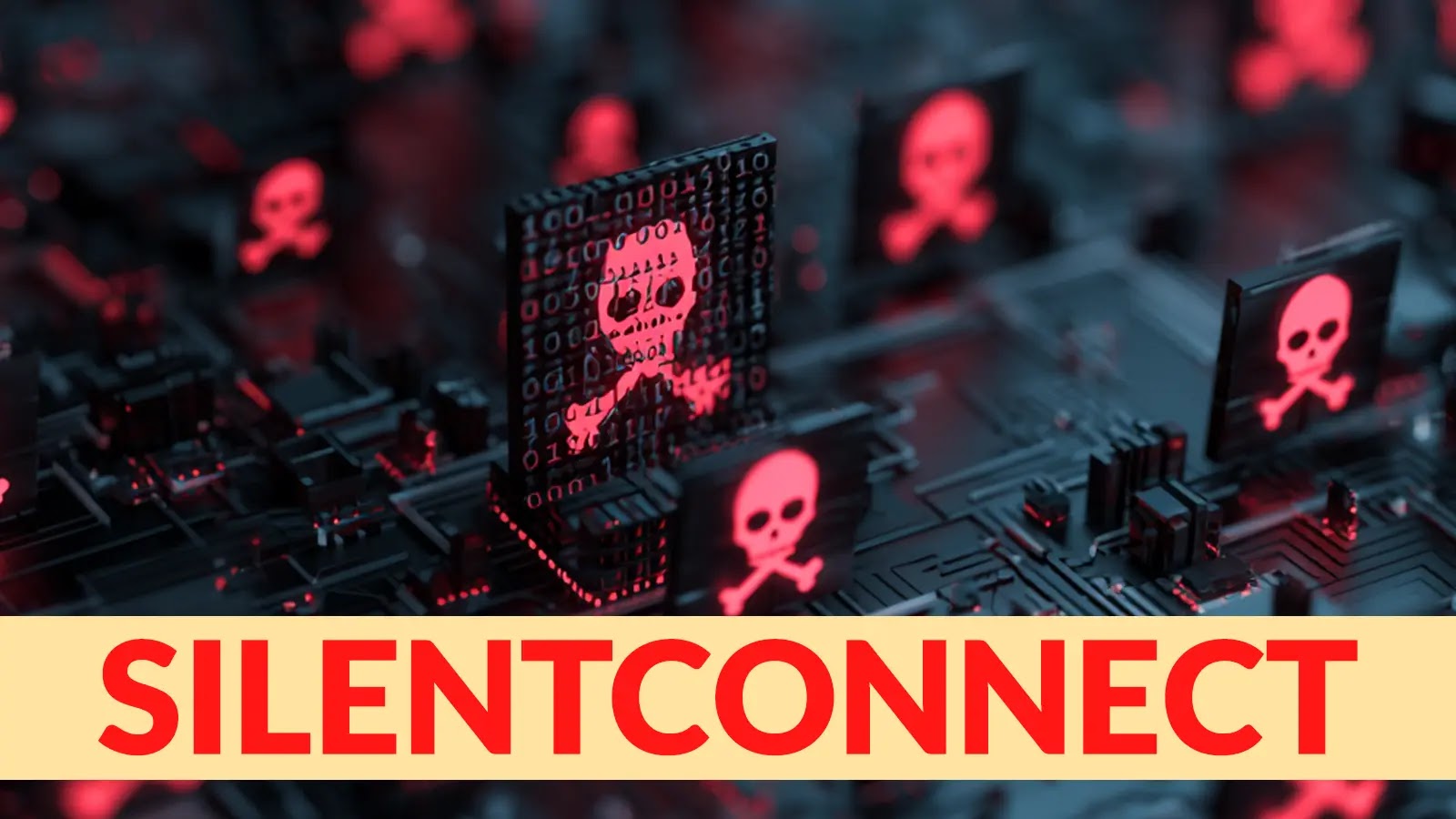
SILENTCONNECT Uses VBScript, PowerShell and PEB Masquerading to Deploy ScreenConnect
Unmasking SILENTCONNECT: A Multi-Stage Malware Loader Exploiting VBScript, PowerShell, and PEB Masquerading
In the relentless landscape of cyber threats, staying ahead of sophisticated attack vectors is paramount. A new and particularly stealthy adversary, dubbed SILENTCONNECT, has emerged, silently targeting Windows machines since at least March 2024. This multi-stage malware loader employs a cunning blend of techniques, including VBScript execution, in-memory PowerShell, and Process Environment Block (PEB) masquerading, to ultimately deploy the legitimate ConnectWise ScreenConnect remote monitoring and management (RMM) tool. The consequence? Full hands-on-keyboard control for attackers, making understanding and mitigating this threat critical for IT professionals and security analysts.
What is SILENTCONNECT? A Deep Dive into its Modus Operandi
SILENTCONNECT isn’t your average drive-by download. It’s a meticulously crafted, multi-stage loader designed for evasion and persistence. Its primary objective is to establish a foothold on a victim’s system by deploying ScreenConnect, a legitimate tool often abused for malicious purposes. The attack chain unfolds through several distinct phases:
- VBScript Execution: The initial stage often involves a VBScript payload. VBScript, while somewhat legacy, remains a potent tool for initial access due to its ability to execute commands and interact with the Windows operating system without triggering immediate alarms from many traditional antivirus solutions. This script likely acts as a dropper or initial downloader.
- In-Memory PowerShell Execution: A key aspect of SILENTCONNECT’s stealth is its heavy reliance on in-memory PowerShell execution. Instead of writing suspicious scripts to disk, where they could be easily detected, PowerShell commands are executed directly in memory. This “fileless” approach significantly reduces the attack’s footprint and makes forensic analysis more challenging.
- PEB Masquerading: Perhaps the most insidious technique employed by SILENTCONNECT is Process Environment Block (PEB) Masquerading. The PEB is a data structure within a Windows process that contains important information about the process, including its image name. By manipulating the PEB, SILENTCONNECT can make a malicious process appear as a legitimate one, effectively masking its true identity. For instance, a malicious process could masquerade as “svchost.exe” or “explorer.exe,” deceiving security tools and analysts into believing it’s a benign system process. This technique is particularly effective at bypassing detection mechanisms that rely on process name integrity.
The ultimate goal, as mentioned, is the installation of ConnectWise ScreenConnect. While ScreenConnect is a legitimate RMM tool, its abuse by threat actors like those behind SILENTCONNECT provides them with complete, unrestricted access to the compromised system. This includes data exfiltration, further malware deployment, lateral movement, and persistent remote control.
The Threat of Abused RMM Tools
The use of legitimate RMM tools like ScreenConnect in malicious campaigns highlights a growing trend among cybercriminals. By leveraging trusted software, attackers can blend their activities with legitimate network traffic, making detection significantly harder. Organizations often allow RMM tools through their firewalls, inadvertently creating a pathway for attackers once the tool is compromised. This tactic exploits the inherent trust placed in widely adopted software for remote support and management.
Remediation Actions and Proactive Defense
Defending against sophisticated threats like SILENTCONNECT requires a multi-layered and proactive approach. Organizations must implement robust security controls and maintain a vigilant monitoring posture.
- Endpoint Detection and Response (EDR): Advanced EDR solutions are crucial for detecting fileless attacks and behavioral anomalies characteristic of SILENTCONNECT. EDR can monitor process creation, memory injections, and unusual PowerShell activity that standard antivirus might miss.
- Application Whitelisting/Control: Implement strict application whitelisting policies to prevent unauthorized executables, including unrecognized VBScript or PowerShell scripts, from running on endpoints.
- PowerShell Logging and Monitoring: Enable verbose PowerShell logging and send these logs to a Security Information and Event Management (SIEM) system for analysis. Look for unusual execution chains, encoded commands, or script blocks.
- Principle of Least Privilege: Enforce the principle of least privilege across all user accounts and system processes. This limits the potential damage an attacker can inflict even if they manage to gain initial access.
- Network Segmentation: Segment your network to limit lateral movement potential. Even if one endpoint is compromised, robust segmentation can prevent the attacker from spreading across the entire infrastructure.
- Regular Software Updates and Patching: Ensure all operating systems, applications, and RMM tools (like ConnectWise ScreenConnect) are kept up-to-date with the latest security patches to address known vulnerabilities.
- User Awareness Training: Educate users about phishing attempts and social engineering tactics that may be used to deliver the initial VBScript payload.
- Behavioral Analytics: Deploy security solutions that leverage behavioral analytics to identify deviations from normal user and system behavior, which could indicate a PEB masquerading attack.
Recommended Tools for Detection and Mitigation
| Tool Name | Purpose | Link |
|---|---|---|
| ConnectWise Control (ScreenConnect) Remediation Guides | Official guidance and patches for ScreenConnect vulnerabilities | https://control.connectwise.com/security/security-bulletins/ |
| Microsoft Defender for Endpoint (MDE) | Advanced EDR for detecting fileless attacks and behavioral anomalies. | https://www.microsoft.com/en-us/security/business/threat-protection/microsoft-defender-for-endpoint |
| Sysmon | Detailed logging of process creation, network connections, and other system activity. | https://docs.microsoft.com/en-us/sysinternals/downloads/sysmon |
| Carbon Black Cloud | Cloud-native EDR solution with strong behavioral detection capabilities. | https://www.vmware.com/products/carbon-black-cloud.html |
| PowerShell Script Block Logging | For auditing and detecting malicious PowerShell scripts. | https://docs.microsoft.com/en-us/powershell/module/microsoft.powershell.core/about/about_logging?view=powershell-7.2 |
Conclusion: Stay Vigilant Against Evolving Threats
SILENTCONNECT serves as a stark reminder that threat actors are continually refining their methodologies to bypass traditional security controls. The combination of VBScript for initial access, in-memory PowerShell for stealth, and PEB masquerading for evasion makes it a formidable challenge. Organizations must evolve their defenses by implementing advanced EDR solutions, rigorous application control, comprehensive logging, and robust behavioral analytics. Proactive threat hunting and a strong security posture are no longer optional but essential in today’s dynamic threat landscape. By understanding the tactics, techniques, and procedures (TTPs) of adversaries like SILENTCONNECT, we can better protect our digital assets and maintain operational resilience.