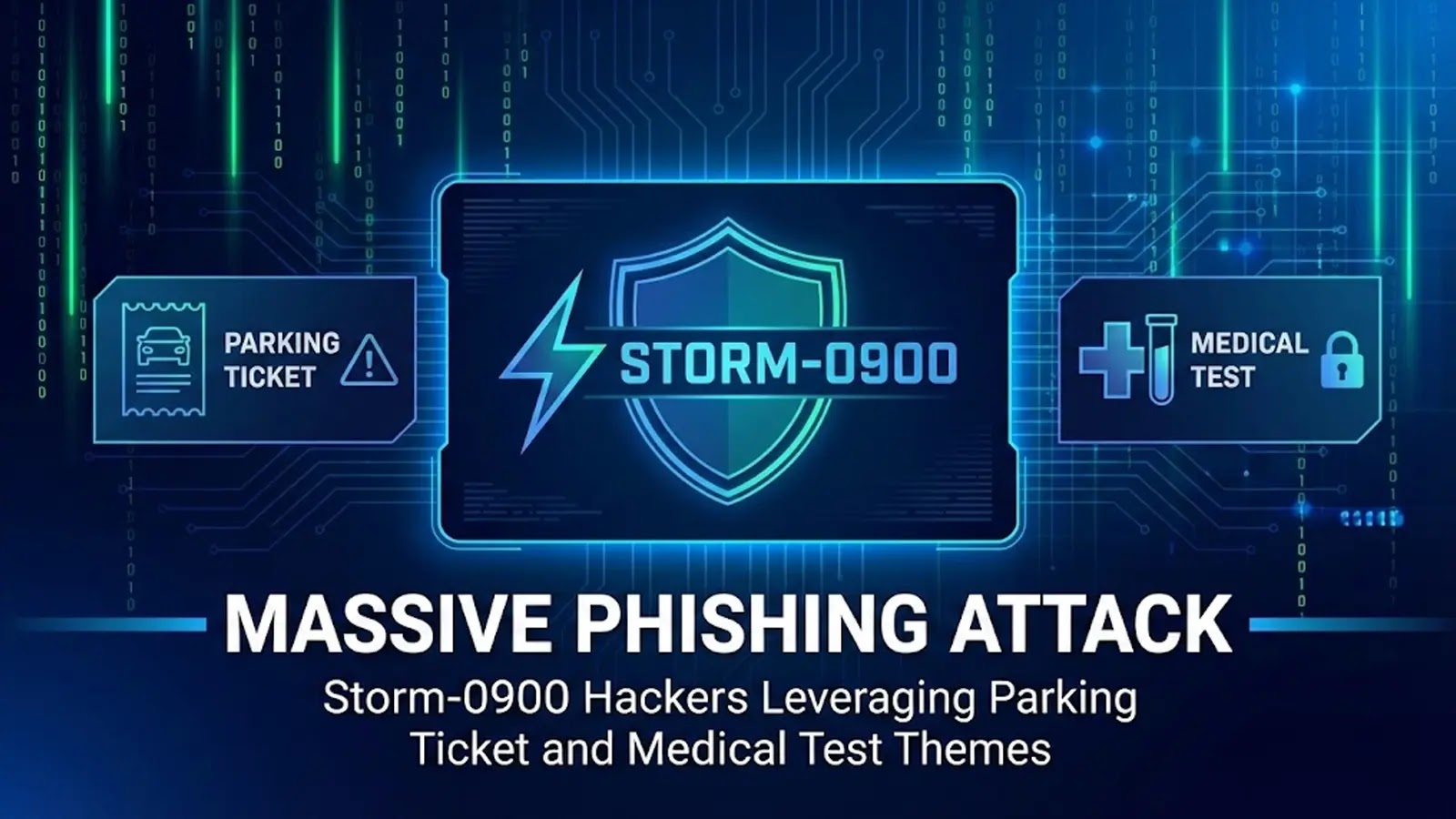
Storm-0900 Hackers Leveraging Parking Ticket and Medical Test Themes in Massive Phishing Attack
The holiday season, a time for reflection and connection, often brings with it increased online activity. Unfortunately, it also presents prime opportunities for cybercriminals. Just before Thanksgiving, a sophisticated threat actor known as Storm-0900 launched a high-volume phishing campaign, demonstrating a cunning exploitation of human psychology during a sensitive period. This coordinated attack, detected and swiftly blocked by Microsoft Threat Intelligence, bombarded users across the United States with tens of thousands of deceptive emails.
Understanding the Storm-0900 Phishing Campaign
Storm-0900, a name synonymous with advanced persistent threats, employed a dual-pronged approach in their latest phishing endeavors. The core of their strategy relied on potent social engineering themes designed to elicit immediate, unthinking responses from recipients. The scale of this operation, involving tens of thousands of emails, underscores the calculated effort behind their malicious intent.
The Deceptive Themes: Parking Tickets and Medical Tests
The effectiveness of Storm-0900’s campaign stemmed from its choice of social engineering lures:
- Parking Ticket Notifications: These emails likely simulated official notices for unpaid parking violations. The urgency and potential financial penalty associated with parking tickets frequently prompt recipients to click on embedded links without due diligence, fearing late fees or further legal complications.
- Medical Test Results/Appointments: Exploiting health-related concerns is a particularly insidious tactic. Emails disguised as urgent medical test results or appointment confirmations tap into a recipient’s anxiety, often leading them to open attachments or click links in a quest for information about their well-being.
Both themes are chosen for their ability to bypass critical thinking, pushing individuals towards a quick reaction. This emotional manipulation is a hallmark of successful phishing campaigns.
The Mechanics of the Attack
While the initial report focuses on the social engineering aspect and the volume of emails, it’s critical to understand the typical progression of such an attack. A user, deceived by the urgent or alarming subject matter, would likely complete one or more of the following actions:
- Click a Malicious Link: This could lead to a fake login page designed to steal credentials (credential harvesting) or a website that automatically downloads malware onto the user’s device.
- Download a Malicious Attachment: The attachment, disguised as a legitimate document (e.g., a PDF of a parking ticket or medical report), could contain malware such as ransomware, spyware, or a banking Trojan.
- Provide Personal Information: Fictitious forms on fake websites might solicit sensitive data like banking details, Social Security numbers, or other Personally Identifiable Information (PII).
Why Holiday Periods are Prime Targets
The timing of this attack—Thanksgiving eve—is no coincidence. Holiday periods often see:
- Increased Distraction: Individuals are often preoccupied with travel, family gatherings, or holiday preparations, making them less vigilant about cybersecurity threats.
- Higher Email Volume: People receive more emails during holidays (e.g., promotional offers, shipping notifications), making it easier for malicious emails to blend in.
- Reduced Staffing: Many organizations operate with skeleton crews during holidays, potentially slowing down incident response times if an attack is successful.
Remediation Actions and Proactive Defense
Defending against sophisticated phishing campaigns like those from Storm-0900 requires a multi-layered approach:
- Enhance Email Security Gateways: Implement and regularly update advanced email filtering solutions that can detect and block malicious emails before they reach employee inboxes. These solutions often employ AI and machine learning to identify suspicious patterns, known threat indicators, and deceptive sender domains.
- Implement Multi-Factor Authentication (MFA): Even if credentials are compromised through phishing, MFA provides an additional layer of security, significantly hindering unauthorized access. This should be enforced across all critical systems and applications.
- Conduct Regular Security Awareness Training: Educate employees about common phishing tactics, recent threats, and how to identify suspicious emails. Training should emphasize:
- Verification: Always verify the sender’s identity, especially for unexpected or urgent requests. Do not rely solely on the “From” address.
- Link Scrutiny: Hover over links to inspect the actual URL before clicking. Be wary of shortened URLs.
- Grammar and Spelling: Malicious emails often contain errors.
- Urgency and Threat: Be suspicious of emails demanding immediate action or threatening negative consequences.
- Reporting: Establish a clear process for employees to report suspicious emails to the IT security team.
- Deploy Endpoint Detection and Response (EDR) Solutions: EDR tools can monitor endpoints for suspicious activity, even if a user falls victim to a phishing attempt and malware is introduced. They can detect and respond to threats in real-time, preventing further compromise.
- Keep Systems Patched and Updated: Ensure operating systems, applications, and security software are always up-to-date to patch known vulnerabilities that attackers might exploit as part of their post-phishing activities.
- Strengthen DNS Filtering: Implement DNS filtering to prevent users from accessing known malicious websites, even if they inadvertently click on a phishing link.
Key Takeaways
The Storm-0900 phishing campaign serves as a stark reminder of the persistent and evolving nature of cyber threats. Their strategic use of compelling social engineering themes, particularly during vulnerable holiday periods, highlights the need for robust technical defenses combined with ongoing user education. Vigilance, verification, and a proactive security posture remain our strongest defenses against these sophisticated attacks.