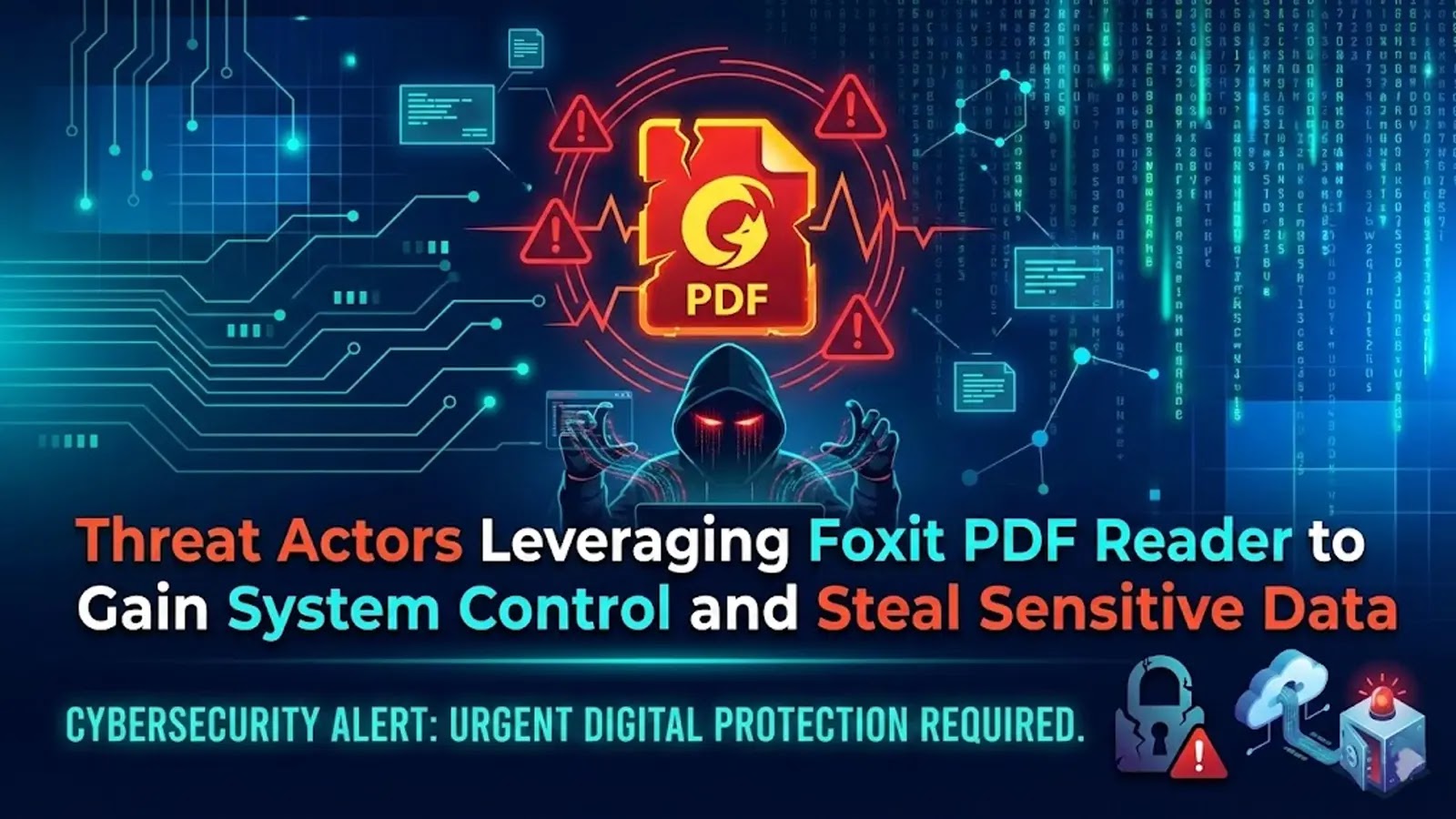
Threat Actors Leveraging Foxit PDF Reader to Gain System Control and Steal Sensitive Data
The Deceptive Trap: Threat Actors Exploit Foxit PDF Reader in Recruitment Scams
The digital landscape is constantly challenged by cunning cyber adversaries. A recent development highlights a particularly insidious tactic: threat actors are now leveraging the widely used Foxit PDF Reader to compromise systems and exfiltrate sensitive data. This new campaign, dubbed ValleyRAT, targets unsuspecting job seekers with seemingly legitimate recruitment documents, transforming a hopeful career opportunity into a major security incident.
This report delves into the mechanics of this attack, examines the critical vulnerabilities exploited, and provides actionable remediation steps for individuals and organizations to safeguard against such sophisticated social engineering ploys.
ValleyRAT: A New Front in Cyber Espionage
The ValleyRAT campaign is a prime example of how cybercriminals adapt their methodologies to exploit human trust and common practices. By masquerading as reputable employers and offering enticing job opportunities, these attackers significantly increase their chances of success. The core of this operation involves distributing malicious files disguised as essential recruitment documentation.
The attack vector typically begins with an email message containing fake job offers or company materials. These emails are crafted to appear authentic, often mimicking legitimate HR communications. The crucial delivery mechanism for the malware is typically a compressed archive file, meticulously named to convey professionalism and urgency. Once a user extracts and opens one of these seemingly innocuous PDF documents, the infection chain is initiated.
Exploiting Trust: How Foxit PDF Reader Becomes a Vector
Foxit PDF Reader, a popular alternative to Adobe Acrobat, has regrettably become a conduit for these malicious activities. While the specific CVEs exploited in the ValleyRAT campaign are not detailed in the provided source, the fact that threat actors are “leveraging Foxit PDF Reader to gain system control” strongly suggests the exploitation of client-side vulnerabilities, likely tied to scripting capabilities or document rendering within the reader.
Attackers likely embed malicious scripts (e.g., JavaScript) or specially crafted elements within the PDF itself. When the unsuspecting user opens the document, these embedded components execute, dropping the ValleyRAT malware onto their system. The malware then proceeds to establish persistence, exfiltrate sensitive data, and potentially grant the attackers remote control over the compromised machine.
Key indicators of compromise for this type of attack include the discovery of unusual network traffic, unauthorized process execution, or the presence of unfamiliar files in system directories, particularly after opening a document from an unverified source.
Remediation Actions: Fortifying Your Digital Defenses
Protecting against sophisticated social engineering attacks combined with software exploitation requires a multi-layered approach. Here are critical remediation actions:
- Software Updates: Immediately update Foxit PDF Reader and all other installed software to their latest versions. Software vendors regularly release patches for identified vulnerabilities. While specific CVEs for this campaign are not publicly detailed, maintaining current versions is paramount.
- Email Security: Implement robust email security solutions that include advanced threat protection, sandboxing, and URL/attachment scanning. Educate users on identifying phishing attempts, even those that appear highly professional.
- User Awareness Training: Conduct regular cybersecurity awareness training for all employees, especially those involved in recruitment or who frequently interact with external documents. Emphasize critical thinking before opening attachments or clicking links, even if they appear legitimate.
- Endpoint Detection and Response (EDR): Deploy EDR solutions to monitor endpoints for suspicious activities, such as unusual process behavior, unauthorized file modifications, or attempts at data exfiltration.
- Network Segmentation and Least Privilege: Implement network segmentation to limit the lateral movement of threat actors in case of a breach. Enforce the principle of least privilege, ensuring users only have access to the resources absolutely necessary for their roles.
- Backup and Recovery: Regularly back up critical data and establish a comprehensive incident response plan, including robust data recovery procedures.
Conclusion
The ValleyRAT campaign underscores the persistent and evolving threat landscape. Threat actors continue to refine their methods, exploiting user trust and software vulnerabilities to achieve their objectives. The exploitation of commonly used applications like Foxit PDF Reader in conjunction with socially engineered recruitment schemes poses a significant risk to individuals and organizations alike.
Staying vigilant, maintaining updated software, and fostering a strong security-aware culture are not merely best practices; they are essential for mitigating the impact of such sophisticated attacks and safeguarding sensitive information.