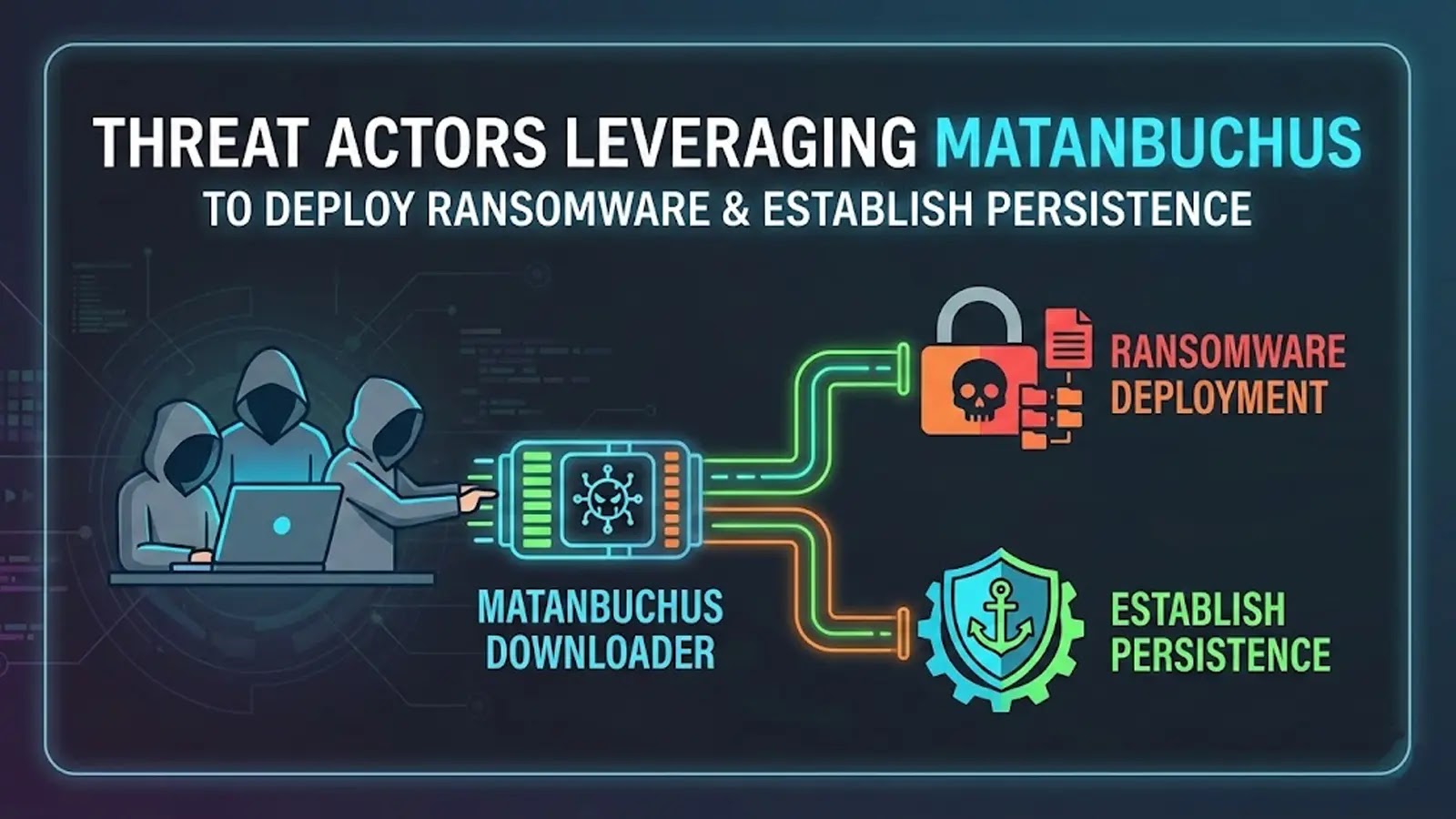
Threat Actors Leveraging Matanbuchus Malicious Downloader to Ransomware and Establish Persistence
Unmasking Matanbuchus: A Rising Threat in the Ransomware Landscape
The digital defense perimeter is under constant siege, with sophisticated tools quickly evolving in the hands of malicious actors. Among these, dangerous malware loaders like Matanbuchus have emerged as a primary vector for delivering devastating payloads such as ransomware and establishing persistent access within compromised networks. Understanding its mechanics and evolution is crucial for any organization aiming to fortify its cyber defenses.
What is Matanbuchus? An Overview of a Dangerous Downloader
Matanbuchus is a potent and increasingly prevalent malicious downloader, distinguished by its development in the robust C++ programming language. Its primary function is to serve as an initial access broker, facilitating the delivery and execution of secondary malware, most notably ransomware. What makes Matanbuchus particularly insidious is its availability as a Malware-as-a-Service (MaaS) offering since 2020. This business model allows a broader range of threat actors, potentially with varying levels of technical expertise, to rent access to this powerful tool and deploy it against their targets, effectively democratizing access to sophisticated attack capabilities.
The Evolution of Matanbuchus: Version 3.0 Surfaces
The threat landscape is dynamic, and malware strains, like legitimate software, undergo continuous development. Security researchers recently uncovered Matanbuchus version 3.0 actively deployed in real-world attacks as of July 2025. This iteration signifies a notable evolution in its capabilities, likely incorporating enhanced evasion techniques, improved stealth, and potentially new methods for payload delivery or command-and-control communication. The regular updates to Matanbuchus underscore the commitment of its developers to maintaining its efficacy and staying a step ahead of defensive measures.
How Matanbuchus Fuels Ransomware Attacks and Persistence
Matanbuchus acts as a crucial precursor to more destructive attacks. Its role as a downloader means it’s often the first malicious code to gain a foothold on a system. Once executed, it downloads and executes additional malware, such as ransomware families, to encrypt critical data and demand payment. Beyond immediate financial gain via ransomware, Matanbuchus is also leveraged to establish persistence within a compromised environment. This can involve installing backdoors, creating new user accounts, modifying system settings, or deploying other tools that allow threat actors to maintain long-term access, exfiltrate data, or launch further attacks at a later stage. The ability to establish persistence transforms a transient compromise into a long-term threat, significantly increasing the potential damage.
Remediation Actions: Defending Against Matanbuchus and Similar Threats
Proactive and multi-layered security strategies are essential to mitigate the risks posed by Matanbuchus and its evolving counterparts. Organizations must focus on preventing initial compromise, detecting suspicious activity, and having robust incident response plans in place.
- Endpoint Detection and Response (EDR) & Antivirus: Implement advanced EDR solutions and regularly updated antivirus software to detect and block malicious executables and anomalous process behavior associated with downloaders.
- Email Security Gateways: Since phishing emails are a primary delivery vector, robust email security solutions are vital to filter out malicious attachments and links before they reach end-users.
- Network Segmentation: Implement network segmentation to limit the lateral movement of malware should an initial compromise occur.
- Principle of Least Privilege: Enforce the principle of least privilege for all user accounts and applications to minimize the impact of a successful breach.
- Regular Backups: Maintain comprehensive, offline, and tested backups of all critical data to ensure business continuity in the event of a ransomware attack.
- Patch Management: Regularly update and patch all operating systems, applications, and firmware to remediate known vulnerabilities. While Matanbuchus itself isn’t a vulnerability, it often exploits existing weaknesses.
- User Awareness Training: Conduct regular security awareness training for employees to educate them on identifying and reporting phishing attempts and suspicious activities.
- Threat Intelligence Integration: Integrate up-to-date threat intelligence feeds to understand the latest tactics, techniques, and procedures (TTPs) used by threat actors leveraging tools like Matanbuchus.
There are no specific CVEs directly associated with Matanbuchus as it is a malware, not a vulnerability in software. However, it often exploits vulnerabilities that do have CVEs. For example, if it were to exploit a critical flaw in a browser, that vulnerability might be cataloged as CVE-2023-XXXXX (placeholder for example).
Tools for Detection and Mitigation
| Tool Name | Purpose | Link |
|---|---|---|
| CrowdStrike Falcon | Endpoint Detection and Response (EDR) for threat prevention, detection, and response. | https://www.crowdstrike.com/ |
| Microsoft Defender for Endpoint | Comprehensive enterprise endpoint security platform. | https://www.microsoft.com/en-us/security/business/endpoint-security/microsoft-defender-for-endpoint |
| Proofpoint Email Protection | Advanced email security gateway to block phishing and malware. | https://www.proofpoint.com/us/products/email-protection |
| Wireshark | Network protocol analyzer for incident response and traffic analysis. | https://www.wireshark.org/ |
| Nmap | Network scanner for identifying open ports and services, useful for post-compromise network analysis. | https://nmap.org/ |
Conclusion: Strengthening Defenses Against Evolving Threats
The continued evolution and widespread adoption of tools like Matanbuchus highlight the persistent and adaptive nature of cyber threats. Its role as a primary delivery mechanism for ransomware and a vector for establishing persistence makes it a critical concern for IT professionals and security analysts. Organizations must adopt a proactive, multi-layered cybersecurity posture, encompassing robust technical controls, continuous monitoring, and ongoing user education, to effectively defend against sophisticated threats like Matanbuchus and safeguard their digital assets.