Top 10 Best Web Application Firewall (WAF) in 2026
Securing Your Digital Gateway: The Top 10 Web Application Firewalls (WAFs) in 2026
The digital landscape is a battlefield, and your web applications are prime targets. With sophisticated threats constantly emerging, a robust defense mechanism is not just an option—it’s an absolute necessity. Organizations face an unending barrage of attacks, from insidious SQL injections to debilitating Distributed Denial-of-Service (DDoS) assaults. This is where Web Application Firewalls (WAFs) become indispensable, acting as the critical frontline defense for your web-facing assets.
This report delves into the paramount importance of WAFs and, drawing insights from industry analysis and forward-looking projections, presents the top 10 Web Application Firewalls predicted to dominate the market in 2026. We’ll explore their core functionalities and shed light on why these solutions are pivotal for maintaining application security and business continuity.
Understanding the Web Application Firewall (WAF) Imperative
A Web Application Firewall (WAF) operates at Layer 7 of the OSI model, focusing exclusively on HTTP/S traffic. Its strategic placement as a reverse proxy, situated between clients and your web applications, allows it to meticulously inspect every incoming request and outgoing response. This granular inspection capability enables WAFs to detect and neutralize a wide spectrum of application-layer threats before they can compromise your systems or data.
Unlike traditional network firewalls that operate at lower layers, WAFs are purpose-built to understand the intricacies of web application protocols. They can identify malicious patterns indicative of common vulnerabilities such as cross-site scripting (XSS), SQL injection, and buffer overflows, effectively blocking anomalous or threatening requests while permitting legitimate traffic to pass through. This intelligent filtering mechanism is crucial for safeguarding sensitive data, preserving application integrity, and ensuring uninterrupted service availability.
How a Web Application Firewall (WAF) Functions
The operational backbone of a WAF lies in its policy engine. Upon intercepting HTTP/S traffic, a WAF applies a set of predefined rules or policies to analyze the request’s various components: HTTP headers, URL parameters, and POST data. These rules are designed to identify known attack signatures, behavioral anomalies, and protocol violations.
Key mechanisms employed by WAFs include:
- Signature-Based Detection: Identifying known attack patterns and malicious code snippets.
- Protocol Validation: Ensuring requests adhere to HTTP/S standards, blocking malformed or non-compliant traffic.
- Behavioral Analysis: Learning normal application behavior to detect deviations that may indicate an attack.
- Reputation-Based Filtering: Blocking traffic from known malicious IP addresses or botnets.
- Data Leakage Prevention: Preventing sensitive information from leaving the application in response to an attack.
When a WAF detects a suspicious request, it can take various actions, including blocking the request, logging the event for further analysis, alerting security teams, or even issuing a CAPTCHA challenge to verify user legitimacy.
Top 10 Best Web Application Firewalls (WAFs) in 2026
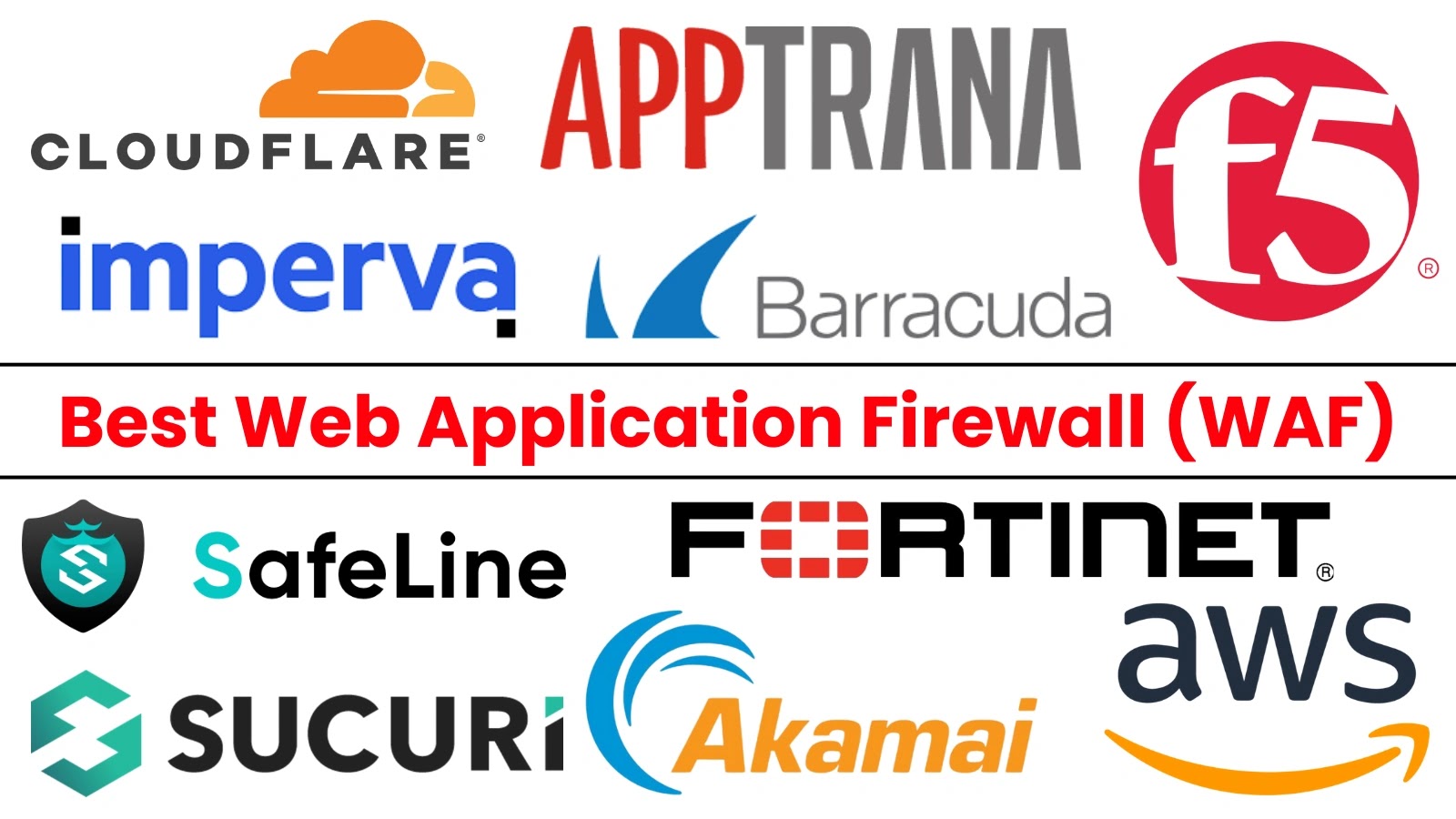
The landscape of WAF solutions is dynamic, with continuous innovation driving enhanced protection capabilities, scalability, and integration. Based on current market trends, technological advancements, and projected feature sets, here are the top 10 WAFs expected to lead the industry in 2026:
- Cloudflare WAF: Renowned for its ease of deployment, robust DDoS protection, and extensive global network. Cloudflare’s integrated suite offers comprehensive security for web applications and APIs, making it a strong contender for various business sizes.
- AWS WAF: Deeply integrated with Amazon Web Services, AWS WAF provides seamless protection for applications hosted on AWS. It offers flexible rule customization, managed rulesets, and integrates with other AWS security services.
- Azure Application Gateway WAF: Microsoft’s native WAF solution for Azure-hosted applications, offering integrated protection, centralized management, and scalability within the Azure ecosystem.
- F5 Advanced WAF: A powerful and feature-rich WAF offering advanced bot protection, API security, and sophisticated behavioral analysis capabilities, catering to enterprise-level requirements.
- Akamai App & API Protector: Akamai’s offering provides comprehensive protection against a broad spectrum of web and API threats, leveraging its vast edge network for superior performance and threat intelligence.
- Imperva WAF: A long-standing leader in the WAF space, Imperva offers strong defense against OWASP Top 10 threats, advanced bot protection, and robust API security, suitable for complex environments.
- Barracuda CloudGen WAF: Known for its comprehensive security features, including advanced threat protection, DDoS mitigation, and robust API security, offered as both a physical and virtual appliance, and a cloud service.
- Sucuri WAF: Particularly popular among smaller to medium-sized businesses and WordPress users, Sucuri offers a cost-effective and efficient cloud-based WAF with excellent performance and incident response capabilities.
- Fortinet FortiWeb: Fortinet’s WAF solution provides advanced multi-layered protection against known and zero-day threats, integrating with the broader Fortinet security fabric for enhanced threat intelligence sharing.
- Palo Alto Networks Cloud WAF: Leveraging the power of machine learning and behavioral analytics, Palo Alto Networks offers cloud-native WAF protection for modern applications, emphasizing API security and threat prevention.
Remediation Actions: Enhancing Your WAF Strategy
Deploying a WAF is a critical step, but its effectiveness hinges on proper configuration and ongoing management. Here are key remediation actions to maximize your WAF’s protection:
- Continuous Rule Tuning: Regularly review and fine-tune your WAF rules to adapt to evolving threats and specific application needs. Generic rulesets may not cover all vulnerabilities, such as those related to a specific version of Apache Struts (e.g., CVE-2017-5638).
- Leverage Managed Rulesets: Utilize vendor-provided managed rulesets, which are regularly updated to counter new vulnerabilities and emerging attack vectors.
- Implement API Security: With the rise of API-driven applications, ensure your WAF or a dedicated API gateway provides robust API security, protecting against threats like broken object level authorization (CVE-2023-38546 relevant to some HTTP/2 implementations, though typically API specific issues are within the application logic).
- Integrate with SIEM: Forward WAF logs to your Security Information and Event Management (SIEM) system for centralized monitoring, correlation with other security data, and faster incident response.
- Regular Testing: Conduct penetration testing and vulnerability scanning (e.g., OWASP ZAP) against your applications with the WAF enabled to identify gaps in protection and validate its efficacy.
- Enable Bot Protection: Configure and optimize bot management features to differentiate between legitimate and malicious bot traffic, preventing credential stuffing and content scraping.
- Educate Developers: Foster a security-aware development culture to build applications with security in mind, reducing the attack surface that the WAF needs to protect.
Conclusion
The role of Web Application Firewalls in defending against sophisticated cyber threats cannot be overstated. As web applications continue to be central to business operations, the need for advanced, intelligent protection grows exponentially. The WAFs highlighted for 2026 demonstrate a strong commitment to integrating machine learning, AI, and comprehensive threat intelligence to offer unparalleled defense.
Selecting the right WAF involves considering your specific application architecture, deployment model, threat landscape, and budget. However, one constant remains: a well-implemented and regularly managed WAF is a non-negotiable component of any robust cybersecurity strategy, ensuring the integrity, availability, and confidentiality of your most critical digital assets.