Top 15 Firewall Management Tools in 2026
Firewalls are the bedrock of network security, acting as the first line of defense against an increasingly sophisticated threat landscape. But in 2026, simply deploying a firewall isn’t enough; effective management is paramount. Without robust tools to oversee, configure, and update these critical security appliances, organizations become vulnerable to unauthorized access, data breaches, and operational disruptions. This deep dive explores the top firewall management tools poised to dominate the market in 2026, offering insights into their capabilities and how they empower security teams to maintain an ironclad perimeter.
The essence of a strong cybersecurity posture lies in consistent, intelligent firewall management. These tools move beyond basic rule administration, offering comprehensive solutions for policy enforcement, threat intelligence integration, and compliance reporting across complex, hybrid environments. They streamline operations, reduce human error, and proactively identify weaknesses, transforming a reactive defense into a proactive security strategy.
Understanding Firewall Management Tools
Firewall management tools are sophisticated platforms designed to simplify and enhance the administration of network firewalls. Their primary function is to safeguard networks by monitoring and controlling inbound and outbound traffic against predefined security rules. They actively block unauthorized access and evolving cyber threats, preserving the integrity of sensitive data and critical systems.
Key features integral to these tools include:
- Centralized Policy Management: Unifying rule creation, modification, and deployment across multiple firewalls, regardless of vendor or location.
- Real-time Monitoring and Alerting: Providing immediate visibility into network traffic, suspicious activities, and policy violations.
- Compliance Reporting: Generating detailed reports essential for regulatory compliance (e.g., GDPR, HIPAA, PCI DSS).
- Change Management: Tracking all policy changes, providing audit trails, and enabling rollbacks to previous configurations.
- Vulnerability Management Integration: Often linking with vulnerability scanners to prioritize and address firewall-related security gaps.
- Threat Intelligence Feeds: Incorporating real-time threat data to update rulesets dynamically against emerging threats.
With intuitive interfaces and seamless integrations, these tools simplify policy configuration and updates across even the most complex enterprise environments. This ensures consistent, enterprise-grade security that adapts to dynamic business needs and evolving cyber threats.
Why Effective Firewall Management is Crucial
The digital perimeter is under constant assault. Organizations face persistent advanced persistent threats (APTs), ransomware attacks, zero-day exploits, and sophisticated phishing campaigns. Static or poorly managed firewalls are easily bypassed, leading to catastrophic consequences. Effective firewall management ensures that security policies are always aligned with current threats and business requirements, preventing the sort of breaches that lead to significant financial loss and reputational damage.
Consider the impact of unpatched vulnerabilities or misconfigured rules. For example, a critical vulnerability like CVE-2022-42475 in FortiGate SSL-VPN could be exploited if firewalls are not promptly updated or managed. Similarly, a simple misconfiguration, allowing excessive open ports, can be an entry point for attacks, leading to data exfiltration or system compromise.
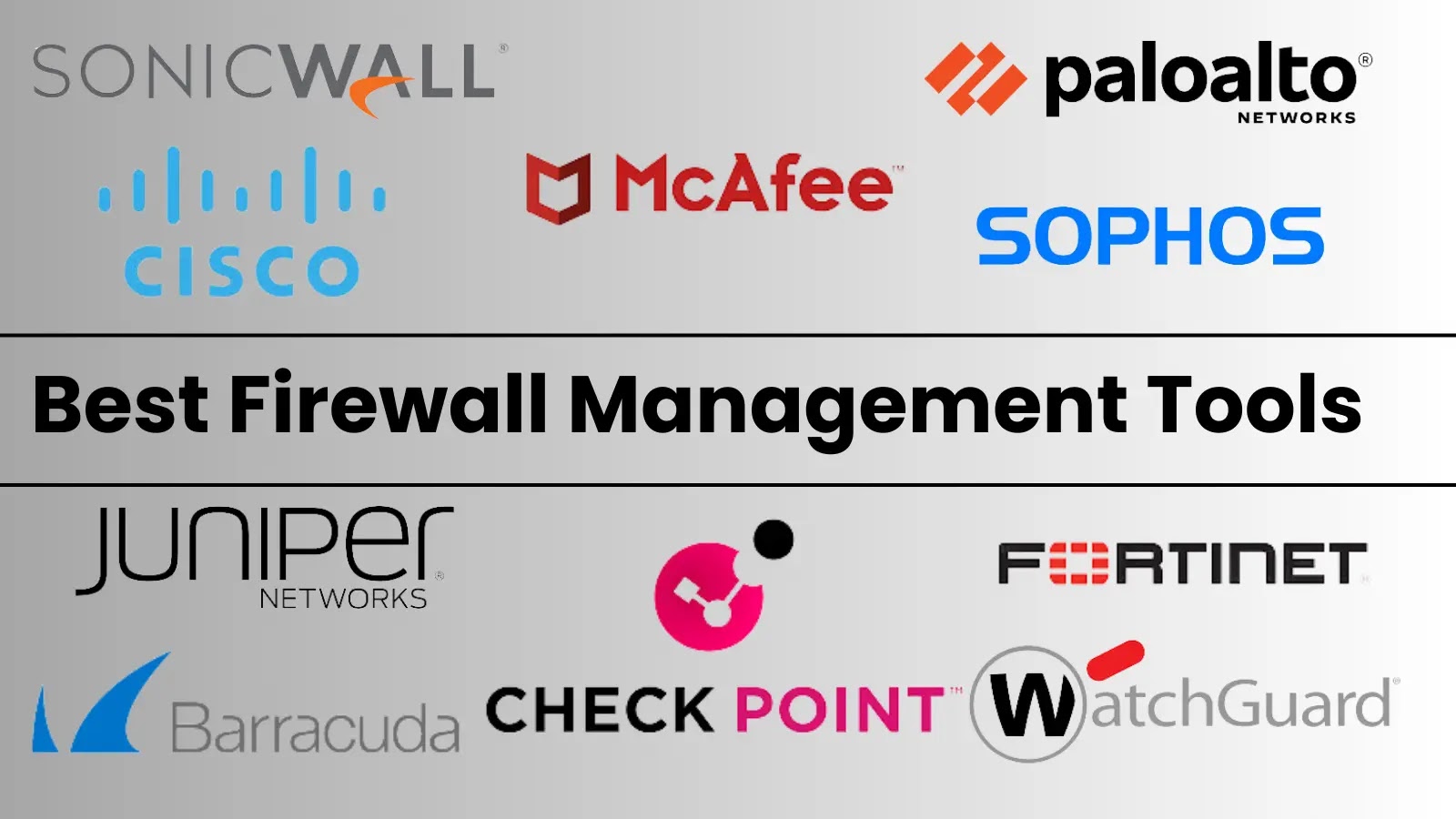
Top 15 Firewall Management Tools in 2026 (Based on Projections and Industry Trends)
While the cybersecurity landscape evolves rapidly, certain tools consistently demonstrate leadership and innovation. Based on current trends, market dominance, and anticipated advancements, here are the top firewall management tools likely to be prominent in 2026:
(Editor’s Note: The specific ranking within this list is dynamic and reflects projected industry momentum and feature sets rather than a definitive current snapshot. The reference article from CybersecurityNews.com serves as a foundational insight for these projections.)
1. Palo Alto Networks Panorama
Palo Alto Networks Panorama provides centralized security management for Palo Alto Networks next-generation firewalls. It offers comprehensive visibility, policy management, and logging across a distributed network of firewalls, streamlining operations and ensuring consistent policy enforcement.
2. Fortinet FortiManager
FortiManager is Fortinet’s centralized management solution for its FortiGate firewalls. It enables administrators to control thousands of FortiGate devices from a single console, providing robust configuration, deployment, and monitoring capabilities for security policies across the entire Fortinet security fabric.
3. Cisco Security Manager (CSM)
Cisco Security Manager provides comprehensive management for Cisco security devices, including ASA firewalls, Firepower Threat Defense, and IPS. It simplifies firewall policy deployment, VPN configuration, and reporting, catering to large-scale network environments.
4. Check Point SmartConsole
Check Point SmartConsole is the unified management interface for Check Point security gateways. It delivers granular policy control, threat visibility, and reporting for Check Point’s enterprise-grade firewall solutions, emphasizing integrated threat prevention.
5. FireMon Security Manager
FireMon offers a comprehensive security management platform that goes beyond basic administration. It provides deep visibility into firewall rules, automates policy management, continuously monitors for compliance, and optimizes security postures across multi-vendor environments.
6. Tufin SecureTrack / SecureChange
Tufin provides network security policy management solutions, including SecureTrack for visibility and compliance, and SecureChange for automated provisioning and change management. It supports a wide range of firewall vendors, offering a unified approach to security policy orchestration.
7. AlgoSec Security Management Solution
AlgoSec automates security policy management across hybrid and multi-cloud environments. It helps organizations understand, provision, and audit network security policies, minimizing manual errors and ensuring continuous compliance while optimizing firewall performance.
8. Juniper Networks Junos Space Security Director
Junos Space Security Director provides centralized management for Juniper firewalls (SRX Series) and other security devices. It simplifies policy enforcement, threat management, and network visibility, allowing administrators to manage security across complex networks efficiently.
9. Sophos Central Firewall Management
Sophos Central provides a unified cloud management platform for Sophos firewalls (XG Series and SG Series). It offers centralized control over policy, reporting, and threat response, making it easier for organizations to manage distributed firewall deployments from a single interface.
10. Forcepoint Security Manager
Forcepoint Security Manager offers centralized configuration, monitoring, and reporting for Forcepoint NGFWs. It integrates with Forcepoint’s broader security ecosystem, providing unified policy enforcement across web, data, and network security.
11.华为 (Huawei) USG Series Management
Huawei’s management solutions for its USG (Unified Security Gateway) firewalls provide centralized configuration, monitoring, and policy deployment. They cater to large enterprises and service providers, emphasizing integration within Huawei’s extensive network infrastructure.
12. CyberArk Central Policy Manager (CPM)
While primarily a PAM solution, CyberArk’s CPM capabilities often extend to securing access to and managing configurations of critical network devices, including firewalls. Its role in securing administrative credentials and automating privileged access to firewall consoles makes it indirectly crucial for robust firewall management.
13. Skybox Security Suite
Skybox Security provides a comprehensive security posture management platform that includes extensive firewall analysis and optimization. It offers attack surface visualization, vulnerability management, and policy compliance, helping organizations reduce risk by intelligently managing firewall configurations.
14. ManageEngine Firewall Analyzer
ManageEngine Firewall Analyzer is a log analysis and configuration management solution for various firewall brands. It provides powerful reporting, real-time alerts, compliance auditing, and security analytics to enhance firewall performance and security posture.
15. pfSense/OPNsense with Management Overlays (e.g., pfSense EasyRule)
For organizations leveraging open-source firewalls like pfSense or OPNsense, third-party management tools and robust APIs facilitate centralized administration. While not a single vendor solution, the ecosystem around these platforms, including tools like pfSense EasyRule for GUI-based rule management, is growing, offering flexible and cost-effective alternatives for specific use cases.
Remediation Actions for Suboptimal Firewall Management
Poorly managed firewalls are not just ineffective; they are active liabilities. Addressing suboptimal firewall management requires a structured approach:
- Conduct Regular Policy Audits: Periodically review all firewall rules to eliminate outdated, redundant, or overly permissive policies. Tools like FireMon and AlgoSec excel at this.
- Implement Change Management Protocols: Establish a rigorous process for all firewall rule changes, including approval workflows, testing, and documentation. Tufin’s SecureChange is designed for this purpose.
- Automate Patches and Updates: Ensure that all firewall software and firmware are kept up-to-date to protect against known vulnerabilities like CVE-2023-34304 (Mirth Connect vulnerability that could impact related network policies). Centralized management platforms (Palo Alto Panorama, FortiManager) expedite these critical updates.
- Integrate Threat Intelligence: Connect firewalls to reputable threat intelligence feeds to enable dynamic blocking of known malicious IP addresses and domains. Many NGFWs and their management platforms offer this natively.
- Monitor Logs and Alerts Actively: Utilize SIEM or dedicated firewall analysis tools (like ManageEngine Firewall Analyzer) to continuously monitor logs for anomalies, policy violations, and potential attacks.
- Segment Networks: Implement network segmentation to limit the lateral movement of threats even if a perimeter firewall is breached. Firewall management tools help enforce policies across these segments.
- Train Personnel: Ensure that security teams are properly trained on firewall functionalities, best practices, and the specifics of their chosen management tools.
Conclusion
The journey to robust network security is continuous, and effective firewall management is a non-negotiable component. The sophisticated tools available in 2026 offer capabilities far beyond simple rule administration, providing centralized control, deep visibility, automation, and compliance assurance. Organizations that invest in and properly utilize these platforms will significantly enhance their defensive posture, protecting critical assets and ensuring business continuity in an ever-hostile cyber landscape.