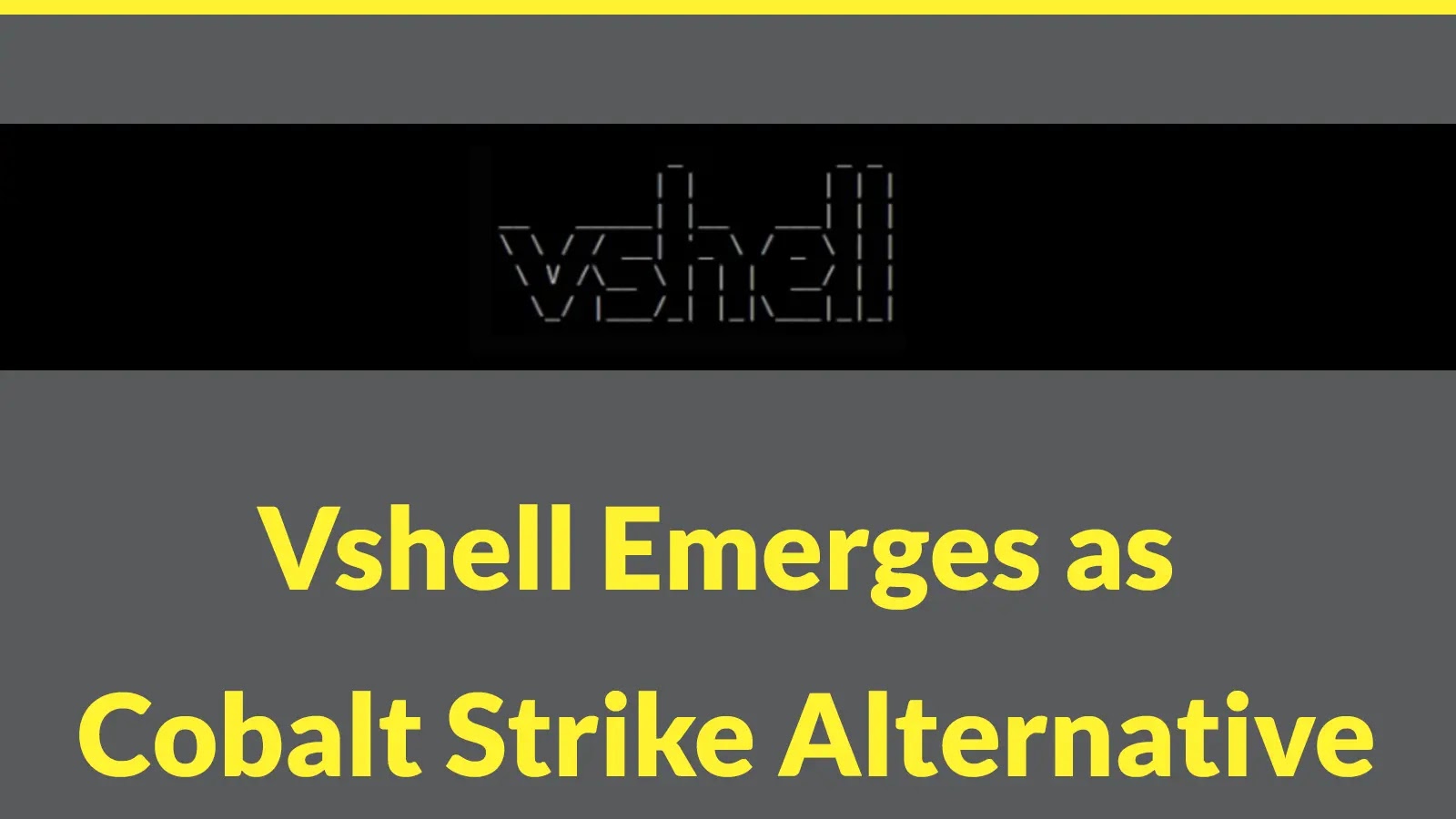
Vshell Gains Traction Among Threat Actors as an Alternative to Cobalt Strike
The Shifting Sands of Cyber Espionage: Vshell Emerges as a Cobalt Strike Contender
The landscape of cyber attack tools is in constant flux, driven by threat actors’ relentless pursuit of effective, adaptable, and often, more affordable options. For years, Cobalt Strike has reigned supreme as a go-to post-exploitation framework for both red teams and malicious actors alike. Its robust features and versatility made it an invaluable asset. However, a new contender is quietly gaining significant traction in the shadows: Vshell. This Go-based command-and-control (C2) framework, initially cultivated within Chinese-speaking offensive security circles, is rapidly evolving beyond its humble beginnings to offer a compelling alternative, challenging Cobalt Strike’s dominance.
Vshell’s Evolution: From RAT to Robust C2
Vshell is no longer a rudimentary Remote Access Tool (RAT). Its journey has seen it transform into a sophisticated C2 platform, providing threat actors with a flexible and cost-effective solution for their operational needs. The shift from a basic RAT to a full-fledged C2 framework signifies a significant maturation of the tool. This evolution includes:
- Enhanced stealth capabilities to evade detection.
- A broader array of post-exploitation modules.
- Improved command and control mechanisms for persistent access.
These advancements make Vshell particularly attractive to groups seeking to circumvent the high licensing fees associated with commercial tools like Cobalt Strike, without sacrificing critical functionalities.
Why Threat Actors are Migrating: Cost-Effectiveness and Flexibility
The primary drivers behind Vshell’s ascendancy appear to be its affordability and adaptability. Commercial C2 frameworks, while powerful, come with substantial price tags that can be a barrier for some threat groups or nation-state actors operating under budgetary constraints. Vshell offers a compelling value proposition by providing similar capabilities at a fraction of the cost, or in some cases, for free, given its origins and potential open-source contributions within illicit communities.
Beyond cost, the Go programming language, on which Vshell is built, provides inherent advantages. Go’s cross-platform compilation allows for easy deployment across various operating systems, while its static linking often results in standalone executables that are less reliant on system libraries, making them harder to detect and analyze. This flexibility is a significant draw for threat actors aiming for broad compatibility and operational resilience.
Understanding the Threat: Vshell’s Capabilities
While specific details of Vshell’s module library are often kept under wraps within threat actor communities, its trajectory suggests a growing suite of features akin to established C2 frameworks. These typically include:
- Remote Code Execution (RCE): The ability to execute arbitrary commands and scripts on compromised systems.
- Data Exfiltration: Mechanisms for surreptitiously stealing sensitive information.
- Lateral Movement: Tools for moving deeper into a compromised network.
- Persistence Mechanisms: Techniques to maintain access even after system reboots.
- Anti-Analysis Features: Efforts to thwart reverse engineering and sandbox detection.
The increasing sophistication of Vshell raises concerns for defensive security teams, who must now contend with yet another powerful adversary tool.
Remediation and Defensive Strategies
Organizations must adapt their defensive strategies to account for the increasing prevalence of tools like Vshell. Proactive measures are essential to detect and mitigate threats posed by sophisticated C2 frameworks.
- Endpoint Detection and Response (EDR): Employ EDR solutions to monitor endpoint activity for suspicious processes, network connections, and file modifications indicative of C2 activity.
- Network Traffic Analysis (NTA): Implement NTA tools to identify anomalous network traffic patterns, including suspicious DNS queries, non-standard port usage, or encrypted communication channels to unknown external IPs.
- Threat Intelligence Integration: Stay updated with the latest threat intelligence regarding emerging C2 frameworks, their indicators of compromise (IoCs), and typical behaviors.
- Regular Patching and Updates: Ensure all systems and applications are regularly patched to close known vulnerabilities that threat actors might exploit for initial access (e.g., CVE-2023-XXXXX – *This is a placeholder as no specific CVE is mentioned for Vshell itself, but for initial access vectors.*)
- User Awareness Training: Educate employees on phishing, social engineering, and other common attack vectors used to gain initial foothold.
- Principle of Least Privilege: Enforce strict access controls to limit the damage an attacker can inflict even if they compromise an account.
- Application Whitelisting: Restrict the execution of unauthorized executables and scripts, making it harder for Vshell implants to run.
Conclusion
The rise of Vshell as a viable alternative to established platforms like Cobalt Strike underscores a significant trend in the threat landscape: a democratization of sophisticated cyber capabilities. Threat actors are increasingly leveraging versatile, often more accessible, tools to conduct their operations. For cybersecurity professionals, this means a continuous need to monitor emerging threats, adapt defensive postures, and invest in robust detection and response capabilities. Ignoring the evolution of tools like Vshell would be a critical oversight in the ongoing battle against cyber adversaries.