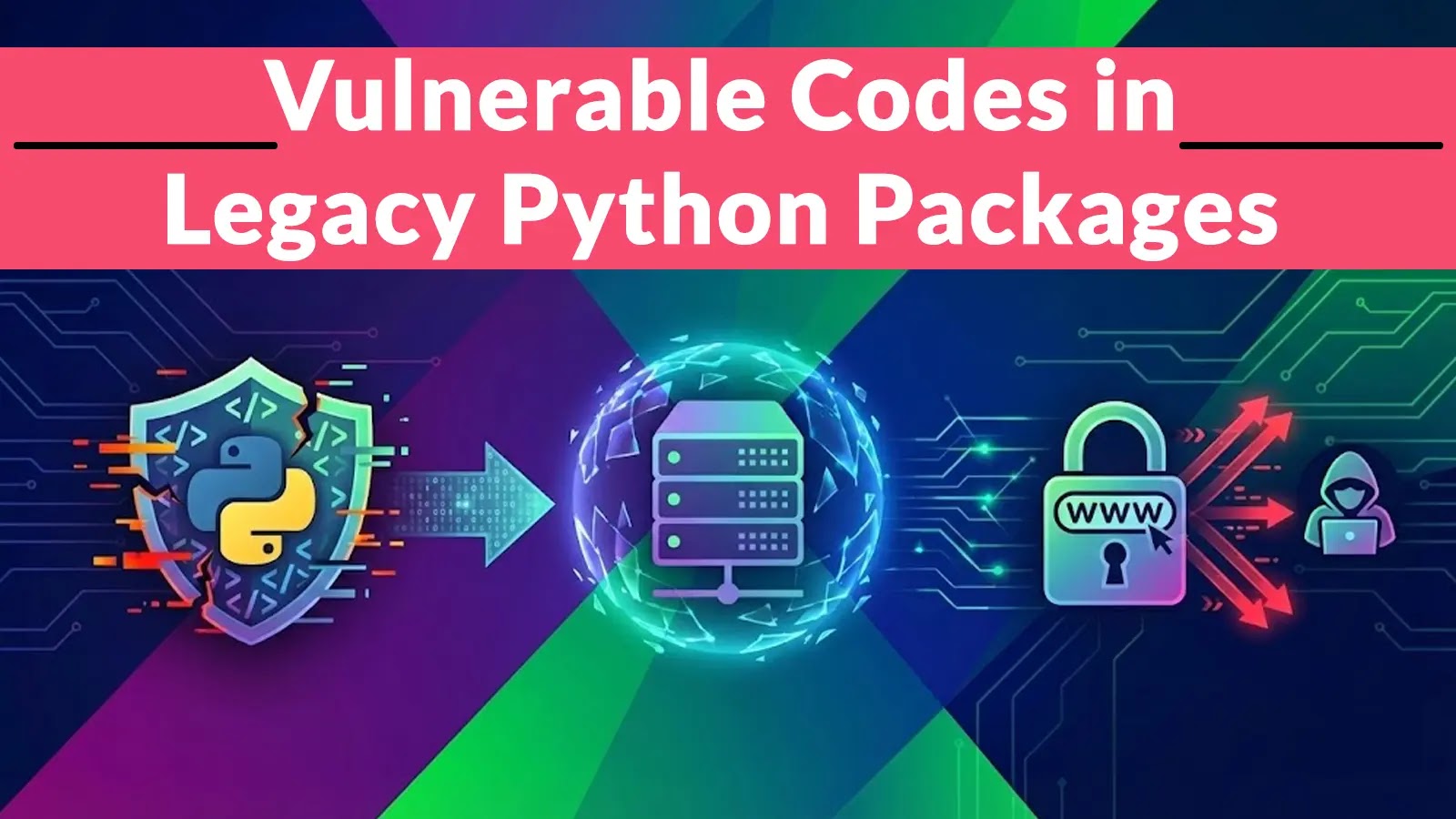
Vulnerable Codes in Legacy Python Packages Enables Attacks on Python Package Index Via Domain Compromise
The Silent Threat: How Legacy Python Code Opens Doors to Domain Takeovers
In the fast-paced world of software development, where new frameworks and libraries emerge daily, the digital ghosts of legacy code often linger unwatched. These remnants from past projects, though seemingly innocuous, can harbor hidden vulnerabilities that create unforeseen risks for modern development environments. A critical example recently surfaced within the Python ecosystem, exposing users to a sophisticated attack vector: domain takeover through outdated bootstrap scripts.
This incident highlights a crucial lesson for developers and security professionals alike: even well-intended automation tools, when left unmaintained, can become serious liabilities. This post will delve into the specifics of this vulnerability, its potential impact, and crucial steps to protect your Python projects from similar threats.
Understanding the Legacy Vulnerability: zc.buildout and Hardcoded Domains
The core of this vulnerability lies within legacy bootstrap scripts historically associated with the zc.buildout tool. For those unfamiliar, zc.buildout is a build system for Python projects that simplifies dependency management and project setup. Developers would typically use bootstrap scripts to automate the installation of necessary packages and configure the project environment.
The problem arises because some of these older bootstrap scripts contain hardcoded references to external domains. While this was a common practice in their prime, it introduces a significant flaw: if the ownership of one of these hardcoded domains expires and a malicious actor registers it, they can then serve arbitrary code to anyone executing these legacy bootstrap scripts. This effectively provides a backdoor into the victim’s development environment, enabling a supply chain attack.
The specific concern here revolves around the potential for these compromised domains to host malicious versions of critical Python packages. When a developer runs a vulnerable bootstrap script, it attempts to fetch resources from these now-controlled domains, inadvertently pulling in malicious code instead of legitimate dependencies. This can lead to a complete compromise of the developer’s system or, even worse, the introduction of malicious code into a production environment.
The Threat: Python Package Index (PyPI) and Domain Compromise
The implications of such a domain compromise are far-reaching, particularly within the Python ecosystem. The Python Package Index (PyPI), the official third-party software repository for Python, is a central pillar of Python development. Any vulnerability that allows for the injection of malicious code into the development pipeline, especially at the dependency installation stage, poses a significant threat to the integrity of PyPI and the projects that rely on it.
A successful domain takeover leveraging these legacy zc.buildout scripts could enable attackers to:
- Distribute Malware: Serve malicious Python packages disguised as legitimate ones.
- Steal Credentials: Inject code designed to exfiltrate API keys, database credentials, or source code.
- Supply Chain Attacks: Compromise entire development teams and ultimately, the end-users of software built with vulnerable dependencies.
- Resource Manipulation: Direct dependency resolution to attacker-controlled repositories.
While a specific Common Vulnerabilities and Exposures (CVE) number related to this broader zc.buildout vulnerability wasn’t immediately available in the source, the principle echoes issues often categorized under supply chain compromises. For example, similar vulnerabilities that rely on domain takeover for dependency resolution might be classified under vulnerabilities like CVE-2023-38600 (a general class of supply chain risks, though not directly related to this specific zc.buildout issue).
Remediation Actions: Securing Your Python Development Workflow
Protecting against this specific vulnerability and similar supply chain risks requires a multi-pronged approach. Here are actionable steps for developers and organizations:
1. Audit and Update Legacy Bootstrap Scripts
- Identify All Scripts: Thoroughly audit all your Python projects, especially older ones, for bootstrap scripts generated by zc.buildout or similar tools.
- Inspect for Hardcoded Domains: Carefully examine these scripts for any hardcoded external domain references. These are often found in URLs used for downloading software or dependencies.
- Update or Replace: Where possible, update these scripts to use more secure, modern dependency management practices (e.g., pip, poetry, or updated buildout configurations that don’t rely on hardcoded external URLs). If legacy scripts are critical, ensure all referenced domains are under your control and monitored.
2. Implement Robust Dependency Management
- Pin Dependencies: Always pin exact versions of your project dependencies. Avoid using broad version ranges (“^1.0.0” or “>=1.0.0”) if possible, as this introduces uncertainty.
- Use Private Package Repositories: For critical projects, consider using a private PyPI mirror or a corporate package repository (like Nexus or Artifactory) to cache approved versions of packages. This provides an additional layer of control and scrutiny.
- Dependency Auditing: Regularly use tools to audit your dependencies for known vulnerabilities.
3. Network Egress Filtering and Monitoring
At an organizational level, network security measures can provide a critical safety net:
- Egress Filtering: Implement firewalls and network policies that restrict outbound connections from build servers and development machines to only approved domains and package repositories.
- DNS Monitoring: Monitor DNS queries from development environments for suspicious or unregistered domains.
4. Stay Informed and Practice Secure Development Lifecycles
- Security Patches: Keep all development tools, operating systems, and libraries up-to-date with the latest security patches.
- Developer Training: Educate developers on common supply chain attack vectors and best practices for secure coding and dependency management.
- Regular Security Reviews: Conduct periodic security audits and penetration testing of your development infrastructure and applications.
Tools for Detection and Mitigation
Leveraging the right tools can significantly enhance your ability to detect and mitigate these types of vulnerabilities:
| Tool Name | Purpose | Link |
|---|---|---|
| Snyk | Dependency vulnerability scanning and remediation. | https://snyk.io/ |
| OWASP Dependency-Check | Identifies project dependencies and checks for known vulnerabilities. | https://owasp.org/www-project-dependency-check/ |
| Bandit | Static application security testing (SAST) for Python code. | https://github.com/PyCQA/bandit |
| pip-audit | Audits Python environment for known vulnerabilities. | https://pypi.org/project/pip-audit/ |
Conclusion: The Enduring Challenge of Legacy Code
The incident involving vulnerable legacy zc.buildout scripts serves as a stark reminder that the security perimeter extends far beyond the most recent code commits. Older, forgotten components can become potent attack vectors, especially when they touch critical infrastructure like dependency bootstrapping. Proactive auditing, rigorous dependency management, and continuous security education are not merely best practices; they are necessities in safeguarding our digital ecosystems from increasingly sophisticated supply chain attacks. By acknowledging the risks posed by legacy code and adopting a vigilant approach, we can significantly strengthen our defenses against such insidious threats.