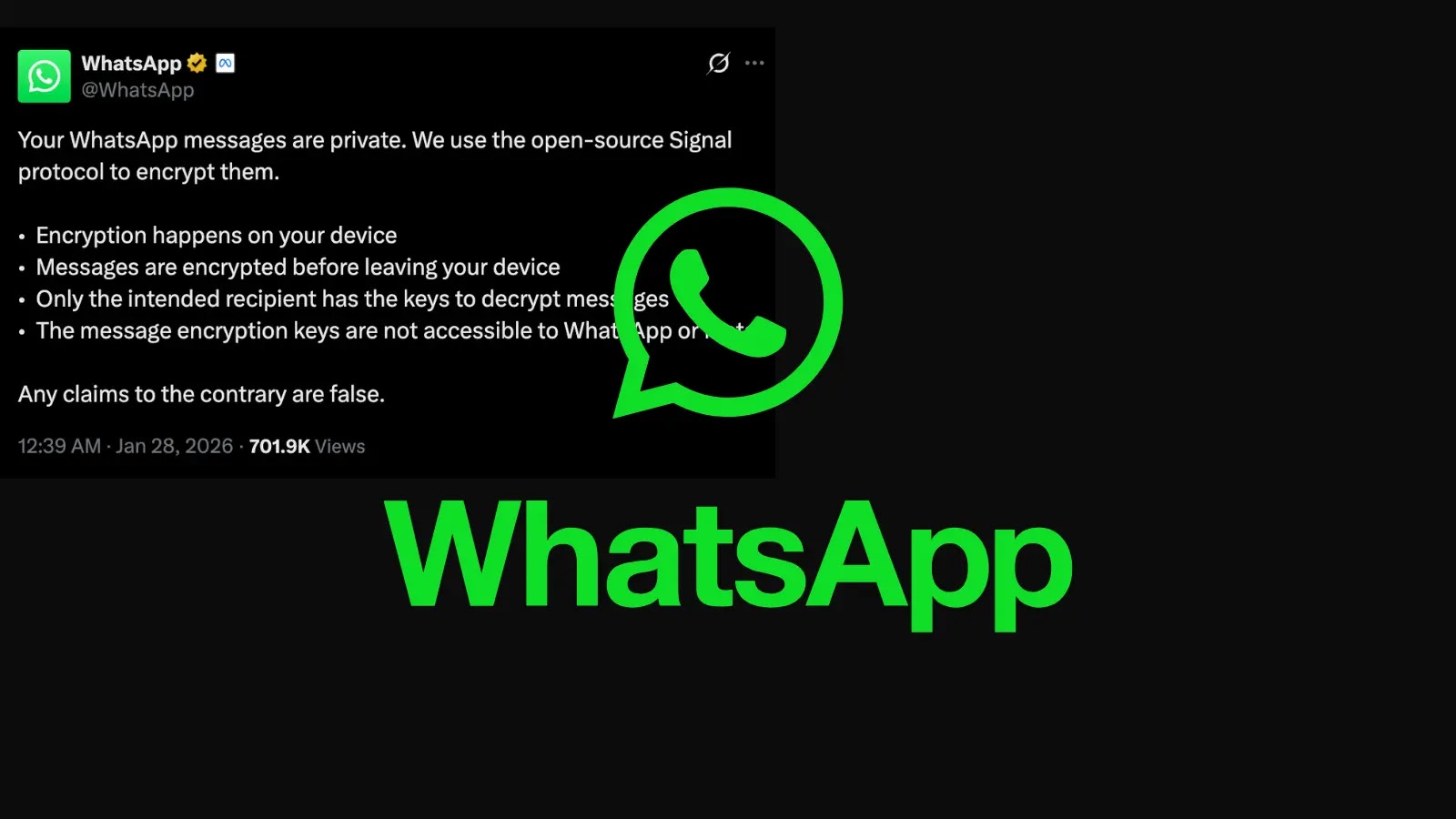
WhatsApp Denies Lawsuit Claim and Confirms Messages are Device-encrypted and Private
WhatsApp Confirms Message Privacy Amidst Lawsuit Claims: What You Need to Know
In an era where digital privacy is paramount, a recent class-action lawsuit filed against Meta, alleging secret access to WhatsApp users’ end-to-end encrypted messages, has inevitably raised concerns. However, WhatsApp has swiftly and emphatically denied these claims, reiterating its long-standing commitment to user privacy through robust device-based encryption. This article delves into the details of the lawsuit, WhatsApp’s response, and the underlying technology that safeguards your digital conversations.
The Class-Action Lawsuit: Allegations of Secret Access
A class-action complaint, filed on January 23, 2026, in the U.S. District Court, has accused Meta of surreptitiously accessing private user communications on its WhatsApp platform. The lawsuit posits that despite claims of end-to-end encryption, Meta somehow retains the ability to view message content. Such an allegation, if true, would represent a fundamental breach of user trust and a serious compromise of digital security principles. However, the details of how this alleged access is purportedly achieved remain broadly unverified within the public domain, focusing more on the accusation itself rather than technical specifics.
WhatsApp’s Stance: Device-Based Encryption and the Signal Protocol
WhatsApp has not only denied these claims but has categorized them as “false and baseless.” The messaging giant firmly stands by its privacy architecture, emphasizing that messages are secured through device-based encryption. This means that encryption keys are stored on the users’ devices, not on WhatsApp’s servers. The technology underpinning this security is the open-source Signal protocol, a widely respected cryptographic protocol developed by Open Whisper Systems. The Signal protocol is renowned for its strong security guarantees, providing end-to-end encryption for individual and group chats, voice calls, and video calls.
Key aspects of WhatsApp’s encryption via the Signal protocol include:
- End-to-End Encryption: Messages are encrypted on the sender’s device and can only be decrypted by the recipient’s device. Neither WhatsApp nor any third party can read the content.
- Forward Secrecy: Each message uses a new encryption key, meaning that even if one key is compromised, past and future messages remain secure.
- Open-Source Protocol: The Signal protocol’s open-source nature allows security experts worldwide to scrutinize its design and implementation, ensuring its integrity and identifying potential vulnerabilities.
Understanding Device-Based Encryption
Device-based encryption is a critical concept in maintaining message privacy. Unlike server-side encryption, where data is encrypted and decrypted on the service provider’s servers, device-based encryption ensures that the encryption and decryption processes occur exclusively on the end-user devices. This architecture means that even if WhatsApp’s servers were compromised, the encrypted messages stored there would remain unreadable without access to the individual device keys. This design significantly reduces the attack surface and enhances user confidentiality.
Implications for Cybersecurity Professionals and Users
For cybersecurity professionals, this situation highlights the continuing importance of understanding cryptographic protocols and their real-world implementations. The reliance on widely audited and open-source protocols like Signal provides a stronger foundation for trust than proprietary, closed-source solutions. Users, on the other hand, are reminded of the need to stay informed about the security features of the communication platforms they use and to be discerning about widespread claims that lack technical substantiation.
While no system is 100% impenetrable, WhatsApp’s consistent defense of its encryption methods, backed by the credibility of the Signal protocol, provides a significant layer of assurance for its billions of users. The company’s transparency in discussing its security architecture is also crucial in fostering trust within the cybersecurity community.
Conclusion: Reinforcing Trust Through Transparency and Technology
WhatsApp’s firm denial of the class-action lawsuit claims and its reaffirmation of device-based, end-to-end encryption through the Signal protocol underscore its commitment to user privacy. In an age of heightened digital surveillance and data breaches, understanding the technical underpinnings of our communication tools is more important than ever. This incident serves as a pertinent reminder that while accusations may arise, robust, verifiable security measures, coupled with transparent communication from service providers, are essential for maintaining user trust in the digital landscape.