WiFi Signals Reveal Human Activities Through Walls by Mapping Body Keypoints
Unseen Eyes: WiFi Signals, Human Activities, and the π RuView Surveillance Threat
The invisible waves that power our daily connectivity are now revealing our every move, even behind solid walls. A new open-source edge AI system, aptly named π RuView, is transforming ordinary WiFi infrastructure into a formidable, through-wall human-sensing platform. This development, which enables the detection of body posture, vital signs, and movement patterns without a single camera, raises urgent and significant cybersecurity and privacy concerns. For years, researchers have posited the potential weaponization of ambient radio signals for passive surveillance; π RuView demonstrates this theory in stark reality.
π RuView: How WiFi Becomes a Surveillance Tool
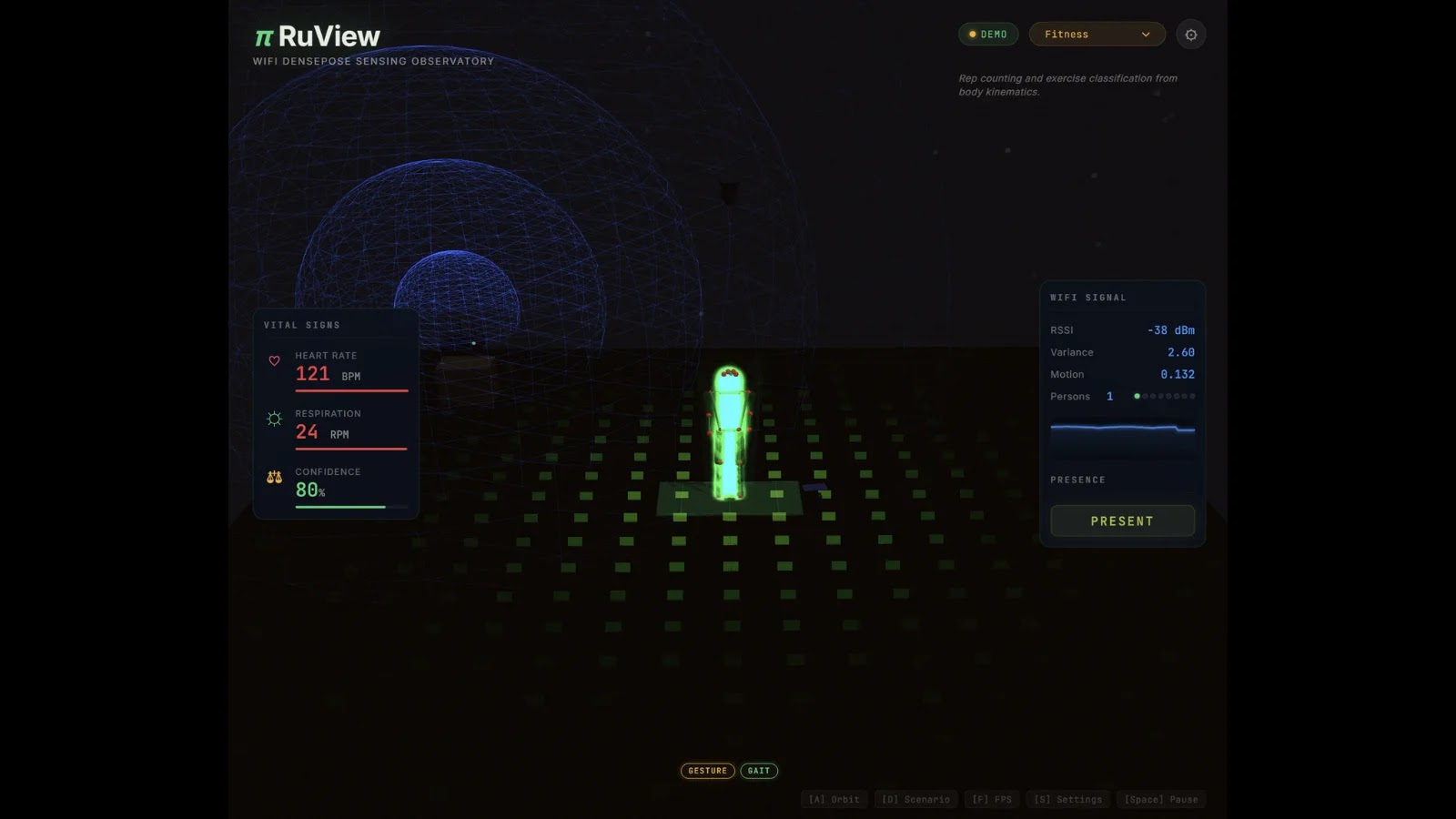
π RuView leverages existing WiFi signals to create a detailed map of human activities within a monitored space. Unlike traditional surveillance methods that rely on visual data, π RuView interprets the subtle disturbances and reflections of WiFi signals as they interact with a human body. This technique allows the system to:
- Map Body Keypoints: Identify and track the relative positions of an individual’s joints and limbs, effectively creating a skeletal representation of their posture and movement.
- Detect Vital Signs: Potentially infer heart rate and breathing patterns based on micro-movements of the chest cavity that influence WiFi signal propagation.
- Monitor Movement Patterns: Track walking paths, gestures, and other dynamic activities, providing a comprehensive understanding of occupancy and behavior.
The significant aspect of π RuView is its reliance on readily available WiFi devices, requiring no specialized hardware beyond the edge AI system itself. This makes its deployment remarkably easy and potentially widespread, turning any WiFi-enabled environment into a potential surveillance zone.
The Escalating Privacy and Security Implications
The capabilities of π RuView introduce a new frontier of privacy and security challenges. The ability to monitor individuals through walls without their knowledge or consent has profound implications, impacting:
- Personal Privacy: Individuals could be monitored in their homes, workplaces, or public spaces without ever knowing they are under observation. This erodes the fundamental right to privacy.
- Corporate Espionage: Sensitive meetings or confidential activities within corporate environments could be monitored, leading to trade secret theft or competitive disadvantages.
- National Security: Adversarial states or non-state actors could exploit such technology for intelligence gathering, facility mapping, or tracking high-value targets.
- Ethical Concerns: The ethical landscape surrounding pervasive, non-consensual surveillance is complex and largely unaddressed by current legal frameworks.
The open-source nature of π RuView accelerates its potential adoption and further complicates efforts to control its deployment. While researchers often release such projects for academic study and to highlight potential risks, the very existence of such tools demands immediate attention from cybersecurity professionals and policymakers.
Remediation Actions and Mitigations
Addressing the threats posed by through-wall WiFi sensing requires a multi-faceted approach, combining technical controls with policy and public awareness initiatives.
- Signal Obfuscation & Jamming: While not a perfect solution, localized WiFi signal obfuscation or low-power jamming technologies could disrupt the coherence necessary for accurate sensing. This is often illegal or impractical for broad deployment.
- Regulatory Frameworks: Governments and international bodies must develop robust regulations to govern the deployment and use of such intrusive technologies. This includes clear definitions of what constitutes surveillance, permissible use cases, and severe penalties for misuse.
- Ethical AI Development: Encourage and enforce ethical guidelines for AI development, particularly for systems with significant privacy implications. Emphasis should be placed on privacy-by-design principles.
- Public Awareness Campaigns: Educate the general public about the capabilities of these emerging technologies and the associated privacy risks. Informed citizens are better equipped to advocate for their rights.
- Research into Countermeasures: Invest in research and development for active and passive countermeasures against through-wall sensing, including novel shielding materials or adaptive signal processing techniques.
The lack of a specific CVE for π RuView currently prevents direct technical patching, as the system itself is a novel application of existing WiFi technology rather than a vulnerability in a specific product. However, the fundamental concept it exploits can be categorized under broader privacy invasion concerns. For further information on related privacy vulnerabilities in modern technologies, one might consult resources pertaining to smart home device security or general IoT privacy risks, though a direct CVE for this specific mechanism is still emerging.
Key Takeaways
The emergence of systems like π RuView fundamentally alters our understanding of privacy and security in environments permeated by WiFi. The ability to map human activities through walls, without cameras and using existing infrastructure, presents an unprecedented surveillance capability. Cybersecurity professionals, policymakers, and the public must collaboratively explore robust regulatory frameworks, develop technological countermeasures, and foster ethical guidelines to safeguard individual privacy in this new technological landscape. Proactive engagement is critical to prevent the widespread misuse of such powerful and pervasive sensing technologies.