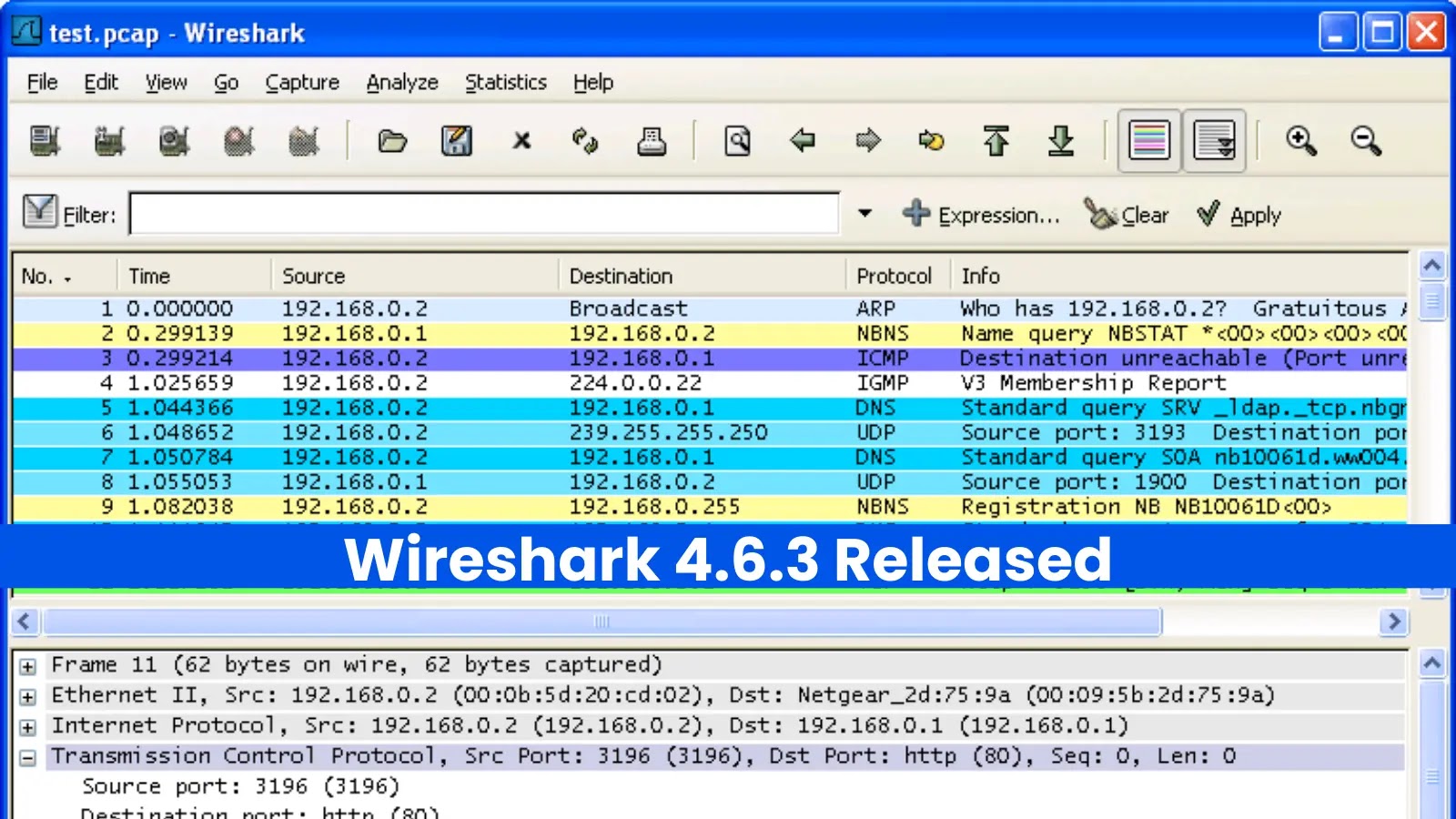
Wireshark 4.6.3 Released With Vulnerabilities Dissector and Parser Crash
For network professionals, security analysts, and developers, Wireshark is an indispensable tool. It’s the magnifying glass we use to peer into the complex dance of network traffic, diagnose elusive issues, and understand protocol intricacies. The recent release of Wireshark 4.6.3, however, isn’t just another routine update; it’s a critical patch addressing several security vulnerabilities that could lead to significant operational disruptions.
This update, announced by the Wireshark Foundation, focuses on resolving conditions where the network protocol analyzer could experience denial-of-service (DoS) attacks. Specifically, these vulnerabilities stem from flaws within Wireshark’s various dissectors and parsers, which, when exploited, could cause the application to crash. Given Wireshark’s pervasive use in network troubleshooting, software development, and security forensics, understanding and implementing this update is paramount.
Understanding Dissector and Parser Crashes
At its core, Wireshark functions by dissecting and parsing various network protocols to present their data in a human-readable format. A “dissector” is responsible for breaking down a network packet into its constituent parts according to a specific protocol’s rules (e.g., TCP, UDP, HTTP). A “parser,” on the other hand, interprets the data within those dissected parts. When vulnerabilities exist in these components, specially crafted or malformed network packets can trigger unexpected behavior, leading to memory corruption, infinite loops, or ultimately, a crash of the Wireshark application itself.
Such crashes, while not directly compromising the underlying systems being monitored, introduce a critical denial-of-service vector. An analyst relying on Wireshark for incident response or real-time monitoring could find their crucial tool rendered inoperable, potentially delaying threat detection or remediation efforts. In development environments, it could hinder protocol testing and debugging.
Key Vulnerabilities Addressed in Wireshark 4.6.3
The Wireshark 4.6.3 release is designed to mitigate several specific vulnerabilities that could lead to these DoS conditions. While the announcement from cybersecuritynews.com highlights the general nature of these issues (dissector and parser crashes), the official Wireshark release notes often detail the specific CVEs (Common Vulnerabilities and Exposures) addressed. These include various types of issues, such as:
- Buffer Overflow Vulnerabilities: Where a program attempts to write more data into a fixed-size buffer than it can hold, overwriting adjacent memory.
- NULL Pointer Dereferences: When a program attempts to use a pointer that doesn’t point to a valid memory location, leading to a crash.
- Infinite Loops: Malformed input can cause a dissector or parser to enter an endless loop, consuming CPU resources and freezing the application.
For instance, previous Wireshark versions have seen issues such as CVE-2022-26154 (a Wireshark NFS dissector infinite loop) or CVE-2022-26155 (a Wireshark ZigBee ZCL dissector infinite loop), which are indicative of the types of flaws being continuously patched. While specific CVEs for Wireshark 4.6.3 were not detailed in the source, users should refer to the official Wireshark release notes for a comprehensive list.
Remediation Actions for Wireshark Users
Given the potential for disruption, immediate action is recommended for all users of older Wireshark versions. The primary remediation is straightforward:
- Upgrade to Wireshark 4.6.3: This is the most crucial step. Downloading and installing the latest version from the official Wireshark website will ensure that all known vulnerabilities addressed in this release are patched.
- Regular Updates: Adopt a routine for regularly checking for and applying Wireshark updates. The network landscape is constantly evolving, and so are the threats.
- Minimize Exposure (for legacy systems): If immediate upgrade isn’t possible for highly specific, isolated reasons, consider running Wireshark in a sandbox environment or on a dedicated analysis machine that is not exposed to untrusted network traffic directly. This is a temporary measure, not a substitute for upgrading.
- Validate Packet Sources: Be cautious when opening capture files from unknown or untrusted sources. Malicious actors could craft capture files specifically to exploit these types of vulnerabilities.
Tools for Network Analysis and Security
While Wireshark is paramount, it operates within a broader ecosystem of network security tools. Understanding this context can enhance your overall defense posture.
| Tool Name | Purpose | Link |
|---|---|---|
| Wireshark | In-depth network protocol analysis and packet capture. | wireshark.org |
| Suricata | Network intrusion detection/prevention system (IDS/IPS) and network security monitoring (NSM). | suricata.io |
| Snort | Widely used intrusion prevention system (IPS) capable of real-time traffic analysis and packet logging. | snort.org |
| tcpdump | Command-line packet analyzer for capturing and filtering network traffic. | tcpdump.org |
| Nmap | Network discovery and security auditing, port scanning. | nmap.org |
Concluding Thoughts
The release of Wireshark 4.6.3 serves as a timely reminder of the continuous effort required to maintain robust cybersecurity. Even the most fundamental tools, relied upon daily by countless professionals, are not immune to vulnerabilities. Prioritizing updates like this isn’t just about fixing a bug; it’s about protecting the very instruments we use to safeguard our digital environments. Ensure your Wireshark installation is up-to-date to maintain the integrity of your network analysis capabilities and contribute to a more secure operational posture.