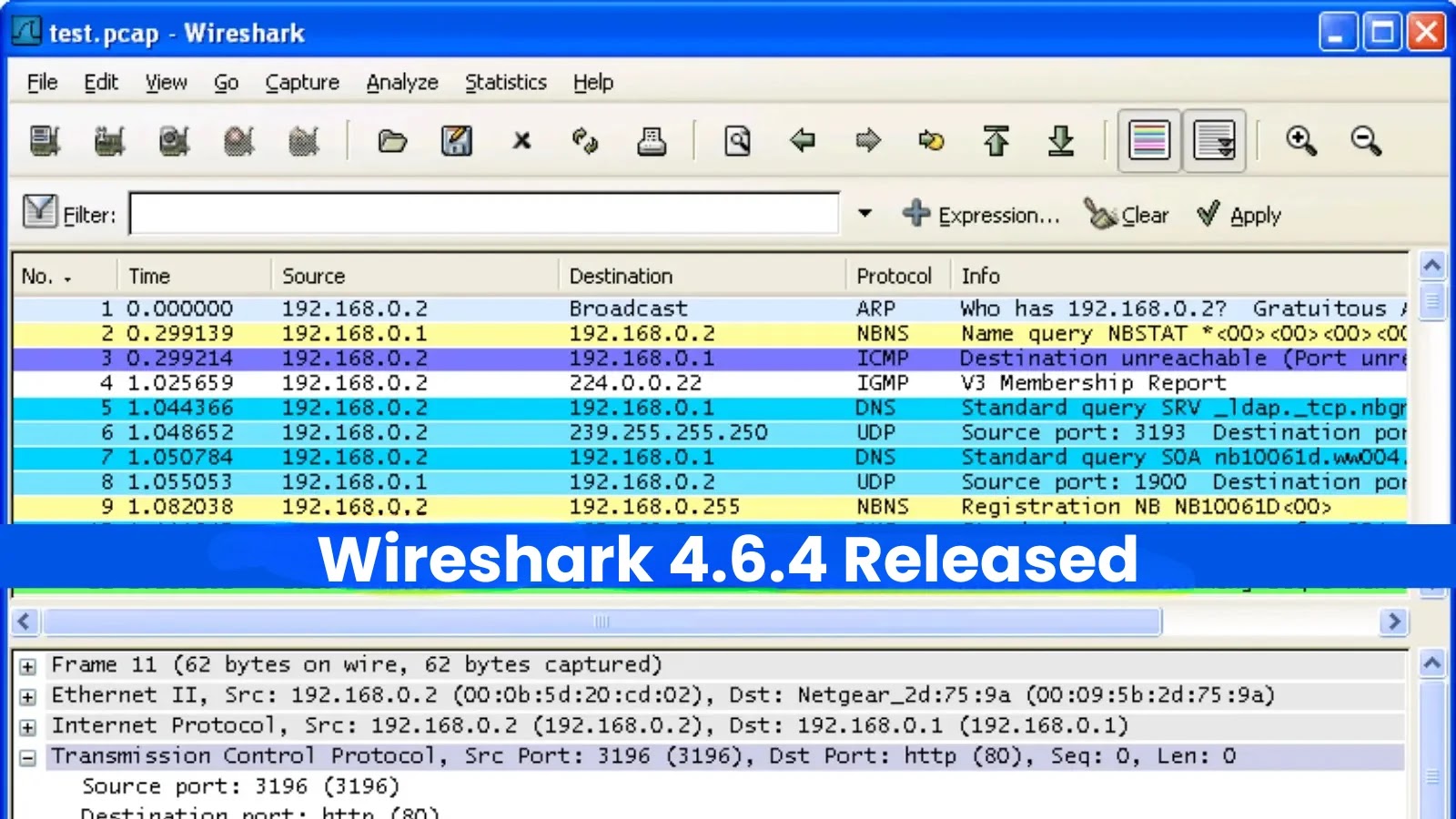
Wireshark 4.6.4 Released With Fix for Multiple Security Vulnerabilities
Wireshark 4.6.4: Critical Update Fortifies Network Analysis Against Security Threats
For network professionals, security analysts, and developers, Wireshark isn’t just a tool; it’s an indispensable lens into the intricate world of network communications. Its ability to capture and analyze data packets makes it paramount for diagnosing network issues, understanding protocol behavior, and identifying subtle security anomalies. The Wireshark Foundation has now released Wireshark 4.6.4, a crucial maintenance update that directly addresses multiple security vulnerabilities and resolves various functional bugs. This release is more than just a routine patch; it’s a vital upgrade for anyone relying on Wireshark for robust and secure network diagnostics.
Understanding the Importance of the Wireshark 4.6.4 Update
The 4.6.4 release focuses heavily on bolstering the security posture of the popular network protocol analyzer. Given Wireshark’s role in examining network traffic, any vulnerability within the application itself could inadvertently expose sensitive information or even be exploited as an attack vector. This update specifically targets and remediates these potential weaknesses, ensuring that the tool used to secure networks is itself secure.
Beyond security, Wireshark 4.6.4 also brings stability and performance enhancements. These bug fixes contribute to a more reliable analysis environment, reducing the likelihood of crashes or unexpected behavior during critical troubleshooting or incident response operations. For IT professionals, a stable Wireshark means more efficient diagnostics and accurate data interpretation.
Identified Security Vulnerabilities Addressed in Wireshark 4.6.4
While the provided source content from cybersecuritynews.com indicates “multiple security vulnerabilities,” specific CVE details for this particular Wireshark 4.6.4 release are typically cataloged and publicly disclosed by the Wireshark project team and subsequently tracked in the CVE database. Users are strongly encouraged to consult the official Wireshark release notes for a comprehensive list of all patched vulnerabilities and their corresponding CVE identifiers. Searching the CVE database with “Wireshark” and “4.6.4” will yield the most current and specific vulnerability details once publicly published.
Historically, Wireshark vulnerabilities often stem from issues such as:
- Buffer Overflows: Malformed packets could lead to buffer overflows, potentially allowing arbitrary code execution.
- Denial of Service (DoS): Specially crafted network traffic could cause Wireshark to crash, leading to a denial of service for the analysis tool itself.
- Information Disclosure: Flaws in parsing certain protocols might lead to unintended disclosure of memory contents or other sensitive data.
- Protocol Dissector Vulnerabilities: Specific dissecting engines for various protocols can contain logic errors that an attacker could exploit.
Remediation Actions: Securing Your Wireshark Deployment
Updating to Wireshark 4.6.4 is a critical step to mitigate the disclosed security vulnerabilities and benefit from enhanced stability. Network administrators and security analysts should prioritize this update immediately.
- Immediate Upgrade: Download and install Wireshark 4.6.4 from the official Wireshark download page. This is the primary and most effective remediation step.
- Verify Installation: After installation, verify that the new version is correctly installed by checking the “About Wireshark” section within the application.
- Regular Updates: Establish a routine for checking for and applying Wireshark updates. The project frequently releases patches for both security and functionality.
- Principle of Least Privilege: Run Wireshark with the minimum necessary privileges. Avoid running it as a root or administrator user unless absolutely required for packet capture.
- Isolated Environments: For analyzing potentially malicious traffic, consider running Wireshark in an isolated virtual machine or a dedicated analysis workstation to contain any potential exploits.
Essential Tools for Network Analysis and Security
While Wireshark is paramount, a holistic approach to network security and analysis often involves a suite of tools. Here are some complementary tools that can enhance your cybersecurity posture:
| Tool Name | Purpose | Link |
|---|---|---|
| Nmap | Network discovery and security auditing | https://nmap.org/ |
| Snort | Intrusion Detection System (IDS) / Intrusion Prevention System (IPS) | https://www.snort.org/ |
| Suricata | Intrusion Detection System (IDS) / Intrusion Prevention System (IPS) / Network Security Monitoring (NSM) | https://suricata.io/ |
| Zeek (formerly Bro) | Network Security Monitor (NSM) and traffic analysis | https://zeek.org/ |
| Metasploit Framework | Penetration testing and vulnerability exploitation | https://www.metasploit.com/ |
Conclusion: Prompt Action for Enhanced Network Security
The release of Wireshark 4.6.4 underscores the continuous effort required to maintain robust network security and reliable analysis capabilities. Addressing multiple security vulnerabilities and functional bugs, this update is essential for anyone who relies on Wireshark. By promptly upgrading to version 4.6.4, network professionals not only protect their analysis environment but also ensure they have the most stable and secure iteration of this critical tool at their disposal. Prioritize this update to sustain the integrity of your network troubleshooting and security investigations.