
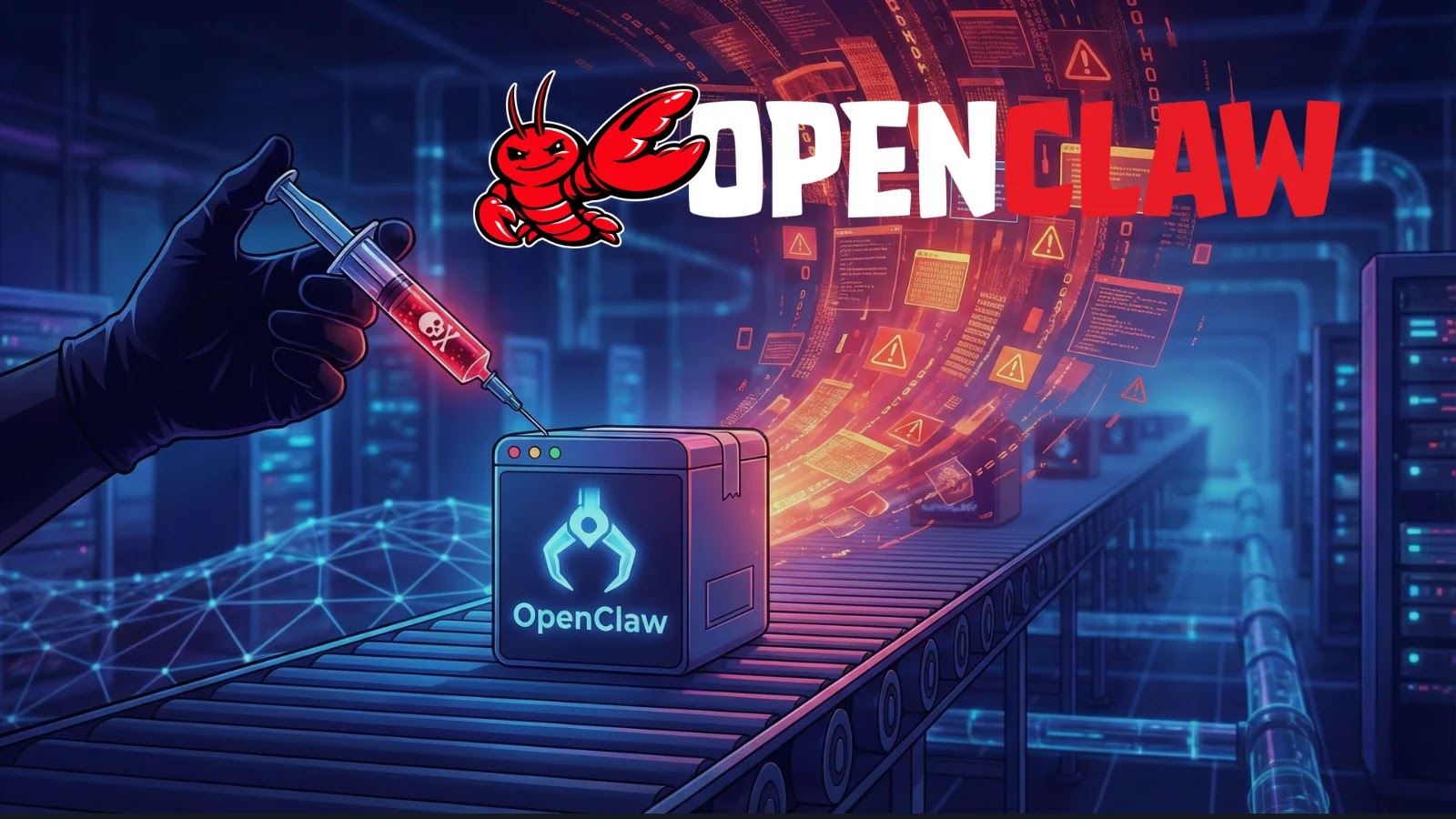
OpenClaw Becomes New Target in Rising Wave of Supply Chain Poisoning Attacks
The Silent Menace: OpenClaw Becomes Latest Victim in Supply Chain Poisoning Wave
In the intricate ecosystem of modern software development, trust is a critical yet increasingly fragile commodity. The promise of open-source innovation, particularly in the burgeoning field of AI agents, often comes hand-in-hand with inherent risks. This grim reality has once again been laid bare as OpenClaw, a rapidly growing open-source AI agent platform, has fallen victim to sophisticated supply chain poisoning attacks. Security firms SlowMist and Koi Security have unveiled a concerning landscape where hundreds of compromised extensions on OpenClaw’s ClawHub marketplace are actively deploying potent infostealers, including the notorious Atomic Stealer.
This incident underscores a broader, escalating trend of supply chain attacks, where attackers target upstream components to compromise a vast array of downstream users. For professionals relying on AI agents for workflow automation and system interaction, understanding the
depth of this threat is paramount.
Understanding OpenClaw and Its Vulnerability
OpenClaw provides a powerful framework for building and deploying local AI agents. These agents are designed to automate diverse workflows, interact with various services, and exert control over devices. The platform’s extensibility is a core strength, facilitated by its ClawHub plugin marketplace. Developers and users can integrate “skills” – essentially plugins – to expand the capabilities of their AI agents.
The very strength of this ecosystem, its openness and reliance on third-party contributions, has become its Achilles’ heel. Malicious actors have exploited this decentralized model by injecting compromised extensions into ClawHub. These poisoned skills, once installed and executed by an OpenClaw agent, grant attackers a foothold in critical systems, leading to data exfiltration and further compromise.
The Anatomy of the Attack: Malicious “Skills” and Infostealers
The core of the OpenClaw supply chain attack lies in the poisoning of its plugin marketplace with malicious AI agent “skills.” These seemingly innocuous extensions harbor dangerous payloads designed to compromise user systems. Security researchers from SlowMist and Koi Security identified a significant number of such contaminated skills. The primary objective of these malicious skills, once executed, is to deploy infostealers.
One prominent infostealer observed in these attacks is Atomic Stealer. Atomic Stealer is a well-known malware threat designed to harvest sensitive information from compromised systems, including browser data (passwords, cookies, autofill data), cryptocurrency wallet details, and system information. The seamless integration of these compromised skills into an AI agent’s functionality makes detection challenging for an unsuspecting user. When an AI agent executes a tainted skill, the infostealer activates, silently exfiltrating valuable data to attacker-controlled infrastructure.
The Broader Implications of Supply Chain Poisoning
The OpenClaw incident is not an isolated event but a stark reminder of the increasing prevalence and sophistication of supply chain poisoning attacks. These attacks exploit the trust inherent in software ecosystems, targeting development environments, build processes, or distribution channels. By compromising an upstream component, attackers can achieve widespread impact without directly attacking individual end-users or organizations.
The consequences extend far beyond immediate data loss. Organizations relying on compromised software or components face:
- Reputational damage: Erosion of trust from customers and partners.
- Operational disruption: Downtime and efforts required for incident response and remediation.
- Regulatory penalties: Fines for data breaches and non-compliance with data protection regulations.
- Intellectual property theft: Loss of sensitive business data and competitive advantage.
Remediation Actions and Best Practices for OpenClaw Users
For OpenClaw users, developers, and organizations leveraging AI agents, immediate action and a proactive security posture are critical. Given the nature of these supply chain attacks, a multi-faceted approach to detection and prevention is essential.
Immediate Steps:
- Audit Installed Skills: Review all installed OpenClaw skills/plugins. Prioritize skills from well-known, reputable sources. If a skill’s origin is unclear or suspicious, disable or remove it immediately.
- Monitor Network Traffic: Implement network monitoring tools to detect unusual outbound connections from systems running OpenClaw agents. Look for connections to unknown or suspicious IP addresses and domains.
- Endpoint Detection and Response (EDR): Ensure EDR solutions are actively deployed and configured to detect known infostealers like Atomic Stealer. Regularly review EDR alerts and investigate any suspicious activity.
- Backup and Restore: Maintain regular, secure backups of critical data. In the event of a compromise, a clean restore point is invaluable.
Long-Term Security Posture:
- Supply Chain Security Frameworks: Implement robust supply chain security frameworks. This includes vetting third-party dependencies, maintaining a software bill of materials (SBOM), and regularly scanning for vulnerabilities.
- Least Privilege Principle: Operate OpenClaw agents and development environments with the principle of least privilege. Grant only the necessary permissions for tasks, minimizing potential damage from a compromised skill.
- Secure Development Life Cycle (SDLC): For developers contributing to OpenClaw or building custom skills, integrate security practices throughout the SDLC. Conduct regular code reviews, static and dynamic analysis, and penetration testing.
- User Education: Educate users about the risks of downloading and installing unverified plugins or extensions, regardless of the platform.
- Automated Vulnerability Scanning: Utilize automated tools to scan for known vulnerabilities in all software components, including those within the OpenClaw ecosystem.
Tools for Detection and Mitigation:
Leveraging appropriate tools can significantly enhance your ability to detect and mitigate these threats.
| Tool Name | Purpose | Link |
|---|---|---|
| YARA Rules | Pattern matching for detecting malware families like Atomic Stealer. | https://virustotal.github.io/yara/ |
| Malware Sandboxes (e.g., Any.Run, Cuckoo Sandbox) | Safe environment to analyze suspicious files and observe their behavior. | https://any.run/ |
| Software Composition Analysis (SCA) Tools | Identify open-source components and their known vulnerabilities. | (e.g., Snyk, Black Duck, Sonatype Nexus Firewall) |
| Endpoint Detection and Response (EDR) Solutions | Monitor endpoint activity for malicious behavior and detect threats. | (e.g., CrowdStrike, SentinelOne, Microsoft Defender for Endpoint) |
The Path Forward: Securing the Open-Source Frontier
The OpenClaw supply chain poisoning attack serves as a potent reminder that innovation, especially in the rapidly evolving AI landscape, must be tempered with robust security. While the open-source model fosters collaboration and rapid development, it also presents unique challenges for maintaining integrity and trust. As AI agents become more deeply embedded in critical workflows, the implications of compromised skills become increasingly severe.
The cybersecurity community, platform developers, and end-users must collaborate to fortify the software supply chain. Proactive vulnerability management, rigorous vetting of third-party components, and a continuous security posture are no longer optional but essential for navigating the complex threat landscape of the digital age. This incident should galvanize further efforts to develop more secure open-source ecosystems, ensuring that the benefits of innovation are not overshadowed by preventable security breaches.




