
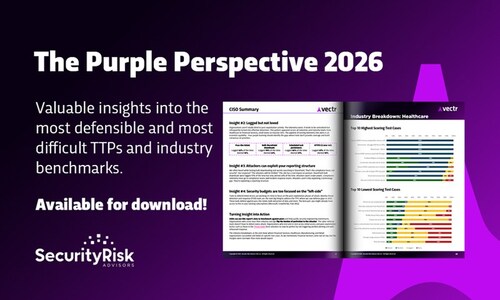
Security Risk Advisors Releases “The Purple Perspective 2026” Report
Navigating the complex landscape of cyber threats requires more than just reactive measures. It demands proactive insights, data-driven strategies, and a deep understanding of adversary tactics. This is precisely what Security Risk Advisors (SRA) aims to deliver with their inaugural report, “The Purple Perspective 2026.” For cybersecurity professionals, this report promises to be a crucial resource, offering a unique lens into effective detection and prevention performance against today’s most pressing cyber adversaries.
Introducing “The Purple Perspective 2026”
On March 9th, 2026, from Philadelphia, PA, CyberNewswire announced the release of Security Risk Advisors’ “The Purple Perspective 2026” report. This comprehensive analysis marks a significant step forward in providing actionable intelligence to bolster cybersecurity defenses. At its core, the report delves into real-world performance metrics, evaluating how current security measures stand up against a carefully selected set of high-priority adversary techniques.
Understanding the “Purple” Approach
The term “purple” in cybersecurity typically refers to a collaborative approach between red teams (attack simulations) and blue teams (defensive operations). This often involves sharing insights, refining tactics, and optimizing detection and response capabilities. “The Purple Perspective 2026” likely embodies this philosophy, translating the findings from such engagements into tangible advice for organizations. By examining scenarios where detection and prevention tools are put to the test against realistic threat scenarios, the report offers an invaluable benchmark for security efficacy.
Key Focus Areas and Actionable Insights
While specific details of the techniques examined are not yet publicly available, the report’s emphasis on “high-priority adversary techniques” suggests a focus on methods commonly employed by sophisticated threat actors. This could include aspects of the MITRE ATT&CK framework, such as:
- Initial Access: How adversaries gain their first foothold in a network.
- Execution: The methods used to run malicious code.
- Persistence: Techniques to maintain access over time.
- Privilege Escalation: Gaining higher-level permissions.
- Defense Evasion: Circumventing security controls.
- Command and Control (C2): Establishing communication with compromised systems.
The report’s value lies in converting these assessments into “actionable insights.” This means going beyond simply identifying weaknesses and providing concrete recommendations for improving security posture. Organizations can expect guidance on optimizing their Security Information and Event Management (SIEM) systems, enhancing endpoint detection and response (EDR) solutions, and refining their incident response playbooks based on SRA’s findings.
Why This Report Matters for Cybersecurity Professionals
For IT professionals, security analysts, and developers tasked with safeguarding digital assets, “The Purple Perspective 2026” offers several critical benefits:
- Benchmarking: Compare your organization’s detection and prevention capabilities against industry benchmarks established by the report.
- Strategic Planning: Inform your long-term cybersecurity strategy by understanding which adversary techniques pose the greatest risk and where your defenses might be insufficient.
- Tool Optimization: Gain insights into the effectiveness of various security tools and technologies against specific threat vectors, guiding procurement and configuration decisions.
- Resource Allocation: Prioritize security investments by focusing on areas highlighted as critical vulnerabilities in the report.
- Threat Intelligence: Augment your existing threat intelligence with real-world performance data, providing a more granular understanding of current threats.
Remediation Actions and Proactive Defense
While the report itself details specific findings, the general thrust points towards proactive improvements. Security teams should consider:
- Regular Purple Team Exercises: Conduct internal exercises that combine red team attacks with blue team defense to continuously test and improve incident response.
- Threat Emulation: Simulate specific adversary techniques highlighted in the report using tools like CALDERA or Atomic Red Team to validate existing controls.
- Patch Management and Vulnerability Remediation: Stay vigilant on known vulnerabilities. For example, addressing common vulnerabilities like CVE-2023-46747 (F5 BIG-IP RCE) or CVE-2023-4966 (Citrix Bleed) is always a fundamental step.
- Employee Training: Reinforce security awareness, particularly on common initial access vectors like phishing.
- Continuous Monitoring: Implement robust logging and monitoring across endpoints, networks, and cloud environments to detect anomalous activity.
Conclusion: A Purple Light in the Cyber Storm
Security Risk Advisors’ “The Purple Perspective 2026” report emerges as a vital resource for organizations striving to elevate their cybersecurity posture. By offering a data-backed, real-world analysis of detection and prevention performance against high-priority adversary techniques, it empowers security professionals with the insights needed to build more resilient defenses. Prioritizing the actionable intelligence from this report will undoubtedly contribute to a more secure digital future for countless enterprises.




