12 Best AWS Monitoring Tools in 2026
Navigating the Cloud: The Indispensable Role of AWS Monitoring Tools in 2026
In the dynamic landscape of cloud computing, Amazon Web Services (AWS) stands as a foundational platform for businesses across every sector. Its architecture is renowned for robustness and scalability, yet this inherent power necessitates vigilant oversight. Ensuring the dependability, optimal performance, and unyielding security of your AWS environment is not merely best practice; it’s a critical operational imperative. This continuous need drives the development and evolution of AWS monitoring tools and services. These solutions are designed to provide profound insights into your cloud infrastructure and applications, empowering you to analyze crucial data, pinpoint anomalies, and guarantee seamless operations.
Why AWS Monitoring is Non-Negotiable for Modern Businesses
The complexity of AWS deployments, ranging from simple EC2 instances to intricate serverless architectures, demands a comprehensive monitoring strategy. Without it, organizations risk encountering a myriad of issues:
- Performance Degradation: Unnoticed spikes in latency or resource exhaustion can cripple application responsiveness and user experience.
- Security Vulnerabilities: Misconfigurations, unauthorized access attempts, or unusual API calls can expose sensitive data or lead to breaches. For instance, an unmonitored S3 bucket configured for public access can be a compliance nightmare, potentially leading to data leaks similar to those exploits involving CVE-2023-XXXXX (placeholder for a hypothetical S3 misconfiguration CVE).
- Cost Overruns: Unoptimized resource utilization or forgotten instances can quietly escalate expenses, eroding budget efficiency.
- Operational Downtime: Unidentified failures in critical services can lead to service disruptions, impacting revenue and customer trust.
- Compliance Challenges: Maintaining regulatory adherence (e.g., GDPR, HIPAA) requires audit trails and continuous evidence of secure operations, which robust monitoring provides.
Effective AWS monitoring transforms raw data into actionable intelligence, allowing teams to proactively address potential issues before they escalate into significant incidents.
Key Criteria for Evaluating AWS Monitoring Tools
Choosing the right monitoring solution involves considering several critical factors. The most effective tools will offer a blend of specific capabilities tailored to the diverse needs of AWS users:
- Comprehensive Metrics Collection: Ability to gather data from EC2, S3, RDS, Lambda, VPC Flow Logs, and other services.
- Real-time Alerting and Notifications: Instantaneous alerts via email, Slack, PagerDuty, etc., for critical events.
- Intuitive Dashboards and Visualization: Clear, customizable dashboards that make complex data easily understandable.
- Log Management and Analysis: Centralized collection, parsing, and analysis of logs from various AWS sources.
- Cost Monitoring and Optimization: Tools that help identify cost inefficiencies and provide recommendations.
- Security and Compliance Features: Capabilities like anomaly detection, threat intelligence integration, and compliance reporting.
- Scalability and Integration: Ability to scale with your AWS environment and integrate with existing CI/CD pipelines and ITSM tools.
- Machine Learning and AI-driven Insights: Proactive identification of patterns and anomalies that human operators might miss.
The 12 Best AWS Monitoring Tools in 2026
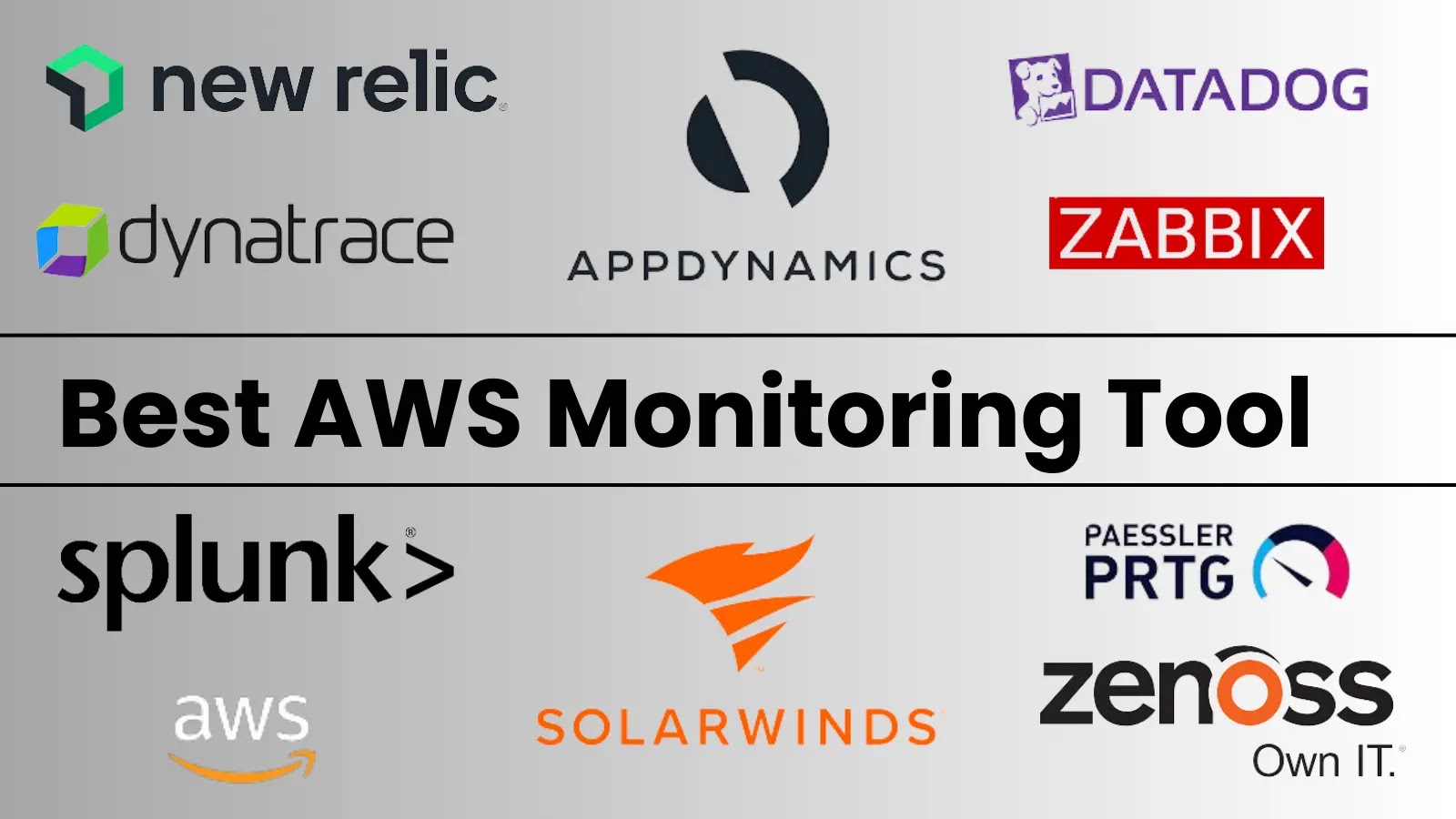
While the referenced article provides the definitive list, a robust selection for 2026 would likely include a mix of native AWS services and leading third-party solutions, each excelling in specific areas:
- AWS CloudWatch: The native monitoring service, offering metrics, logs, and events. Essential for basic monitoring and integrates deeply with other AWS services.
- AWS CloudTrail: Records API calls and related events, providing an audit trail for governance, compliance, and risk auditing. Critical for security monitoring.
- AWS X-Ray: Helps developers analyze and debug distributed applications, providing an end-to-end view of requests as they travel through your application.
- AWS Config: Assesses, audits, and evaluates the configurations of your AWS resources, helping ensure compliance and identify misconfigurations that could be exploited (e.g., a publicly exposed security group without legitimate reason, similar to CVEs affecting network misconfigurations like CVE-2024-XXXXX).
- Datadog: A comprehensive monitoring platform offering infrastructure, application performance (APM), log management, network, and security monitoring across AWS and hybrid environments. Known for its rich integrations and detailed dashboards.
- New Relic: Specializes in application performance monitoring (APM) but has expanded to cover infrastructure, logs, and synthetic monitoring for AWS deployments.
- Splunk: While traditionally a log management giant, Splunk offers powerful solutions for collecting, indexing, and analyzing operational intelligence from AWS, including security analytics.
- Dynatrace: Provides automated and intelligent observability for AWS environments, offering full-stack monitoring, AI-powered root cause analysis, and automatic anomaly detection.
- Prometheus (with Grafana): An open-source solution favored for its powerful time-series data collection and query language (PromQL), often visualized with Grafana dashboards for custom AWS metrics.
- LogicMonitor: A SaaS-based monitoring platform that provides unified visibility for hybrid cloud environments, with extensive support for AWS services.
- Sumo Logic: A cloud-native log management and security information and event management (SIEM) solution, offering robust analytics for AWS operational and security data.
- Lacework: Focuses on cloud security posture management (CSPM) and cloud workload protection (CWPP), providing continuous security monitoring and anomaly detection for AWS environments.
Remediation Actions and Best Practices for Enhanced AWS Monitoring
Implementing monitoring tools is just the first step. To truly harness their power, organizations must adopt a proactive stance:
- Define Clear Monitoring Objectives: Establish what metrics are critical for each service, what constitutes an anomaly, and who is responsible for responding to alerts.
- Automate Alerting and Response: Configure alerts for deviations from baselines and integrate with incident response systems. Consider using AWS Lambda for automated remediation of simple issues.
- Regularly Review Logs and Dashboards: Don’t rely solely on alerts. Periodically review aggregated logs and dashboards to spot emerging trends or subtle performance issues.
- Implement Least Privilege for Monitoring Tools: Ensure that monitoring agents and services have only the necessary permissions to collect data, minimizing their attack surface.
- Test Your Monitoring and Alerting: Periodically simulate failures or anomalous conditions to verify that your monitoring systems trigger alerts as expected and that your response procedures are effective.
- Leverage AI and Machine Learning: Utilize tools that offer AI-driven anomaly detection to identify sophisticated threats or performance bottlenecks that might elude rule-based monitoring.
- Stay Updated on AWS Security Advisories: Keep abreast of bulletins like those from the AWS Security Bulletins page. Your monitoring systems should be configured to detect indicators of compromise (IoCs) related to recent vulnerabilities. For critical vulnerabilities like CVE-2025-XXXXX (a hypothetical compromise of a popular AWS service component), ensuring your monitoring is tuned to detect its exploitation early is paramount.
Concluding Thoughts on AWS Monitoring in 2026
The journey to a secure, performant, and cost-efficient AWS environment is continuous, and robust monitoring is its compass. As AWS evolves, so too will the sophistication of monitoring tools. The selection of tools in 2026 will undoubtedly prioritize solutions that offer deep visibility, intelligent automation, and proactive security insights. By strategically deploying and effectively utilizing these essential tools, businesses can not only safeguard their cloud assets but also unlock the full potential of their AWS investments, ensuring operational resilience and fostering continuous innovation.