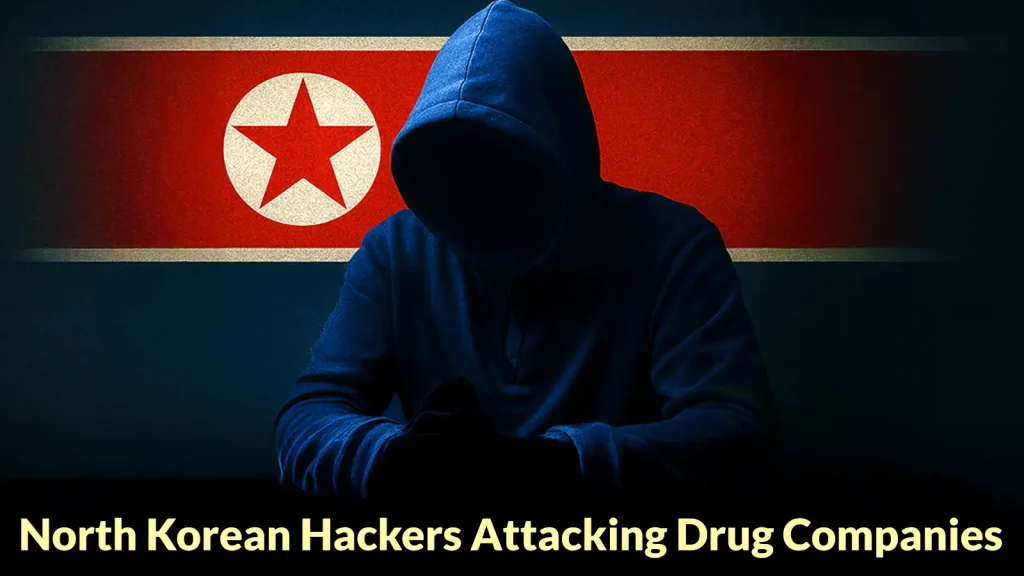
North Korean Hackers Attacking Drug Companies to Deploy Malware Via Weaponized Excel Files
The pharmaceutical industry holds a treasure trove of sensitive data, from groundbreaking research and intellectual property to patient information and intricate supply chain logistics. This makes it an irresistible target for state-sponsored actors seeking economic advantage, intelligence gathering, or even disruptive capabilities. A recent campaign by North Korea’s Kimsuky group highlights this danger, demonstrating a sophisticated approach to infiltrating prescription pharmaceutical companies using weaponized Excel documents.
Kimsuky’s Latest Offensive: Weaponized Excel Files Target Pharma
North Korean state-sponsored hackers, specifically the notorious Kimsuky group, have initiated a targeted campaign against prescription pharmaceutical companies. Their primary vector for infiltration? A cunningly disguised malware file titled “White Life Science ERP Specification.” This isn’t a new tactic, but its persistent effectiveness underscores the need for robust security postures, particularly in high-value sectors.
The attack leverages a common social engineering technique: tricking employees into opening a seemingly innocuous document. In this case, it’s a fake Excel document. Once executed, the malicious code embedded within grants attackers stealthy access to the victim’s system, a critical first step for deeper network penetration, data exfiltration, or further malware deployment.
Understanding the Threat: How Weaponized Documents Operate
Weaponized documents, like the Excel file used by Kimsuky, exploit a combination of user trust and software vulnerabilities. They often rely on macros, which are small programs embedded within documents to automate tasks. While legitimate, macros can be abused to execute malicious code. When a user opens such a document and, crucially, enables its content (often prompted by a warning message), the embedded malware springs to life.
The Kimsuky group’s choice of an “ERP Specification” document is deliberate. For pharmaceutical companies, Enterprise Resource Planning (ERP) systems are central to operations, managing everything from manufacturing to distribution. A document seemingly related to such a critical system lends an air of legitimacy, making employees more likely to open it without suspicion. It’s a classic example of contextual social engineering.
Potential Impact: Silent Access and Data Exfiltration
Gaining “silent access” to a victim’s system is a significant achievement for any attacker. This initial foothold allows Kimsuky to:
- Conduct Reconnaissance: Map out the network, identify critical systems, and pinpoint high-value data.
- Escalate Privileges: Seek out vulnerabilities to gain higher administrative rights, allowing broader access.
- Install Additional Malware: Deploy persistent backdoors, keyloggers, or data exfiltration tools.
- Exfiltrate Sensitive Data: Steal intellectual property, research data, patient records, or competitive intelligence.
- Maintain Persistence: Establish long-term access to the compromised network, often through various redundant mechanisms.
The impact on pharmaceutical companies can range from significant financial losses due to intellectual property theft to reputational damage and regulatory fines if patient data is compromised.
Remediation Actions and Proactive Defense
Mitigating the threat of weaponized documents and sophisticated state-sponsored attacks requires a multi-layered security strategy. Here are actionable steps pharmaceutical companies and others in critical sectors can implement:
- User Awareness Training: Regularly educate employees on phishing, social engineering tactics, and the dangers of opening unsolicited attachments or enabling macros from untrusted sources. Emphasize verification processes for suspicious emails and documents.
- Disable Macros by Default: Configure Microsoft Office applications to disable macros by default, and only allow signed macros from trusted publishers. For critical business functions requiring macros, implement strict whitelisting.
- Email Filtering and Sandboxing: Utilize advanced email security solutions that can detect and quarantine malicious attachments, including those with embedded malware. Implement sandboxing to open suspicious documents in an isolated environment before they reach user endpoints.
- Endpoint Detection and Response (EDR): Deploy EDR solutions to monitor endpoint activity for suspicious behavior, such as unauthorized process execution or attempts to access sensitive files.
- Regular Software Patching: Ensure all operating systems, applications (especially Microsoft Office), and security software are regularly updated and patched. While Kimsuky’s attack relies on social engineering, unpatched vulnerabilities can provide additional infection vectors or escalation paths.
- Network Segmentation: Isolate critical systems and sensitive data on separate network segments to limit lateral movement in case of a breach.
- Principle of Least Privilege: Grant users and systems only the minimum necessary permissions to perform their tasks, reducing the potential impact of a compromised account.
- Regular Backups: Implement a robust backup strategy for all critical data, ensuring backups are stored offline and tested regularly.
Relevant Tools for Detection and Mitigation
| Tool Name | Purpose | Link |
|---|---|---|
| Microsoft 365 Defender | Comprehensive endpoint security, email & identity protection for Microsoft environments. | https://www.microsoft.com/en-us/security/business/microsoft-365-defender |
| Splunk Enterprise Security | SIEM for security monitoring, threat detection, and incident response. | https://www.splunk.com/en_us/software/splunk-enterprise-security.html |
| Proofpoint Email Security | Advanced email threat protection, including malicious attachment detection and sandboxing. | https://www.proofpoint.com/us/products/email-protection |
| Cisco Secure Endpoint (AMP for Endpoints) | Endpoint detection and response (EDR) with advanced malware protection. | https://www.cisco.com/c/en/us/products/security/endpoint-security/index.html |
| VirusTotal | Online service for analyzing suspicious files and URLs for malware. | https://www.virustotal.com/gui/home/upload |
Conclusion
The Kimsuky group’s persistent targeting of pharmaceutical companies via weaponized Excel files serves as a stark reminder of the sophisticated threats facing critical industries. While the method may appear straightforward, its effectiveness lies in exploiting human trust and fundamental security gaps. By implementing robust technical controls, continuous employee training, and a proactive security posture, organizations can significantly reduce their attack surface and defend against such determined adversaries.