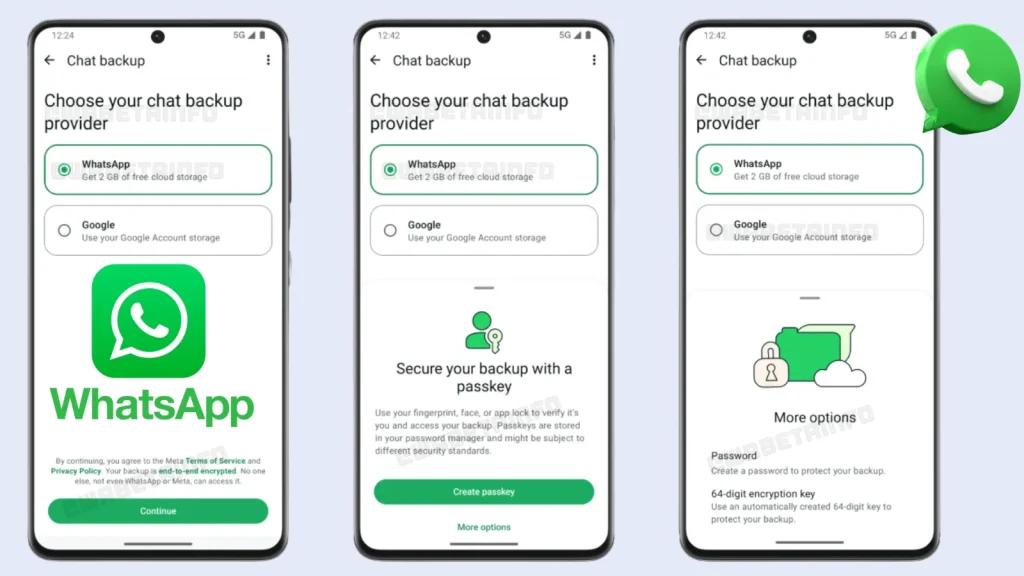
WhatsApp Testing Own Cloud Backup Provider for Default End-to-End Encryption
The landscape of digital communication is constantly shifting, with user privacy and data security at the forefront of concerns. For years, instant messaging platforms have grappled with the complexities of safeguarding user conversations, especially when those conversations extend beyond the confines of their immediate infrastructure. WhatsApp, a ubiquitous messaging giant, is making a significant move in this arena. The company is actively developing and testing its own cloud backup provider, aiming to offer users a more controlled and inherently secure method for storing their chat histories with default end-to-end encryption. This initiative represents a noteworthy shift from relying on third-party cloud services and could redefine how we perceive the security of our personal digital archives.
The Evolution of WhatsApp Backups: A Shift Towards Self-Reliance
Historically, WhatsApp has leveraged popular cloud platforms like Google Drive for Android users and Apple’s iCloud for iOS users to facilitate chat backups. While convenient, this approach introduces a layer of complexity regarding data ownership and the scope of end-to-end encryption. When backups reside on third-party servers, even with WhatsApp’s encryption applied, the integrity of that encryption can be influenced by the policies and security practices of the external provider. Recognising this, WhatsApp is now moving to establish an independent cloud backup system. This system will enable users to store their encrypted chat histories directly on WhatsApp’s native servers, thereby reducing reliance on external services and centralising control over their data’s security posture.
Understanding Default End-to-End Encryption for Cloud Backups
The core of this new feature lies in its commitment to default end-to-end encryption for cloud backups. End-to-end encryption (E2EE) is a cryptographic method that ensures only the communicating users can read their messages. Even the service provider cannot access the content. Extending this robust protection to cloud backups means that even if WhatsApp’s servers were compromised, the encrypted chat histories would remain inaccessible without the user’s private key. This is a critical security enhancement, as it addresses a long-standing concern about the potential vulnerability of chat backups stored in the cloud. By making this the default setting, WhatsApp aims to significantly bolster user privacy without requiring complex configuration steps from the user.
Benefits of an In-House Cloud Backup Solution
The implementation of an in-house cloud backup provider offers several compelling advantages:
- Enhanced Security: By managing the entire backup infrastructure, WhatsApp can enforce stricter cryptographic protocols and security measures tailored specifically for chat data, moving beyond the generic encryption offered by external cloud providers.
- Reduced Third-Party Dependency: Less reliance on Google Drive and iCloud mitigates risks associated with data handling practices, terms of service changes, or potential vulnerabilities within those external ecosystems.
- Streamlined User Experience: A unified backup system across platforms could simplify the user experience, making it easier to manage and restore chats regardless of the device.
- Increased Control: WhatsApp gains more direct control over the entire data lifecycle, from creation to storage and retrieval, empowering them to offer more robust privacy guarantees.
- Potential for Future Features: Owning the backup infrastructure opens doors for WhatsApp to develop more integrated and secure features around chat history management.
Implications for Data Privacy and Security Professionals
For IT professionals, security analysts, and developers, this shift holds significant implications. The move solidifies WhatsApp’s commitment to user privacy, which can act as a benchmark for other messaging platforms. It also underscores the growing trend of organisations taking greater ownership of their data’s entire lifecycle. While specific implementation details are still emerging, this development suggests that future privacy audits and compliance assessments for platforms like WhatsApp will need to consider their internal cloud infrastructure more closely. Understanding the cryptographic implementations and access control mechanisms within WhatsApp’s proprietary backup system will be paramount for ensuring data integrity.
It’s important to note that while this new feature significantly enhances security, users should still practice good security hygiene. For example, ensuring their devices are secured with strong passcodes and regularly updating the WhatsApp application remains crucial to overall protection.
Conclusion
WhatsApp’s initiative to develop its own cloud backup provider with default end-to-end encryption marks a pivotal moment in the evolution of digital communication security. By moving away from external dependencies and centralising control over chat history storage, the platform is addressing critical privacy concerns head-on. This development offers users greater peace of mind knowing their most personal conversations are protected with a higher degree of cryptographic assurance. For the cybersecurity community, it highlights the ongoing imperative for platforms to take proactive steps in safeguarding user data, setting a new standard for secure cloud-based backups.