
Microsoft Outlook.com Issue Blocks Users From Accessing Emails
For many professionals, email isn’t just a communication tool; it’s the central nervous system of their workday. So, when a digital giant like Microsoft encounters an issue that blocks access to its widely used Outlook.com service, the ripple effect on productivity and operations can be significant. Recently, users globally experienced this disruption firsthand, underscoring the critical reliance we place on these essential services.
Microsoft Outlook.com Experiences Service Degradation
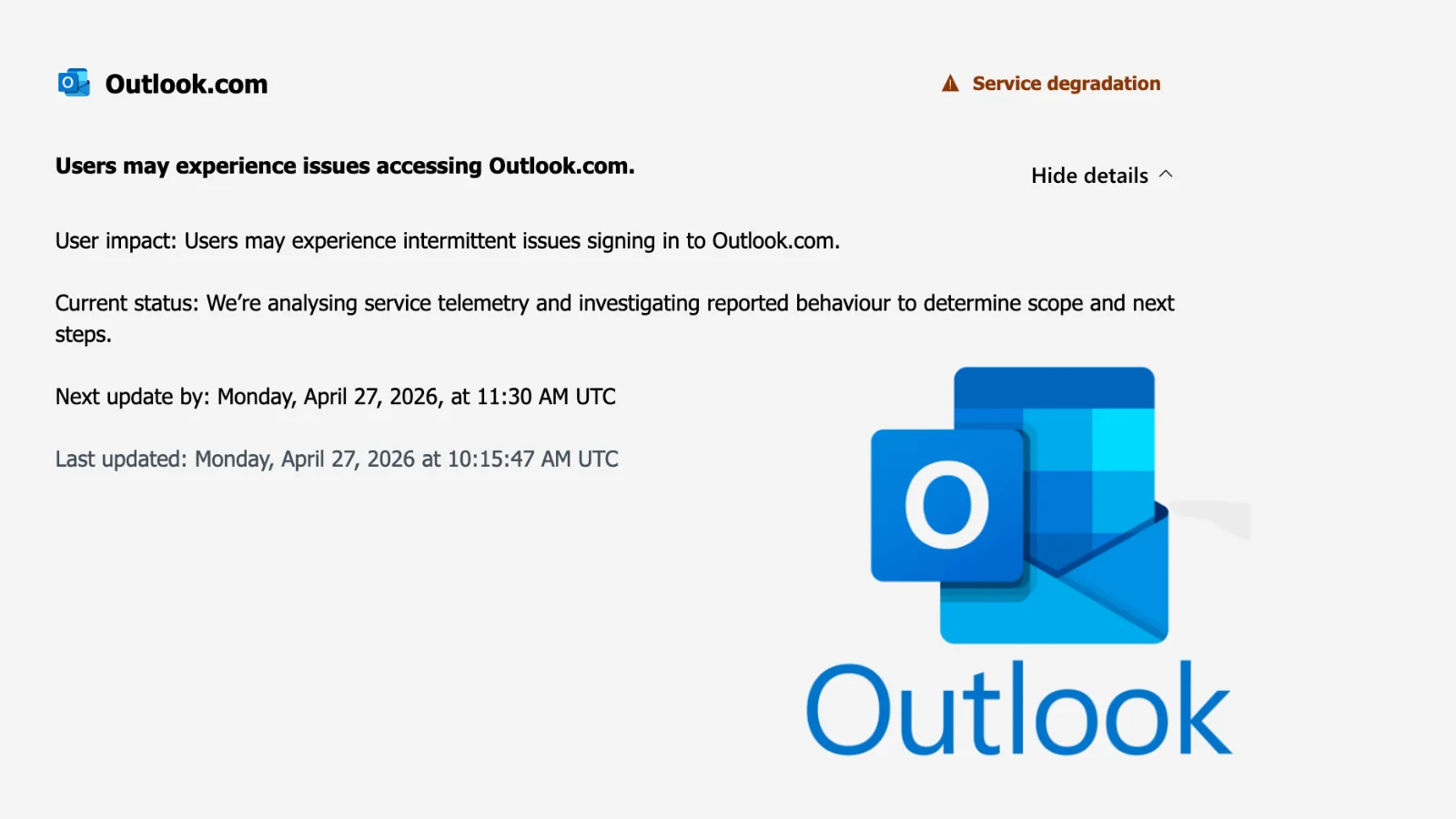
As confirmed by Microsoft itself, a service degradation impacting Outlook.com began manifesting on Monday, April 27, 2026. This incident, which Microsoft’s official Microsoft 365 Status account on X acknowledged, left countless users unable to access their emails. The last status update provided by Microsoft at the time of reporting was 10:15 AM UTC, indicating an ongoing situation.
Reports from various regions highlighted widespread difficulties. Users attempting to log into Outlook.com were met with access issues, preventing them from sending, receiving, or even viewing their correspondence. Such outages, while often temporary, can severely impede business continuity and personal communications.
Impact and Scope of the Outage
The immediate impact of a service disruption like this is multi-faceted. Individuals and organizations reliant on Outlook.com for daily operations face immediate challenges. Essential communications are halted, deadlines can be missed, and critical information becomes inaccessible. For businesses, this can translate into lost revenue, damaged customer relationships, and decreased employee productivity.
While specific details regarding the root cause of the degradation were not immediately available, such events often stem from a variety of technical issues, including server problems, network infrastructure failures, or software glitches. Microsoft’s prompt acknowledgment of the issue via its official channels is standard practice, aimed at keeping users informed during such critical times.
Staying Informed During Service Disruptions
During any widespread service disruption, reliable information is paramount. Users affected by the Outlook.com outage were advised to monitor official Microsoft channels, particularly the Microsoft 365 Status account on X (formerly Twitter), for the most current updates. These channels typically provide real-time information on the incident’s status, estimated resolution times, and any temporary workarounds.
Organizations that depend heavily on cloud services like Outlook.com often implement contingency plans for such events. These plans might include alternative communication methods, backup email solutions, or clear protocols for employees to follow when primary services are unavailable.
Outlook on Cloud Service Reliability
This incident serves as a reminder that even the most robust cloud services are not immune to occasional disruptions. While providers like Microsoft invest heavily in infrastructure and redundancy to ensure high availability, unforeseen technical challenges can arise. For users, it reinforces the importance of understanding their service level agreements (SLAs) and having strategies in place for business continuity. While this particular issue was a service degradation and not a security vulnerability, the principle of preparedness remains constant, whether facing an outage or a potential CVE-2023-23397 or CVE-2023-35636 related threat.
Key Takeaways
- Microsoft acknowledged a service degradation affecting Outlook.com on Monday, April 27, 2026, preventing users from accessing emails.
- The incident was confirmed via the official Microsoft 365 Status account on X.
- Users in multiple regions experienced significant disruptions, affecting daily operations and communications.
- Monitoring official channels for updates is crucial during service outages.
- This event underscores the importance of contingency planning for cloud service dependencies.




