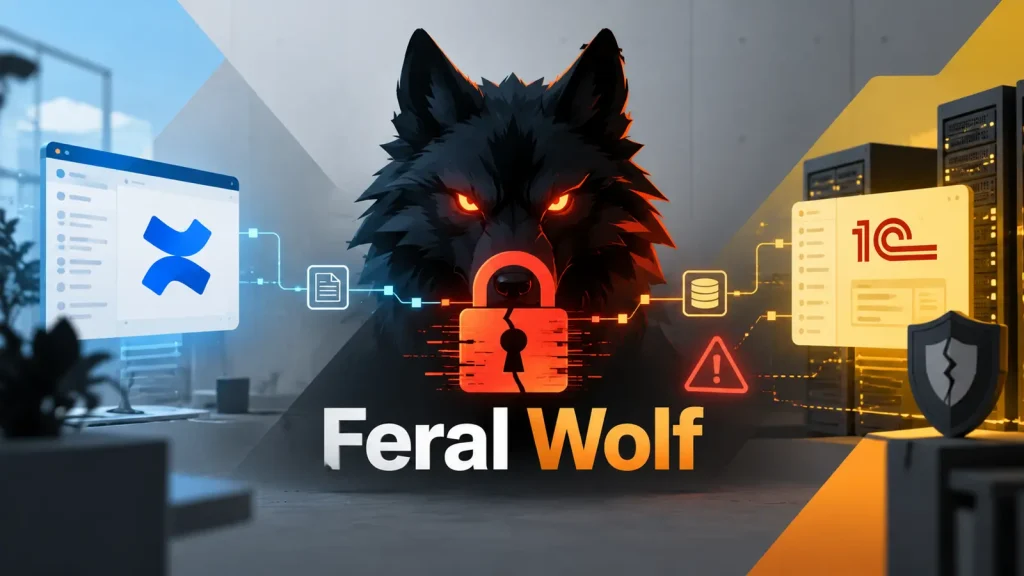
Feral Wolf Ransomware Attacks Exploit Atlassian Confluence and Misconfigured 1C Systems
The digital battleground is relentless, and threat actors constantly seek the path of least resistance into corporate networks. A recent and concerning example is the Feral Wolf ransomware campaign, which has leveraged exposed business software and weak server configurations to devastating effect. This sophisticated operation underscores a critical truth: a single, overlooked internet-facing system can quickly become the gateway to a catastrophic enterprise-wide incident.
Understanding the Feral Wolf Ransomware Threat
Feral Wolf isn’t just another ransomware group; their methodology highlights a strategic focus on exploiting known vulnerabilities and common misconfigurations. From May through August 2026, this group specifically targeted Russian organizations across diverse sectors, including retail, construction, manufacturing, and information technology. Their modus operandi involves gaining initial access through vulnerable public-facing assets, then deploying ransomware to encrypt critical data and demand payment.
Exploiting Atlassian Confluence: A Critical Entry Point
A significant vector for Feral Wolf’s attacks involves vulnerabilities within Atlassian Confluence. Confluence, a widely used collaboration platform, can become a significant risk when not properly secured or updated. Threat actors frequently scan for unpatched Confluence instances, particularly those exposed to the internet. While the specific CVEs exploited by Feral Wolf in this campaign were not detailed in the source, it’s crucial for organizations to maintain diligence in patching. Past critical vulnerabilities in Confluence include:
- CVE-2023-22515: An authentication bypass vulnerability leading to Confluence Data Center and Server privilege escalation. Organizations should consult the official CVE entry for details.
- CVE-2023-22518: A critical remote code execution vulnerability in Confluence Data Center and Server. Further information is available at CVE-2023-22518.
These examples illustrate the severe impact unpatched Confluence servers can have, serving as an ideal initial access point for ransomware groups like Feral Wolf.
Misconfigured 1C Systems: Another Weak Link
Beyond Atlassian Confluence, Feral Wolf also capitalized on misconfigured 1C systems. 1C Company develops business software, widely used in various industries, particularly in Russia and Eastern Europe, for enterprise resource planning (ERP), accounting, and management. When these systems are improperly configured, especially with direct internet exposure and weak authentication, they present an open invitation for attackers. Such misconfigurations can lead to unauthorized access to sensitive business data and, subsequently, network lateral movement for ransomware deployment.
The Cascade Effect: From One System to Enterprise-Wide Compromise
The Feral Wolf campaign serves as a stark reminder that cyber resilience hinges on the security of every single component. The initial compromise of an internet-facing Confluence server or a misconfigured 1C system is rarely the end. Instead, it’s the beginning of a chain reaction. Once inside, attackers often leverage elevated privileges, move laterally across the network, and eventually gain access to critical systems, culminating in data exfiltration and ransomware deployment.
Remediation Actions and Proactive Defense
Protecting against ransomware threats like Feral Wolf requires a multi-layered and proactive security strategy. Organizations must prioritize the following:
- Patch Management: Implement a rigorous patch management program. Regularly update all software, operating systems, and applications, especially internet-facing ones like Atlassian Confluence, to address known vulnerabilities promptly.
- Configuration Hardening: Review and harden the security configurations of all business-critical systems, including 1C platforms. Ensure default credentials are changed, unnecessary services are disabled, and strong authentication mechanisms are enforced.
- Network Segmentation: Segment your network to limit lateral movement. If one segment is compromised, attackers should not easily be able to access other critical parts of the network.
- Strong Authentication: Implement multi-factor authentication (MFA) for all user accounts, particularly for administrative access and external-facing services.
- Regular Backups: Maintain immutable, offline backups of all critical data. Test your backup and recovery procedures regularly to ensure data can be restored effectively in the event of an attack.
- Endpoint Detection and Response (EDR): Deploy EDR solutions to monitor endpoints for suspicious activity and detect early signs of compromise.
- Vulnerability Scanning and Penetration Testing: Conduct regular vulnerability assessments and penetration tests to identify and address weaknesses before attackers can exploit them.
Tools for Detection and Mitigation
| Tool Name | Purpose | Link |
|---|---|---|
| Nessus | Comprehensive vulnerability scanning and assessment. | Tenable Nessus |
| OpenVAS / Greenbone Vulnerability Management | Open-source vulnerability scanner for identifying security flaws. | Greenbone |
| Atlassian Security Advisories | Official advisories for Confluence and other Atlassian products. | Atlassian Security |
| Endpoint Detection & Response (EDR) Solutions | Real-time threat detection and response on endpoints (e.g., CrowdStrike, SentinelOne). | (Vendor-specific) |
Conclusion
The Feral Wolf ransomware campaign is a powerful reminder of the relentless and adaptable nature of cyber threats. By exploiting seemingly minor chinks in an organization’s armor – an unpatched Confluence server here, a misconfigured 1C system there – threat actors can achieve widespread network compromise. Organizations must embrace a comprehensive security posture, emphasizing diligent patching, robust configuration management, and proactive threat detection to defend against such sophisticated attacks. The cost of neglecting even one vulnerable system far outweighs the effort required for its proper securing.