
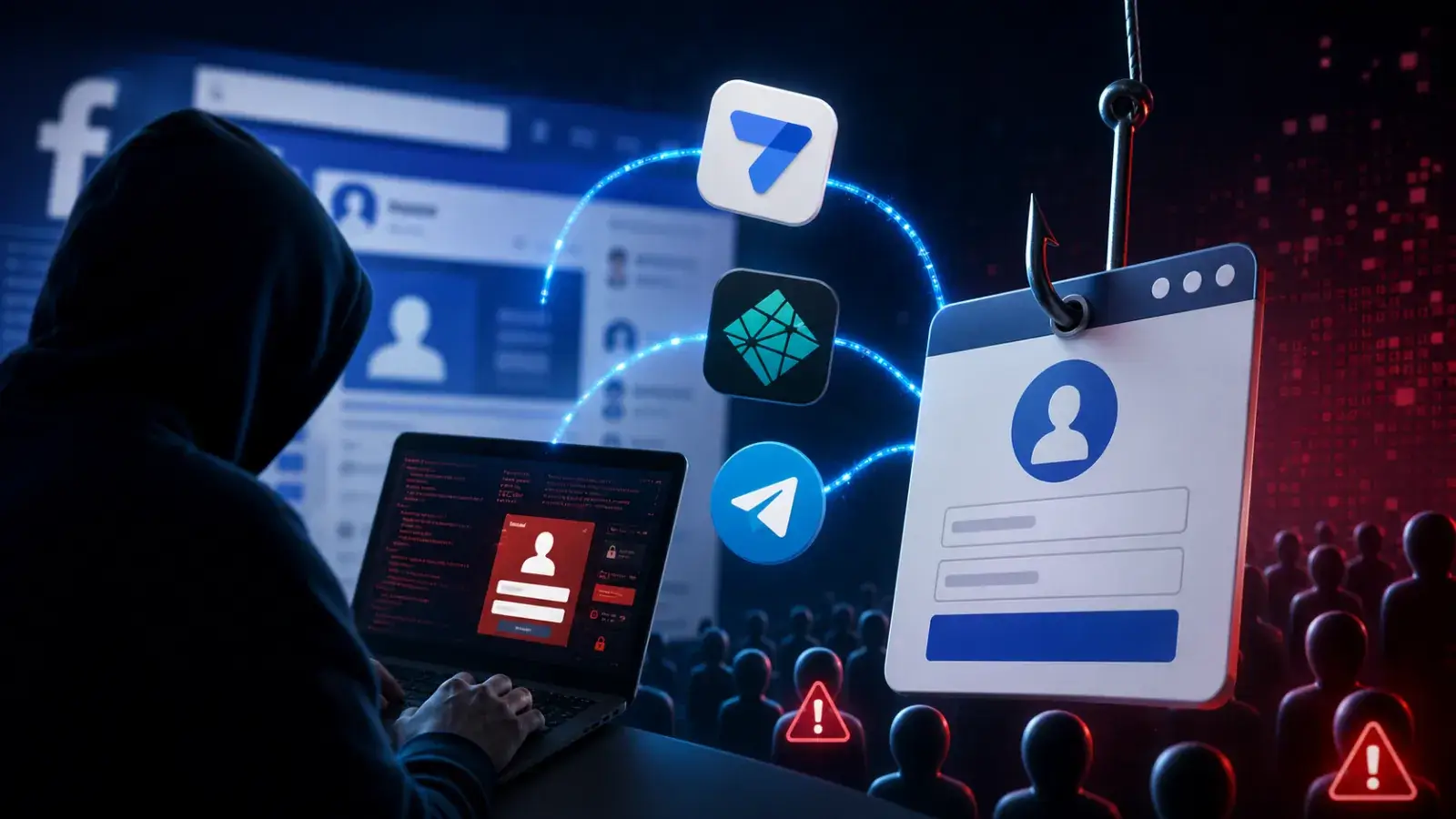
Attackers Abuse Google AppSheet, Netlify, and Telegram in Facebook Phishing Campaign
The Devious Dance: Attackers Abusing Google AppSheet, Netlify, and Telegram in Facebook Phishing Campaigns
In the evolving landscape of cyber threats, attackers consistently refine their tactics to bypass traditional defenses. A recent, sophisticated operation dubbed “AccountDumpling” highlights this alarming trend, compromising approximately 30,000 Facebook accounts globally. Discovered by security researchers at Guardio Labs, this Vietnamese-linked campaign ingeniously leverages legitimate cloud services like Google’s AppSheet, Netlify, and even Telegram to execute highly effective phishing attacks. This post delves into the mechanics of this operation, its impact, and crucial remediation strategies for individuals and organizations.
AccountDumpling: A New Breed of Facebook Phishing
The AccountDumpling campaign stands out due to its innovative use of trusted platforms, a technique that significantly enhances its success rate. Instead of relying on easily flagged malicious domains or suspicious email attachments, the attackers harness the inherent legitimacy of services like Google AppSheet. This allows them to route fully authenticated phishing lures through channels that are typically whitelisted by email security filters and user trust mechanisms.
The core of AccountDumpling’s evasion strategy lies in abusing Google AppSheet, a no-code development platform. By building their phishing infrastructure on AppSheet, the attackers create what appears to be a legitimate application. When users receive a phishing email or message, the links direct them to these AppSheet-hosted pages, which mimic official Facebook login prompts or business account verification forms. Because the links originate from a Google-owned domain, they often bypass stringent email gateway and browser security checks.
Multi-Platform Abuse: Netlify and Telegram in the Mix
Beyond Google AppSheet, the AccountDumpling operation further bolsters its resilience and reach by integrating other widely used platforms:
- Netlify: This popular web development platform is exploited to host components of the phishing infrastructure, potentially including front-end assets or redirectors. Like AppSheet, Netlify’s reputation as a legitimate hosting service helps the malicious content evade detection.
- Telegram: The encrypted messaging application serves as a command-and-control (C2) channel for the attackers. Instead of traditional, easily detectable C2 servers, Telegram’s robust, secure communication capabilities allow the threat actors to exfiltrate stolen credentials and identity documents in real-time. This method is notoriously difficult to monitor and block, as it blends in with legitimate Telegram traffic.
This multi-platform approach creates a highly robust and adaptive attack chain, making detection and disruption significantly more challenging for security teams.
The Objective: Monetizing Stolen Facebook Business Accounts
The primary goal of AccountDumpling is explicit: to harvest credentials and identify documents, specifically targeting Facebook Business accounts. Once compromised, these accounts are then monetized. This typically involves using the stolen accounts for:
- Running fraudulent advertising campaigns.
- Distributing malware or further phishing links.
- Engaging in various forms of financial fraud.
- Selling access to other cybercriminals on the dark web.
The extensive compromise of approximately 30,000 Facebook accounts underscores the effectiveness of this sophisticated approach and the significant financial incentives driving such operations.
Remediation Actions for Individuals and Organizations
Given the cunning nature of the AccountDumpling campaign, proactive measures are critical. Here’s actionable advice for protecting your Facebook accounts and digital identity:
- Enable Two-Factor Authentication (2FA): This is the single most effective defense against credential theft. Even if your password is compromised, attackers cannot access your account without the second factor.
- Be Skeptical of Unsolicited Communications: Always verify the sender of any email or message, especially if it requests login credentials or personal information. Look for inconsistencies, grammatical errors, or unusual sender addresses.
- Hover Before You Click: Before clicking on any link, hover your mouse over it (without clicking) to reveal the actual destination URL. Be wary of links that redirect to unexpected domains, even if they appear to originate from legitimate services.
- Report Suspicious Activity: If you suspect a Facebook account has been compromised or you encounter a phishing attempt, report it immediately to Facebook and your organization’s IT security team.
- Regularly Review Facebook Business Manager Roles: For organizations, conduct regular audits of who has access to your Facebook Business Manager and what permissions they hold. Remove any inactive or unauthorized users.
- Security Awareness Training: Educate employees about the latest phishing techniques, including those leveraging legitimate services. Emphasize the importance of reporting suspicious emails and links.
- Implement Advanced Email Security Solutions: While AppSheet and Netlify can bypass some filters, advanced email security gateways often include sandboxing and URL analysis capabilities that can detect and block sophisticated phishing attempts.
- Monitor for Unusual Account Activity: Regularly check your Facebook account’s login history, ad campaign activity, and linked applications for any unauthorized access or changes.
Conclusion
The AccountDumpling campaign is a stark reminder that cybercriminals are constantly innovating, moving beyond traditional attack vectors to exploit trusted platforms. By abusing Google AppSheet, Netlify, and Telegram, threat actors have mounted a highly effective phishing operation, compromising tens of thousands of Facebook accounts. Understanding these sophisticated tactics and implementing robust security measures, particularly strong authentication and vigilant user education, are paramount to defending against such persistent and evolving threats.




